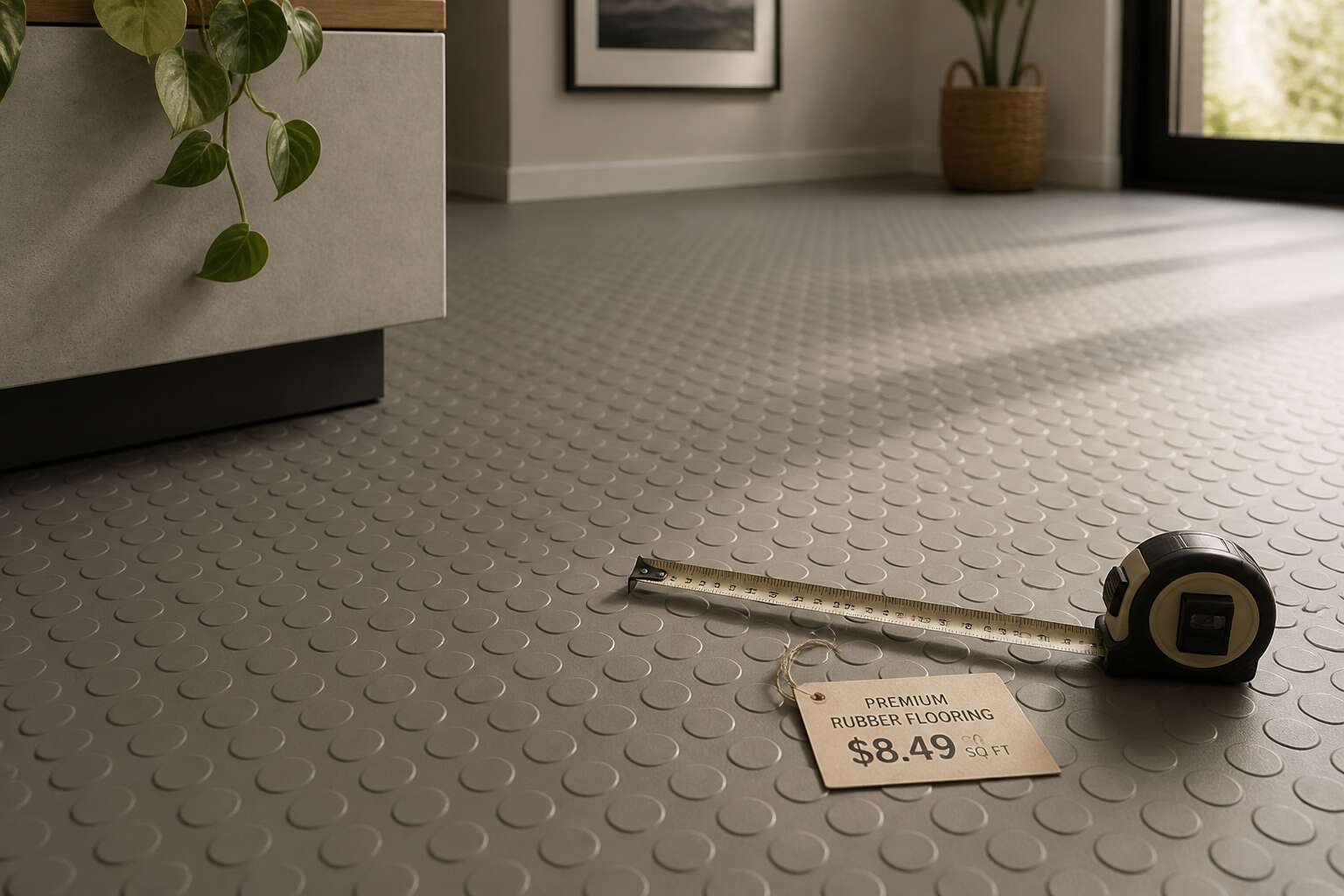
Key Factors That Influence Rubber Mat Flooring Prices
Material Quality and Type
South Africa’s industrial and commercial sectors chew through a lot of flooring, and the variance in rubber mat flooring prices often comes down to what you are actually standing on. Material type dictates the cost more than any other variable. Virgin rubber, which is untouched by recycled content, yields the highest resilience and offers significant chemical resistance, which obviously commands a high rand figure. Recycled rubber, often derived from tyre buffings, is a more economical option, but it comes with a trade-off in consistency and durability. This distinction is crucial for factories that use sharp tools or harsh cleaners.
The specific polymer composition also matters deeply. Natural rubber, with its inherent elasticity, offers a unique bounce that synthetic NBR, or nitrile, cannot replicate, though the latter excels at resisting oil and fuel damage. When you are dealing with suppliers, you will see price quotes reflect these differences. Consider the physical profile of the mat itself:
– Smooth sheets are cost-effective for cleanroom environments.
– EVA foam blends reduce price but offer less abrasion resistance.
– Corrugated or studded surfaces add material weight for a premium price.
Finally, quality is not just about material origin, it is about manufacturing tolerance. A mat that is 8mm thick might be priced lower, but if its dimensional stability is poor, it will curl and peel, costing you more in the long run. I always advise buyers to check for South African Bureau of Standards (SABS) approval, because that mark is a direct tie to quality control. These variables all interact, which means paying the highest price per square meter for NBR is often the smartest move for a grease monkey workshop, while a cheaper recycled option is perfectly fine for a gym floor.
Thickness and Density
Thickness changes the story of rubber mat flooring prices in ways that surprise many facility managers. An 8mm mat feels solid underfoot, while a 14mm option carries real heft and a larger price tag. The difference is not about surface appearance. It is about impact absorption, load bearing, and the quiet comfort that workers notice after eight hours on their feet.
Density works alongside thickness. Two mats can measure the same depth, yet one weighs considerably more. That weight signals a tighter cell structure, which resists compression and extends service life. A flimsy, low density mat may cost less per square meter, but it will flatten under machinery or forklift traffic. In South African workshops, this is where rubber mat flooring prices start to climb.
- A 10mm or 12mm profile suits general industrial use.
- Thinner mats, around 6mm, work for light commercial spaces.
- Heavy duty environments demand 14mm or more.
Do not ignore the interaction between thickness and density. A thick mat with poor density will still fail, and a dense mat that is too thin may lack cushioning. Pay attention to kilograms per square meter and compression set values on technical datasheets. That is the quiet mathematics behind rubber mat flooring prices.
Size and Coverage Area
Every project begins with a floor plan, not a price list. The square meterage you need will shift rubber mat flooring prices. A small workshop might pay premium per square meter, while a warehouse covering 500 square meters can unlock volume pricing.
Here is where the geometry of your space matters.
- Standard roll widths, often 1.2m or 2m, can limit your coverage options.
- Odd shapes and corners generate offcut waste that you still pay for.
- Interlocking tiles offer flexibility but carry more seams than a continuous roll.
Transport costs also scale with size. A full pallet of mats moves cheaply per square meter, but a partial order absorbs higher logistics charges. I’ve watched buyers trim their order to save money, only to lose those savings on freight! Measurements that ignore wastage hide the real expense. Rubber mat flooring prices reward precise planning.
Brand and Manufacturer Reputation
Brand reputation often tells you more than the spec sheet. A manufacturer with decades of experience has solved problems you haven’t met yet. Their consistent vulcanisation process and quality control mean fewer surprises. I have seen cheap mats fail within a year, while established names hold up for a decade. That difference directly shapes rubber mat flooring prices.
Reputable brands also offer traceability. You know the compound, the batch, and the test results. This matters for industries with safety audits. Moreover, they stand behind their product with warranties that actually pay out. Consider what reputation brings:
- Consistent thickness across batches
- Technical support for installation
- Claim handling without arguments
Local distributors add another layer. Their service levels vary. A renowned international brand can still suffer from a poor local agent. The supplier and the agent shape your final cost and experience, and both influence rubber mat flooring prices.
Customization and Design Complexity
Customization is where rubber mat flooring prices take a polite but firm turn upward. A standard black mat is a straightforward product. Add a woven logo, a bespoke colour match, or a die-cut pattern, and you are commissioning a tailored product for your floor.
Design complexity introduces tooling costs and setup time. A simple ribbed surface is easy to produce. A diamond or coin pattern with precise depth requires more attention. Each modification affects the final quote. I have seen buyers assume a logo is a small addition; it is not.
- Custom colours require pigment matching and minimum batch runs
- Logos need mould engraving or printing setups
- Interlocking edges demand tighter tolerances
For South African buyers, this matters in practical ways. A retail chain may want branded entrance mats. A factory may need hazard striping. These choices shape rubber mat flooring prices.
Purchase Volume and Bulk Discounts
Here is a truth that surprises many buyers: rubber mat flooring prices shift dramatically with order size. Suppliers in South Africa structure quotes around volume. A single roll for a home gym is one thing. A pallet for a warehouse is another matter entirely.
Purchase volume triggers economies of scale. Longer production runs lower the cost per unit, and that saving usually gets passed along. Yet the discount curve is not linear. Meaningful price breaks appear at specific thresholds.
- 50 to 100 square metres may yield 5% off
- 500 square metres often unlocks 10 to 15%
- 1 000 square metres and beyond enters negotiation territory
Bulk pricing also reduces logistical costs. One large delivery trumps multiple small shipments. For South African businesses, this matters when freight distances stretch across provinces. Consolidating orders into a single consignment lowers the transport component of rubber mat flooring prices. But the buyer who overbuys to chase a discount tier can erase the benefit.
Price Breakdown by Rubber Mat Types
Interlocking Rubber Tiles
Interlocking rubber tiles present a different pricing equation compared to rolls or mats. The cost of rubber mat flooring prices for these tiles often hinges on the connection system itself. A simple push-in peg design will cost less than a locking tab system that requires no adhesive. In South Africa, expect to pay a premium for tiles with tighter seams, as they create a more unified surface.
Consider how the tile shape affects the final bill:
– Square tiles are the most economical to produce
– Rectangle tiles offer faster installation, saving labour costs
– Hexagonal shapes add visual interest but increase offcut waste
I’ve noticed the backing layer also matters. Tiles with a solid rubber base cost more than those with a sponge or foam backing, though the former holds up better under heavy rolling loads. Your choice here shifts the overall rubber mat flooring prices significantly!
Rubber Rolls for Large Areas
Walk into any warehouse in Johannesburg and you will hear the same story. Rubber mat flooring prices for rolls behave differently than tiles because the seam count drops to nearly zero. That means less adhesive, less labour, and fewer weak points. I have seen quotes where a 10 metre roll undercuts the equivalent tile order by a full 15 percent.
However, the roll itself brings hidden costs. Transport and handling add the most. A 1.5 metre wide roll is heavy and awkward to manoeuvre, and delivery fees climb fast in the Cape. Some suppliers charge per kilogram, so the density of your chosen rubber swings rubber mat flooring prices.
- Wider rolls reduce strips but may need a crane
- Cut to size costs more per square metre
- Thin rolls lower cost but risk ripples
Rubber Floor Mats for Gym Settings
Walk into any CrossFit box in Sandton and the floor tells you what the owner spent. Rubber mat flooring prices for gym settings split into three camps: recycled rubber, blended rubber, and virgin EPDM. Recycled costs the least per square metre but carries a strong odour and uneven colour. Blended rubber sits in the middle, offering better durability for heavy deadlift zones. Virgin EPDM commands a premium, but it resists UV and oils far longer.
For a typical 200 square metre gym floor, expect the following breakdown:
- Recycled rubber tiles: R450 to R650 per square metre installed
- Blended rubber rolls: R700 to R900 per square metre installed
- Virgin EPDM tiles: R1,100 to R1,400 per square metre installed
Installation labour runs another R80 to R150 per square metre, and that figure rarely drops! Rubber mat flooring prices rise sharply when you need shock absorption ratings for turf or sprung subfloors. I have seen owners pay more for the subfloor prep than the rubber itself, especially in older Johannesburg buildings with uneven concrete.
Industrial Rubber Flooring
Industrial rubber flooring splits into distinct price bands, and the differences show in performance. In a Johannesburg distribution centre, the floor must survive forklift tyres, spilled hydraulic oil, and constant scrubbing. Rubber mat flooring prices for these settings depend on surface pattern and chemical resistance more than colour or softness.
- Studded rubber sheets: R550 to R800 per square metre installed
- Chemical-resistant solid rubber: R900 to R1,300 per square metre installed
- Anti-fatigue matting for standing stations: R300 to R500 per square metre installed
These rubber mat flooring prices assume a sound concrete base. I have seen industrial clients pay an extra R200 per square metre for levelling compound because the original floor had expansion joints. The cheapest option often fails within eighteen months, which makes the initial savings rather pointless.
Rubber Pavers for Outdoor Use
Rubber pavers for outdoor use differ from indoor mats. They resist rain, handle UV rays, and survive braai spills. Rubber mat flooring prices for these pavers land between R450 and R750 per square metre installed. That price assumes a sound base of compacted crusher run or concrete. Skip the base, and you will pay twice later!
What shifts the quote? A quick list:
- Paver thickness from 25 mm to 40 mm
- Surface profile from smooth to textured
- Interlocking edges versus glue-down styles
Thicker pavers handle driveway weights, but they nudge rubber mat flooring prices upward. Textured surfaces cost more because the moulds wear out faster. Interlocking pavers need no adhesive, which trims installation labour. A sunny Pretoria patio copes fine with the cheapest paver. A Johannesburg loading bay demands the pricier version.
Specialty Mats with Drainage or Anti-Fatigue Features
Specialty mats hide their complexity. Drainage mats require engineered channels that push water away while supporting a person’s weight. Anti-fatigue mats rely on layered foam or rubber compounds that absorb pressure without collapsing. Both categories shift rubber mat flooring prices in ways that surprise buyers!
Consider what you are actually paying for. A drainage mat must survive constant moisture and cleaning chemicals. An anti-fatigue mat must endure eight hours of standing without flattening. The manufacturing tolerances are tighter, the testing stricter. I have seen quotes for these mats range from R600 to R1,200 per square metre, depending on the following:
- Channel depth and pattern complexity
- Reinforcement layers for heavy trolley traffic
- Surface texture for slip resistance
That variation is not arbitrary. It reflects the cost of solving real human problems, like aching knees in a butchery or slippery floors in a brewery. Paying less for a specialty mat usually means paying more in fatigue or injury claims later. Rubber mat flooring prices only make sense when measured against the body they protect. Check the actual price per square metre against your workers’ comfort, not just the initial quote.
Comparing Costs by Material and Build
Recycled Rubber vs. Virgin Rubber
The gap between recycled and virgin rubber mat flooring prices is narrower than most buyers expect. Recycled material typically costs less per kilogram, yet the manufacturing process demands extra cleaning and binding agents.
Virgin rubber carries a higher raw material price, but it offers predictable compression and resilience. The build complexity also shifts the total expense, because moulded edges and custom thicknesses require more precision. Consider these variables before comparing quotes:
- Recycled rubber absorbs moisture differently, altering underlayment needs.
- Virgin rubber resists oil and chemicals, reducing replacement frequency.
- Build variations like surface texture or backing layers affect installation time.
For a busy workshop, recycled matting handles general traffic well. For a chemical plant, virgin rubber proves more economical over its lifespan. In both cases, understanding the physical trade-offs matters more than the sticker price. That is why rubber mat flooring prices vary so widely.
SBR vs. EPDM Rubber Compounds
You might assume the cheaper compound always wins on price. That assumption proves false once you compare SBR and EPDM in real installations. Styrene-butadiene rubber (SBR) carries lower raw material costs, while ethylene propylene diene monomer (EPDM) demands a steeper upfront outlay but resists weathering, ozone, and ultraviolet degradation far longer.
These compounds affect rubber mat flooring prices in distinct ways:
- SBR absorbs oils and solvents, shortening lifespan in mechanical workshops.
- EPDM maintains dimensional stability from -40°C to 120°C, reducing replacement cycles.
- SBR mats demand thicker profiles to achieve equivalent compression set.
- EPDM allows tighter tolerances, lowering fabrication waste.
Manufacturers add plasticisers to SBR to mimic EPDM’s elasticity, but these fillers degrade under ozone exposure. EPDM’s saturated backbone resists cracking without such amendments. In coastal regions like Durban, salt-laden air accelerates SBR breakdown noticeably. That is why rubber mat flooring prices reflect the compound’s chemical resilience first, and the build complexity second.
Surface Texture and Finish Effects
The conversation around rubber mat flooring prices often stops at the raw polymer, but the true cost lives in the build. A mat’s internal structure, whether it is a dense, solid core or a foam-backed composite, dictates how it performs under a forklift’s weight or a child’s playtime. Buyers who choose a cheaper, less dense construction often face indentations that permanently scar the surface, erasing any initial savings.
Surface texture and finish also shift the final number significantly. A smooth, calendered finish reflects more light and wipes down easily, which keeps maintenance bills low in a medical clinic. A heavily embossed, coin-top texture grips shoe soles and hides scratches, but it also traps dirt and requires vigorous scrubbing. For industrial kitchens, a raised diamond pattern offers slip resistance but collects grease in its recesses; this makes the operational cost higher than the purchase price suggests. A mat’s face, whether it is a fine stipple or a deep rib, tells you about the work required to keep it clean.
Here is where the subtle economics of a textured surface appear. Consider these common scenarios:
– A brushed finish hides scuffs well, reducing replacement frequency, but it comes at a higher mould cost.
– A smooth, polished finish is cheaper to produce but shows every scratch from dragging metal carts.
When comparing rubber mat flooring prices in Cape Town’s humidity or Johannesburg’s dry winters, remember that a textured mat’s cleaning regime is a fixed recurring expense. The adhesive used to bond the wear layer to the backing also matters; a delaminated mat is a premature failure. Therefore, the smartest comparison is not just price per square meter, but price per year of visible, serviceable life.
Backing and Underlayment Costs
Comparing costs by material and build means looking at the entire assembly, including the backing. A cheap mat with a weak backing can buckle under a warehouse trolley in Durban’s heat. The underlayment, whether it is recycled crumb rubber or a closed-cell foam, changes how the mat absorbs impact and sound. A thicker, denser backing raises rubber mat flooring prices immediately, but it also delays fatigue in standing workers.
Consider these backing options:
– Neoprene foam: soft, pricey, resists oil.
– Crumb rubber: heavy, cheap, tolerates outdoor weather.
– Cork: natural, quiet, but prone to moisture in Cape Town.
Each layer interacts with the wear surface. A stiff top fused to a soft core creates a stress point that cracks quicker than a uniform slab. Buyers who compare only the face price ignore this.
Certification and Safety Standards
Nearly every rubber mat carries a stamp of approval, but certification is not a luxury add-on; it is a financial decision. Uncertified imports often fail the SABS testing for slip resistance and fire retardancy, leaving buyers liable for workplace injuries. The build itself, meaning the chemical bond between the wear layer and backing, must be validated for the specific load you will place on it. A forklift rated mat will state its weight capacity, and ignoring these figures is a gamble.
Skimping on these standards to lower rubber mat flooring prices is a short term saving. Specific performance certifications to verify before purchase include:
– Slip resistance (wet and dry)
– Fire retardancy ratings
– UV and ozone stability for outdoor exposure
– Compression set percentages
A mat that lacks these certifications can void your insurance in a liability claim. The manufacturer’s reputation for quality is meaningless without third party verification. Buyers should compare rubber mat flooring prices only after confirming that each quote meets the same certification levels. This separates a transparent supplier from a distributor moving grey market stock. Paying a modest premium for certified, build-tested mats prevents a legal headache in the long run. This is the real cost of compliance, and it protects your operations in Johannesburg or Paarl.
Installation, Maintenance, and Hidden Costs
DIY Installation vs. Professional Installation
The moment rubber mat flooring prices enter a project, the conversation usually stops at the quoted figure. But the real cost of a floor is never written on a price tag. It lives in the hours you spend kneeling, in the adhesive you misjudge, in the seams you hope nobody notices. Installation is where the budget either holds or fractures.
Professional installation demands a higher upfront payment, yet it transfers the risk of failure to someone else. A skilled contractor accounts for subfloor irregularities, temperature shifts, and the specific stretch of rolled rubber. They bring tools you do not own and experience you cannot buy. For a large gym or industrial space, this is not a luxury. It is the difference between a floor that lasts a decade and one that peels within a year.
DIY installation offers a lower initial figure, which appeals to the careful budgeter. But the hidden costs emerge quietly. You need seam tape, adhesive, a heavy roller, and a sharp blade. You need time, often a full weekend or more. You need patience for the inevitable bubbles and edges that refuse to align. When mistakes happen, the repair costs compound. One misaligned tile can ruin the visual rhythm of an entire room.
Maintenance also separates the two paths. A professionally installed floor, with its clean seams and even surface, is simpler to sweep and mop. A DIY job with voids and raised edges collects dirt, wears unevenly, and demands premature replacement. The true rubber mat flooring prices must therefore include the cost of care over years, not just the cost of delivery.
- Subfloor preparation, such as grinding or leveling compound
- Acclimation time for the material to settle in your climate
- Acoustic underlayment for multi-storey buildings
- Disposal fees for old flooring or packaging waste
These expenses rarely appear in a quote. They reveal themselves later, in the form of echoing footsteps, cold drafts, or the slow curl of a corner. What looks like savings on installation day becomes a monthly tax on your patience. The psychological weight of a poorly laid floor is real; it reminds you every time you enter the room.
If you are honest about your own capabilities, the choice becomes clearer. A compact bathroom or a small home office may suit a methodical DIYer. A warehouse, a retail front, or a busy fitness studio deserves the certainty of a professional. South African conditions, with their heat and humidity, can test any adhesive. That is not a risk worth taking alone.
Adhesive and Accessory Costs
Adhesive and accessory costs can ambush the most meticulous budget. A quote for rubber mat flooring prices rarely includes the high-bond contact cement, the notched trowel, or the seam sealer required for a permanent hold. In South Africa’s climate, wrong adhesive choices cause bubbling within months.
- Heavy-duty solvent adhesive
- Seam tape and primers
- Rubber roller rental
- Floor leveling compound
Maintenance adds another layer. Specialized rubber cleaners and protective floor pads are ongoing purchases. Neglect these, and premature wear inflates long-term costs.
Hidden costs extend to subfloor grinding, moisture barriers, and old flooring disposal. Each remains invisible at the point of sale. The final price lives in the sum of these indispensable extras.
Modernization and Removal Expenses
Installation labor in South Africa often reflects the complexity of the surface. A perfectly level concrete slab costs less to prepare than an uneven screed. Modernization projects, such as replacing old vinyl or ceramic tile, require demolition and disposal before the rubber mat can go down.
Removal expenses surprise many buyers. Ripping out existing flooring, transporting debris, and managing landfill fees all add to the final figure. Maintenance also shifts with time. Regular cleaning with pH-neutral solutions and occasional re-sealing extend the lifespan, but these consumables accumulate.
- Old flooring removal and disposal
- Subfloor repair after demolition
- Machinery rental for extraction
These costs, plus inflation on consumables, directly influence rubber mat flooring prices in the long run.
Cleaning and Maintenance Costs
Installation costs for rubber mat flooring prices in South Africa depend on the subfloor’s condition. A smooth, dry surface reduces labour time. Uneven areas require self-levelling compound, which adds to the budget. Once installed, maintenance is simpler than many alternatives. Daily sweeping removes grit. Weekly mopping with a mild detergent keeps the surface intact.
Hidden costs emerge from cleaning chemicals. pH-neutral solutions cost more than generic cleaners, but they prevent discolouration. Water usage in drought-prone regions also adds a small line item. For large commercial spaces, automated scrubbers increase electricity consumption. Consider these recurring expenses when comparing rubber mat flooring prices. A list can help clarify what to budget for.
- pH-neutral cleaner purchases
- Water and electricity for washing
- Annual re-coating or sealing
These items often equal 10% of the initial material cost per year.
Warranty and Long-Term Value
Installation labour in South Africa varies sharply between provinces. A contractor in Johannesburg might charge 30% more than one in Polokwane, simply because demand outstrips supply. That variance directly impacts rubber mat flooring prices. Warranty terms, however, often receive less attention than they deserve. Most manufacturers offer five years, but read the fine print. Surface prep failures or improper adhesive use can void coverage instantly.
Hidden costs emerge during installation itself. Moisture testing, primer coats, and floor levelling compounds add 15% to 20% on older slabs.
– Check if the warranty covers peeling or bubbling
– Confirm if seams and edges are included
– Ask whether repairs require full section replacement
A longer warranty usually signals better material. Paying slightly more upfront for a ten year guarantee often beats replacing cheap mats after three years. That trade off matters more than the initial square metre price.
Regional Price Variations and Market Trends
Average Cost per Square Foot by Region
Ask three contractors in three provinces for a quote, and you’ll get three different currencies disguised as rands. Rubber mat flooring prices in South Africa depend heavily on where the warehouse sits relative to your site. Durban’s port proximity keeps costs lower, but transport to inland hubs adds a markup that nibbles away savings.
The average cost per square foot by region shows Gauteng leading at R45, the Western Cape at R50, and KwaZulu-Natal at R42. Market trends point to steady increases in coastal areas due to import duties and seasonal demand from the tourism sector. For context, consider these regional quirks:
- Gauteng benefits from bulk distribution centers, so prices stay flat.
- Cape Town’s artisan market pushes premium finishes, raising the baseline.
- KwaZulu-Natal sees volatile pricing tied to sugar export shipping schedules.
Expect 5% to 10% annual drift in these rubber mat flooring prices, driven by fuel levies and local manufacturing capacity.
Seasonal and Economic Factors
Seasonal patterns govern rubber mat flooring prices in coastal provinces. Durban’s port congestion during sugar export peaks delays raw materials, forcing temporary markups. Winter tourism in Cape Town lifts demand for anti-fatigue mats, adding pressure to the supply chain.
Consider these economic drivers:
- Fuel levies, increasing transport costs for inland deliveries.
- Import duties on SBR compounds, sensitive to exchange rate variations.
- Local manufacturing capacity, constrained by load-shedding schedules.
Gauteng’s distribution hubs flatten price volatility, yet the national picture still drifts upward. Timing a purchase around these cycles creates an advantage, though the market rarely rests.
Online vs. Local Retail Prices
Here is a fact: rubber mat flooring prices refuse to follow a single, national script. Ask a flooring supplier in Umhlanga what a roll of SBR costs, then pose the same question to a stockist in Bloemfontein. You will get different numbers, sometimes a difference of fifteen percent or more. This is not a mystery, it is logistics wearing its heart on its sleeve.
Johannesburg acts as the country’s pricing anchor. Because the major distribution hubs cluster in Gauteng, the cost per square meter there often undercuts the coastal cities. But move inland, past the Vaal, and the freight charges pile on top of the base price with each kilometer. The Western Cape, meanwhile, deals with a different beast: shorter manufacturing runs and a reliance on imported compounds, so buyers in Cape Town often pay a premium for the same product their Joburg counterparts snap up at a discount.
The Great Online vs. Local Divide
The internet makes price comparison feel like a sport. You can sit in a coffee shop in Pretoria, click through eleven supplier websites, and find a quote for rubber mat flooring that looks suspiciously cheap. The catch? That price rarely includes the delivery surcharge, which can be substantial when the supplier’s warehouse sits on the other side of the Drakensberg. Online pricing wins on transparency but loses on tactile certainty. You cannot feel the thickness of a mat through a monitor.
Local retail shops fight back with a different currency: immediacy and negotiation. Walking into a store like Leroy Merlin or a specialist rubber supplier in East London lets you haggle on bulk orders and inspect the actual product for defects. A store manager might knock ten percent off the listed price if you buy a full pallet. But the stock on the shelf often reflects a markup added months ago, when the exchange rate favored the importer, not the consumer. That means local prices can lag behind online deals, or overshoot them wildly, depending on the season.
Consider the main differences before you commit:
– Online quotes are easy to compare but often exclude handling fees and VAT.
– Local retailers can offer same-day pickup, eliminating shipping delays.
– Online sellers frequently list older stock at lower clearance prices.
– Brick and mortar stores allow for physical inspection of texture and backing.
The smart shopper treats both channels as pieces of the same puzzle. A quick scan online reveals the floor price, roughly, while a visit to a nearby dealer confirms whether that price is a fantasy or a working number. Yet the gap between the two is shrinking. More local shops now match their online counterparts to stay competitive, especially in the big metros. The real arbitrage opportunity sits in smaller towns, where a physical store might still hold stock purchased at a favorable exchange rate and sell it below the current import cost. Those pockets of value appear randomly, so the trick is to ask what the store paid for the inventory, not just what they are asking you to pay. Rubber prices have a memory, and the local shelf is where that memory lives.
Shipping and Delivery Costs
Rubber mat flooring prices move with the trucking lanes, not the headlines. Ask for a quote in Mbombela and then ask in Gqeberha. The difference often exceeds fifteen percent because freight costs attach to every kilometer. Shipping and delivery costs follow a stubborn pattern:
1. Distance from the Gauteng distribution hubs.
2. Roll weight and diameter, which decide how many mats fit on a pallet.
3. Diesel prices and toll fees that change weekly.
4. Access constraints at the final site, such as narrow driveways or missing loading docks.
Coastal stockists pay extra for imported compounds. Inland suppliers pay extra for road transport. The market trend pushes sellers to hide delivery fees in the base quote, but the total rubber mat flooring prices still climb. Delivery is never free. Someone always pays.
Negotiation Strategies
The rand’s wobble does more to shift rubber mat flooring prices than any salesperson’s charm. Inland buyers face one set of numbers, coastal buyers another, and the gap keeps moving. Negotiation here is not about haggling for a discount. It is about timing your order to the market’s mood.
Watch the suppliers who quote low upfront. They often make up for it later. A smart buyer compares quotes across provinces, but also checks when those quotes were written. Prices shift with the exchange rate and the price of crude oil, which feeds into the rubber compounds.
When you do sit down to negotiate, bring facts:
- Ask for a breakdown of the base price versus the freight charge.
- Ask about price locks for bulk orders.
- Ask what happens if the exchange rate moves before delivery.
Those three points expose the real rubber mat flooring prices and give you leverage without shouting.


0 Comments