Why Your Ute Needs a Protective Tray Liner
Shielding Your Tray from Scratches and Dents
Your ute tray endures more abuse than any other part of the vehicle. A single shifting load or dropped tool can gouge the metal instantly, leaving a scar that worsens with every rain. That’s why a rubber mat ute tray is essential for South African conditions.
The mat serves as a shock absorber. It cushions heavy equipment and spreads the force of impacts across a wider area. Dents from sharp corners become far less likely. This simple layer also prevents loose stones from grinding into the surface during transit.
- Scratches from abrasive cargo are blocked
- Dents from dropped items are minimised
Bare metal eventually chips, and moisture does the rest. Corrosion spreads quickly under a cracked paint surface. A rubber mat ute tray stops that process before it starts, keeping your tray solid and presentable.
Reducing Corrosion and Rust Build-Up
The first sign of corrosion is often invisible. A crack in the tray’s coating allows moisture to reach bare steel. In South Africa, coastal spray and acidic dust accelerate the reaction. Once rust begins, it spreads beneath the paint, and no amount of surface treatment will stop it. A rubber mat ute tray prevents this by blocking the elements at the contact point.
- moisture
- oxygen
- a break in the protective layer
A rubber mat ute tray eliminates the third condition and limits the first. Quality mats include drainage channels, so water from rain or a wet load drains away instead of pooling against the tray. Spilled diesel or acid from batteries never reaches the steel because rubber is chemically resistant. Your tray remains sound underneath.
Enhancing Resale Value with a Preserved Tray
A used bakkie’s tray tells the truth about its history. Buyers run a hand over the surface, look for dents, and ask about load capacity. A scarred tray signals abuse. The asking price drops accordingly. A rubber mat ute tray changes that conversation.
With the load bed preserved, the vehicle presents as cared for. This preservation directly affects depreciation. In South Africa’s used bakkie market, visible condition carries more weight than a service record. A protected original surface removes a common negotiation point against you.
- Presentation during inspection
- Confidence in overall condition
- Stronger negotiation position
Each factor flows from a simple layer of rubber that costs far less than a respray.
Key Factors to Consider When Selecting a Tray Mat
Material Thickness and Durability
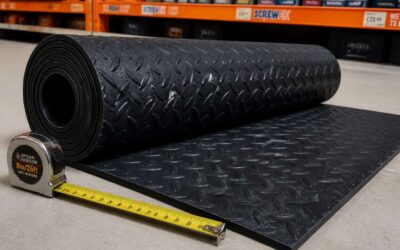
The deliberation over thickness is not about picking the heaviest slab available. It is about matching the rubber mat ute tray to the specific stresses it will endure. A thinner profile, around six millimetres, serves the weekend warrior well, offering a measure of protection for light loads. However, the daily workhorse demands a different commitment. A ten millimetre or twelve millimetre base absorbs the shock of thrown tools and shifting equipment with a quiet authority that thinner materials simply cannot muster.
Consider the physical properties you actually need from the rubber mat ute tray. The material’s hardness, measured on the Shore scale, dictates how it responds to impact. A softer compound provides superior friction to keep a load stationary. A harder compound resists the cutting action of sharp edges. You sacrifice one virtue for another. The installation itself will also influence your choice, as a rigid slab sits differently than a pliable sheet that moulds to the contours of the floor pan.
This selection is a calculation of your habits, not a guess. Every load you throw upon that surface is a test. Those who carry gravel or bricks know that a resilient, layered construction can mean the difference between a quick sweep and a patching project. For the South African user, the environment adds its own harsh criteria, from the baking sun to the red dust of the Karoo, all of which accelerate wear on inferior compounds. A common framework for comparing options involves:
– The weight of the tray’s most frequent cargo.
– The frequency of loading and unloading cycles.
– The ambient temperature range in your region.
– The type of materials that will contact the surface.
Ultimately, a mat is a sacrificial barrier. Its lifespan is a direct measure of its build quality. When you make your purchase, you are not just buying a covering, you are investing in the longevity of the vehicle that earns your living. Paying a little more for a denser rubber mat ute tray is often a fraction of the cost of repairing a corroded or dented bed later. The right choice feels solid underfoot and shows no sign of stress after a year of hard service.
Surface Texture: Non-Slip vs. Smooth
Slip resistance often becomes the silent deciding factor when you size up a rubber mat ute tray. A raised diamond pattern grips timber or a tool crate during a hard stop on the N1, while a smooth surface lets you slide heavy items from the tailgate with less effort. That trade off deserves thought.
For muddy boots and wet loads, a textured face is the safer partner. Yet smooth mats win on cleanliness. A quick sweep removes dust and debris completely, no crevices to trap the red Karoo dust that finds its way everywhere.
- Assess your typical cargo: loose loads demand aggressive tread.
- Consider cleaning time: smooth surfaces are quicker to maintain.
Your driving environment matters too. A smooth tray becomes treacherous in Highveld summer thunderstorms. The right texture balances grip with practicality, unique to every tray owner.
Custom Fit vs. Universal Options
The difference between a custom fit and a universal rubber mat ute tray shows up in the first week of use. A custom mat follows every ridge and tie-down point, so it stays put when you slam the tailgate. A universal sheet gives flexibility across different vehicles, but requires cutting to avoid gaps where debris collects.
Think about how you load your bakkie. A mat that folds over wheel arches or leaves exposed strip defeats its purpose. Custom options cost more, yet save time on installation and prevent edge curling.
- The tray’s internal dimensions, including the floor, determine the footprint.
- Full width between wheel housings ensures coverage.
- Pre-cut holes aligned with tie-down anchors simplify installation.
I find universal mats suit mixed fleets or frequent vehicle swaps. For a single bakkie, the custom route removes guesswork. Your rubber mat ute tray should sit flush under the load, not shift around.
Chemical and UV Resistance
South Africa’s summer UV index routinely exceeds 11, a level classified as extreme. Add diesel spills and battery acid, and your tray faces heavy chemical and photolytic exposure. A quality rubber mat ute tray relies on stabilisers and high-molecular-weight polymers to handle this combination.
Agricultural fertilisers, cleaning agents, and brake fluid each interact differently with elastomeric compounds. Hydrocarbon-resistant formulations may soften against strong bases. Nitrile rubber handles oils, while EPDM excels against weather and ozone. The chemical profile of your load dictates the correct compound.
Prolonged sun accelerates oxidation, surface crazing, and hardness. Carbon black and antiozonant additives preserve flexibility over years, preventing the rigidity that leads to cracking. A rubber mat ute tray left in the open loses elasticity faster than one with UV-stabilised compounds. The difference shows within months, not years.
Step-by-Step Installation Guide for Ute Tray Mats
Cleaning and Preparing the Tray Surface
Almost seventy percent of premature tray liner failures trace back to a poorly prepared surface. Before any rubber mat ute tray meets the metal, the bed must be stripped of every trace of oil, mud, and old adhesive. I have watched many installations sour because the owner mistook a quick hose down for genuine preparation.
- Scrub the entire bed with a stiff brush and a heavy duty degreaser.
- Rinse thoroughly with clean water.
- Wipe down with a lint free cloth and isopropyl alcohol.
- Allow the surface to air dry completely.
Even microscopic debris acts as a wedge between the mat and the tray, creating pockets where moisture collects. A rubber mat ute tray fitted to a clean bed will settle firmly against the steel, moving less under load and resisting the persistent creep of rust from beneath. Take the extra hour!
Aligning the Mat Correctly
After the preparation that I described above, the moment arrives to lay the rubber mat ute tray into position. Alignment demands patience. I always start at the tailgate edge, because that lip determines how the rest of the mat will settle.
- Lift the mat by its corners and hold it level.
- Lower it onto the tray, letting it rest without forcing.
- Shift it gently until the wheel arches and bolt holes line up.
Once the rubber mat ute tray sits within a few millimetres of true, press down from the centre outward. That motion pushes trapped air toward the edges. The mat must not stretch, so coax it rather than pull it. Check the gaps along both sides. A perfect fit shows an even shadow of light around the perimeter. If one side crowds the other, lift the mat completely and reset. Sliding it across the metal abrades both surfaces.
Securing with Fasteners or Adhesive
Fasteners and adhesive offer different kinds of security. A rubber mat ute tray fixed with bolts stays put under heavy loads, while adhesive gives a smooth, flush finish. I have worked with both, and the choice often comes down to how frequently you need to lift the mat for cleaning. The surface you prepared earlier determines how well either method holds, so a clean tray matters more than the product you choose.
With fasteners, align each bolt at the pre-drilled holes and tighten evenly in a sequence that pulls the mat flat. With adhesive, spread a thin bead along the perimeter and centre, then press the mat down from the middle outward.
- Fastener tension settles after the first week of driving
- Adhesive reaches full bond strength within 24 hours
Trimming for an Exact Fit
A rubber mat ute tray arrives as a flat sheet, but the real work begins with a sharp blade and a steady hand. Trimming for an exact fit transforms a universal product into something that looks factory installed. I have cut more mats than I care to count, and the process rewards patience over speed.
Mark your cutting lines with chalk or masking tape before you touch the blade. A straight edge guides the knife, and a series of shallow passes beats one deep cut every time.
- Cut from the underside to prevent chipping the surface
- Leave a 5 mm allowance for thermal expansion
- Test fit after each pass, then trim again
The rubber mat ute tray settles into its final shape after a few days of use, and those small adjustments you made early will serve you well on every load.
Maintaining and Extending the Life of Your Tray Liner
Routine Cleaning Techniques
Your bakkie tray takes a beating. Gravel dust, wet sand, and spilled fuel all settle into the grooves of a rubber mat ute tray. That abrasive film grinds against cargo every time you brake or turn. A quick rinse after a dusty run prevents the surface from wearing thin before its time.
Start with plain water and a stiff broom to lift loose grit. For oil or diesel stains, reach for a mild degreaser and a hard bristle brush. Work in one direction, pushing debris toward the tailgate. Rinse thoroughly. Leftover soap attracts dust and turns the mat slippery when wet.
Here is a routine that works for my own tray:
- Sweep out loose dirt after every trip.
- Blast off caked mud before it bakes in the sun.
- Dry the surface weekly to stop standing water from softening the rubber.
That is five minutes of work. It keeps your rubber mat ute tray flexible, grippy, and ready for the next load.
Dealing with Spills and Stains
Spills and stains are inevitable on any worksite. Petrol, diesel, cement dust, even battery acid. Each one interacts with your rubber mat ute tray differently. Some soften rubber, others crystallize into sharp crusts. The difference comes down to how quickly you respond.
A rubber mat ute tray has microscopic pores. A diesel spill left to soak seeps into those pores and stiffens the material. Cement dust reacts with moisture and hardens into a crust. Dragging cargo across that crust scratches the liner and weakens its grip.
What I keep in my bakkie:
- A spray bottle with diluted dish soap for fuel spills
- A dry scraper for cement and plaster residue
- Baking soda for acid or brake fluid
Timing beats any chemical. Treat a spill within minutes and the surface stays intact. Leave it overnight and the stain bakes in, reducing the mat’s resistance to future damage.
Storage Tips for Removable Mats
The sun is brutal on a rubber mat ute tray when it is out of the vehicle. A mat left folded in direct light develops surface cracks and loses its flexibility.
Most owners remove the mat periodically to wash the tray itself. That is the moment to store the liner correctly. First, let it dry completely out of the sun. Trapped moisture creates mould and odours.
Then, keep the mat flat. Curling it or folding it along creases weakens the rubber permanently. Lean it against a wall in a cool, shaded space if you cannot lay it flat.
Clean mats last longer than neglected ones. A quick rinse before storage removes abrasive dust that grinds into the surface over time.
For long term storage, consider these steps:
– Wash and dry the mat thoroughly
– Apply a rubber protectant to the underside
– Place it flat, away from direct sunlight
– Check it monthly for signs of stiffness
A rubber mat ute tray can last many years if treated this way. The effort is minimal, but the payoff is a liner that keeps protecting your load bed season after season.
Frequently Asked Questions About Tray Protection
Can I Use a Mattress Topper Instead of a Tray Mat?
Can you use a mattress topper instead? No! A mattress topper is designed for sleeping, not for a load bay. It absorbs water and holds dirt, which leads to mould.
Here are the main problems:
- It traps moisture against the steel.
- It moves under heavy cargo.
- It sheds fibres into your equipment.
A rubber mat ute tray handles these conditions without issue. The rubber resists water, stays secure, and washes easily. I have watched toppers fall apart in weeks. That is a costly mistake.
How Long Does a Rubber Tray Liner Last?
Ask five South African bakkie owners how long a rubber mat ute tray lasts and you will get five different answers. A quality mat typically survives five to seven years of hard work. Some last a decade if treated kindly.
Ultraviolet rays are the real enemy. Our sun bakes the rubber, causing stiffness and cracks over time. A mat parked in a garage or under a carport will outlive one exposed daily to Highveld sunshine.
The wear pattern depends on your habits:
- Sharp tools sliding around daily
- Petrol or diesel spills left unattended
- Pressure washing with harsh chemicals
Once cracks appear or the surface goes slick, the protection is gone. The lifespan ends there, no matter how old the mat is.
Are Rubber Mats Suitable for Heavy Loads?
Can a heavy load crush your rubber mat ute tray? The honest answer depends on the rubber’s thickness! A 10mm mat handles rough work, but a 5mm budget liner will fail under sharp steel. I have seen mats sliced open by loose angle iron.
The real issue is load concentration. Spread the weight. A sheet of plywood under bricks or machinery saves the rubber from punctures. The surface texture also matters, a ribbed mat grips better than a smooth one.
- Check the manufacturer’s weight rating
- Use a plywood layer for point loads
- Inspect after each heavy haul
Your rubber mat ute tray serves as a protective barrier. Manage the contact area and it will hold up for years.
Does a Tray Mat Void My Vehicle Warranty?
Does a tray mat void my vehicle warranty? Most manufacturers treat a correctly fitted rubber mat ute tray as an accessory, not a modification. Warranty claims rarely fail because of the mat itself. The trouble starts when installation interferes with vehicle systems.
Consider these points:
- Does the mat block any drain holes?
- Are sensors or mounting points covered?
- Was the mat cut or drilled into the body?
If you answer yes to any, the dealer could argue improper use. Otherwise, your warranty remains intact. Always keep the purchase receipt and note the terms. This simple documentation saves arguments later. The mat works as a protective layer, not a structural change.
Can I Paint or Seal a Rubber Tray Mat?
The urge to paint a rubber mat ute tray is understandable, but resist it. That tough rubber surface is designed to flex, and most paints crack the moment you drop a heavy toolbox. Sealants, too, often create a slick film that defeats the non-slip texture. You might think you are adding protection, but you are actually building a brittle layer that traps grit.
Consider these typical outcomes before you buy a tin of enamel:
– Peeling that looks like a failed art project
– Slippery sections where cargo slides around
– Odours that linger after hot sun exposure
A tiny chip can also let moisture creep between paint and rubber, leading to unsightly bubbles. The factory finish already resists oil and diesel. Save your effort. A rubber mat ute tray performs best when left exactly as the manufacturer made it, no artistic flair required.
Where Can I Buy Quality Ute Tray Liners?
Every bakkie owner knows the hunt. You walk past stacks of alternatives, each promising more than it delivers. Finding a quality rubber mat ute tray in South Africa requires knowing where the serious suppliers operate.
Start with agricultural equipment shops and commercial auto accessory outlets. These retailers stock heavy duty products because their customers punish cheap materials daily. Online marketplaces offer convenience, but inspect the weight and compound before purchasing. A genuine rubber mat ute tray should feel substantial, and the supplier should know its origin.
Consider this when comparing suppliers:
- Ask for the exact shore hardness rating.
- Confirm the rubber compound resists diesel and UV.
- Request a photo of the underside texture.
The right supplier will answer without hesitation. The wrong one will sell you a mat you will replace within a year.


0 Comments