Why Choose a 6mm Thick Mat
Cushioning for Sensitive Joints
Your wrists and knees should not be the loudest voice in your practice. A rubber yoga mat 6mm thick absorbs the impact where your bones meet the floor, offering a stable yet forgiving surface. This cushioning reduces stress on sensitive joints without sacrificing the grounding you need for balance.
Natural rubber compresses just enough to protect, unlike thinner mats that let the ground push back. For anyone carrying old injuries or starting anew, that extra few millimetres transforms every downward dog and seated fold. You feel supported, not sunken.
- Six millimetres of rubber dampens pressure on knees and wrists
- The material offers tactile feedback for standing poses
- It keeps you connected to the floor while softening impact
This thickness prioritises your body’s comfort during long sessions. The rubber yoga mat 6mm option is a practical choice for South African yogis who practise on hard tiled floors.
Maintaining Balance on Hard Floors
South African floors tend toward tile and concrete, both notoriously slippery under a sweaty palm or foot. A rubber yoga mat 6mm changes your relationship with that surface. The mat’s dense rubber grips the tile below while offering traction to your soles, which limits how much your feet slide.
Balance depends on proprioception, your body’s internal map of joint position. On a hard, slick floor, ankles and arches constantly correct micro-slips. The 6mm thickness firms up under pressure, giving each standing pose a steady base. Your drishti stays fixed, and transitions feel deliberate.
- Dense rubber bites into tile, limiting lateral drift
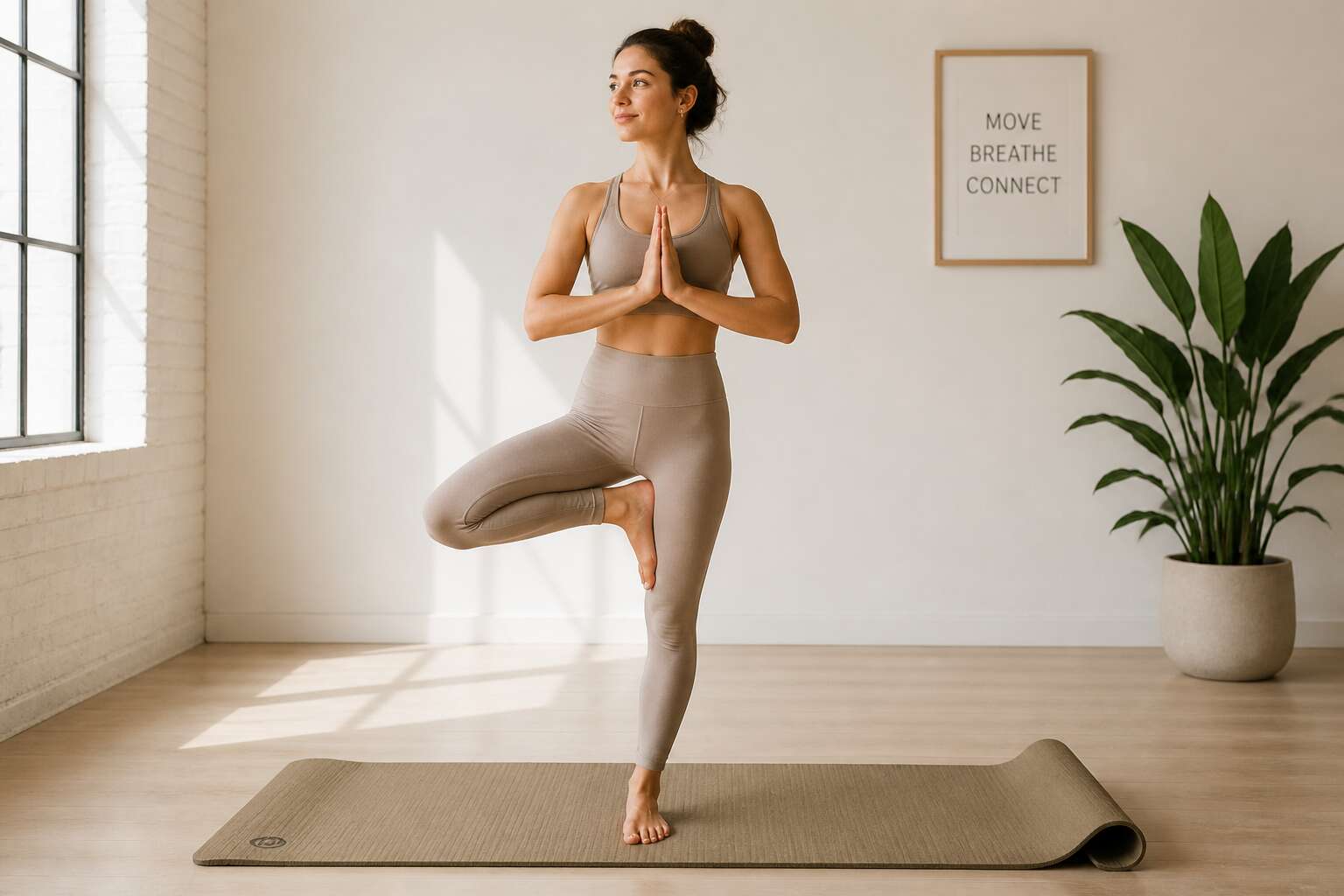
- A stable footprint lets you hold tree pose longer
This mat provides the grip your balance needs on hard floors.
A Versatile Thickness for Various Practices
According to a 2024 Cape Town studio survey, the rubber yoga mat 6mm was the most frequently used mat in group classes. This thickness holds its own throughout a practice day. You can start with a vigorous vinyasa, shift into a therapeutic yin, then end with seated breathwork. The mat delivers a stable base without the bulk of thicker options. Its dense rubber reacts to weight shifts immediately, so transitions stay defined.
Practices that suit this mat include:
- Dynamic vinyasa and power flow
- Restorative and yin sessions
- Pranayama and meditation
For South Africans who practice on polished concrete or rough timber, the 6mm dimension offers a consistent surface across every space. It works as a primary mat for home and studio alike.
How It Compares to 4mm and 8mm Mats
Why choose a mat that compromises your practice? The rubber yoga mat 6mm sits between 4mm and 8mm options. A 4mm mat gives raw ground contact, but it punishes knees during lunges. An 8mm mat feels plush, yet that extra foam deadens your connection to the floor. The 6mm version preserves feedback while offering enough give for comfort.
I have rolled all three thicknesses. The difference shows in small moments, like holding a half moon or flowing through a standing series. Six millimetres lets you feel the floor’s texture without absorbing every shock. That response changes everything!
- 4mm: sharp stability, minimal cushioning
- 6mm: balanced responsiveness, joint relief
- 8mm: soft landings, unstable edges
For South African practitioners switching between studio floors and home spaces, the rubber yoga mat 6mm adapts without demanding adjustments. It compresses slightly under load, then returns quickly, giving you a predictable platform.
Understanding Natural Rubber as a Material
Eco-Friendly Sourcing and Biodegradability
One hectare of rubber trees absorbs roughly 40 tons of carbon dioxide annually. That makes the raw material for any rubber yoga mat 6mm a surprising benefit for the climate, provided you source it properly. The Hevea brasiliensis tree produces latex that is tapped, not felled, which allows the same tree to yield latex for decades.
Yet the eco credentials depend on the supply chain. Many plantations clear primary forest to plant monoculture rubber. Certification schemes like the Forest Stewardship Council help, but they remain the exception. A truly renewable rubber yoga mat 6mm demands you ask hard questions about origin. I insist you do!
- Vulcanised natural rubber retains its shape for years
- Unvulcanised rubber biodegrades in landfill within months
- Most mats use sulphur vulcanisation, which slows breakdown
Biodegradability is then a spectrum. A mat made with natural additives will crumble safely. Those with synthetic accelerants do not.
The Grip Difference in Hot Yoga
The secret to a rubber yoga mat 6mm lies in its polymer chains. These long, coiled molecules uncoil under stress and snap back with perfect memory. This viscoelastic behaviour is why natural rubber grips your palms without sticky adhesives. It is a physical interlock, not a chemical bond.
In hot yoga, sweat destroys most surfaces. Synthetic mats turn to ice. Unvulcanised natural rubber, however, has a slightly tacky surface that increases friction when damp. The latex micro-pores act like suction cups.
- Natural rubber offers a coefficient of friction that rises with humidity
- The open cells wick sweat away from your hands
- The grip is progressive, giving you a stable base
This is why serious practitioners choose a rubber yoga mat 6mm for their hot flow. The grip engages with your body’s own chemistry, a partnership with sweat rather than a battle against it. The surface actually becomes safer as your practice intensifies.
Texture and Open-Cell vs. Closed-Cell
Most people assume a mat’s surface texture is cosmetic. It is not! On a rubber yoga mat 6mm, the material’s structure determines how it feels.
Open-cell rubber contains a labyrinth of micro-pores. These pores create a gentle drag against your palm. The texture feels slightly raw, like natural tree bark. Closed-cell rubber has a smooth, sealed surface. It repels moisture and wipes clean, but it loses that tactile quality.
Here is a quick comparison:
- Open-cell: porous, breathable, softer underfoot
- Closed-cell: dense, moisture-resistant, firmer
Texture alone doesn’t explain everything. The material’s internal bonds affect aging. Open-cell rubber absorbs skin oils over time, gaining a rich patina. Closed-cell stays uniform for years. A rubber yoga mat 6mm with open-cell texture becomes uniquely yours. The closed-cell variant remains consistent. Your preference shapes your practice.
Long-Term Durability Against Wear
Natural rubber can withstand millions of flex cycles before wear becomes visible. This durability explains why a rubber yoga mat 6mm remains a long term investment for practitioners. The material’s molecular structure absorbs repeated stress without losing its shape.
Different curing processes change how the mat ages. A properly vulcanised rubber surface resists abrasion from daily movement. It does not flake, peel, or grow brittle with normal use. The grip stays intact because the rubber itself carries the traction, not a coating.
Care and climate influence longevity:
- Keep the mat away from prolonged direct sunlight
- Roll it loosely between sessions
- Wipe with a damp cloth, not harsh solvents
A rubber yoga mat 6mm from quality natural rubber will develop a soft, lived-in feel while maintaining its structural core for years.
Selecting the Perfect Mat for Your Practice
Matching Thickness to Your Body Type
Body weight dictates how a mat feels beneath you. A 60 kilogram practitioner and a 95 kilogram practitioner do not experience the same floor, even when standing on identical surfaces. Mass changes how much shock the wrists, knees, and spine absorb during transitions. Thickness becomes a personal measurement, not a universal standard.
For lighter bodies, a rubber yoga mat 6mm may feel unnecessarily plush. For heavier frames, that same depth provides the compression buffer that makes kneeling poses tolerable. I have seen this difference play out in real classes. Weight distribution matters too:
- Broad shoulders shift load toward the wrists in downward dog.
- Longer limbs increase leverage on joints during lunges.
Matching depth to your frame is less about preference and more about physics. The right cushioning supports alignment without drawing attention to itself.
Portability Weighing Comfort vs. Convenience
Portability is where comfort and convenience diverge. A rolled rubber yoga mat 6mm feels different after a long walk to the studio. I have carried one through Johannesburg morning traffic, and the same depth that cushions your knees becomes a presence on your shoulder.
The added weight is the tradeoff for that support. Some practitioners strap the mat and barely notice it. Others feel it in their forearms by the second block. Neither response is wrong.
Consider your actual routine:
- Does the mat stay in your car between sessions?
- Do you travel to a studio before sunrise?
- Is your chosen spot a two minute walk or a long drive?
The answer tells you which side of the tradeoff matters more. A mat that never leaves the cupboard protects nothing. What you carry matters less than what you actually place on the floor.
Measuring Your Space and Storage
Somewhere between a shoebox and a tennis court lies the actual space where you practice. Most people guess. Then they buy the mat, unroll it, and the edge collides with a couch leg. The yoga universe shrinks to a compromise. A rubber yoga mat 6mm does not conform to your living room. You conform to it.
Measure the longest and widest points of your flow. Add a margin for the violent transitions. The mat needs room to exist, but you need room to flail.
– Lie down with arms extended. Mark the floor.
– Stand with feet wide. Measure that span.
– Add 15 cm to each side for comfort.
Storage is the other puzzle. A 6mm mat rolls thick and resists staying rolled. It will unspool like a stubborn reptile. You will either need a strap that actually holds or a shelf that tolerates the slack. Leaving it flat against a wall works best, but that requires a wall without clutter. The weight of this mat, and it has weight, means hooks must be secure. A falling mat at 3 a.m. sounds like a small, rubbery avalanche. No one hears it but you, and you hear it perfectly.
The practice space dictates the mat’s fate. A balcony with harsh sun will dry the rubber and crack it over time. A damp garage invites mildew into the open cells. The mat needs a stable environment, dry and cool. Some practitioners leave it in the boot of their car, which works until a Jozi heatwave turns the car into an oven. The rubber softens, the texture goes tacky, and the entire roll smells like a tyre factory. Storage is a discipline. The rubber yoga mat 6mm outlasts lazy habits, but it will not forgive them.
Budget Considerations for Premium Rubber
Premium rubber demands a price that gives some buyers pause. The pause is justified. A rubber yoga mat 6mm from a serious manufacturer costs more than the foam roll, more than the PVC sheet, more than the budget stack near the shop counter. The raw material explains the difference:
- Natural rubber sourcing and processing.
- Curing agents and carbon black.
- Quality control for consistent density.
The arithmetic changes with frequent practice. A cheap mat degrades in months, the surface going slick, the edges lifting. The rubber yoga mat 6mm holds its structure for years. Divide the higher price by the duration of use and the expense becomes modest. The alternative is buying twice, and buying twice always costs more.
Reading Reviews Beyond Brand Names
Seventy percent of yoga students make their mat decision after reading online reviews, not marketing copy. That statistic is easy to believe. The challenge is separating useful reviews from the noise. When you search for a rubber yoga mat 6mm, the reviews pile up quickly. Many repeat the same vague praise: ‘great mat, very grippy.’ Look deeper. Find comments that describe specific behaviours after months of use.
- Does the mat stay put during hot classes?
- How does it handle the humidity of a Durban summer?
- Any mention of odour from the natural rubber?
These details matter more than star ratings. A rubber yoga mat 6mm might earn five stars from an occasional practitioner, but a daily practitioner will note its firmness under pressure. Read for context. One reviewer’s ‘too heavy’ could mean ‘perfectly stable’ for another. Compare notes across different body weights and practice styles. The mat that suits you is described in those paragraphs.
Maintaining and Extending the Life of Your Mat
Daily Wipe-Down Routines
A rubber yoga mat 6mm is a significant investment in your practice, and neglect is its slow poison. Daily sweat, skin oils, and the dust of the world settle into its porous surface. This residue breaks down the natural rubber over time, turning a supple foundation into a brittle, cracking shell. The ritual of the wipe-down is your first line of defence against this decay.
Using a simple spray bottle, you can craft a gentle cleansing solution. A mixture of water and a few drops of mild dish soap is sufficient. For a deeper antiseptic effect, add a splash of witch hazel.
– Avoid harsh chemicals that degrade the rubber.
– Use a soft, non-abrasive cloth.
– Mix your solution fresh weekly for optimal potency.
The act itself takes less than a minute. Wipe the surface immediately after your session, paying attention to the zones where your hands and feet meet the mat. This removes the acidic residue that shadows every down-dog. Do not let the mat sit wet; moisture is the enemy of the material’s integrity. A quick dry with a clean towel prevents the open cells from absorbing excess water, which can lead to a breakdown of the mat’s internal structure. This simple, daily discipline ensures the rubber yoga mat 6mm retains its grip and cushioning for years, long after the novelty of a new purchase has faded into the quiet comfort of a trusted tool.
Deep Cleaning with Natural Solutions
Over 70% of a mat’s structural failure stems from embedded residues that a daily cloth cannot reach. Here, where coastal humidity and highveld dust collide, your rubber yoga mat 6mm demands a monthly deep clean. A natural solution works best, protecting the material’s elasticity while eliminating the microbial load.
My preferred blend uses simple kitchen ingredients that break down oils without attacking the rubber’s cellular structure.
- Combine two cups of warm water with a quarter cup of white vinegar.
- Add five drops of tea tree oil for its potent antifungal action.
- Spray the mat and let the solution sit for two minutes.
Wipe the surface in circular motions, then rinse with a damp cloth. Hang the mat over a rod to air dry thoroughly in the shade. Direct African sunlight warps the rubber. This bi-weekly ritual preserves the grip and leaves your foundation free of odours, guaranteeing a longer, safer lifespan for your rubber yoga mat 6mm.
Drying and Rolling Best Practices
The drying ritual is often skipped entirely. A rubber yoga mat 6mm holds moisture in its cellular structure long after the visible surface feels dry. I hang mine over a wooden rod in the shade, away from the highveld sun. Ultraviolet rays cause the rubber to harden and crack.
Rolling also demands a particular technique. The sequence is simple:
- Start at the top edge and press out trapped air.
- Roll tightly, keeping both edges aligned.
- Store upright against a wall, away from heavy objects.
Folding is the enemy. Permanent creases become structural weak points, and the cushioning of the rubber yoga mat 6mm compresses when weight rests on it.
When to Retire Your Mat
Even the most resilient rubber yoga mat 6mm eventually whispers its own biography through its wear patterns. The surface begins to feel slick in the palms, not from sweat, but from the smooth compression of countless downward dogs. The cushioning loses its spring, feeling more like cardboard than rubber.
Signs that your mat is transitioning from a tool to a liability include these indicators:
– The grip fails on both hands and feet, even when dry.
– Visible thinning at the heel and toe zones.
– A persistent odour that remains after a deep clean.
Instability during balance poses is the clearest signal. When the mat feels more like a hazard than a support system, its functional lifespan is over. Continuing to practice on a compromised surface risks injury. The rubber yoga mat 6mm has served its purpose. Retire it responsibly, perhaps as a garden kneeling pad or a workshop floor mat. Sustainable disposal honours the material, and your practice will benefit from a replacement that offers the proper support your joints depend on. Your body will thank you.
Exploring Versatile Uses Beyond Yoga
Pilates and Core Strength Workouts
Almost a third of South Africans who own a rubber yoga mat 6mm admit to pressing it into service for everything from knee pads during home DIY to a protective layer for camping gear. That thickness absorbs impact when you kneel to paint a skirting board or stretch your hip flexors before a long drive.
Beyond the obvious, this mat excels as a stable base for balance drills, such as single leg stands while brushing your teeth. It also works well for:
- a cushioned surface for barbell rows
- a grippy platform for slide lunges
- a soft landing for box step ups
I have used mine to keep a wobbling office chair from sliding on a laminate floor, and it has survived being dragged to the park for a makeshift stretching zone.
Meditation Cushioning and Comfort
A rubber yoga mat 6mm rarely stays in the yoga studio. Take a Sunday braai: the mat insulates a cooler box from cold stone. My own mat has doubled as a cushioned surface for chopping firewood.
The dense rubber solves peculiar household problems:
- Place it under a portable dishwasher to absorb vibration.
- Fold it into a splint for a broken camping chair.
- Use it as a soft landing for toddlers learning to climb.
Each use exploits the mat’s capacity to resist compression and return to shape. Gardeners in Cape Town use a rubber yoga mat 6mm to buffer knees against rocky soil. The material does not absorb water, so it dries quickly after a heavy mist or an accidental spill.
High-Intensity Training and Floor Exercises
The true test of any fitness surface emerges during high-intensity training, where sweat and speed collide. A rubber yoga mat 6mm doesn’t flinch when the intensity spikes. The tacky surface grips the floor beneath it, refusing to slide even when you are dripping. For burpees, mountain climbers, or jump squats, this stability is non-negotiable. Your focus shifts entirely to the movement, because the ground beneath you is absolute.
I have watched people wrestle with towels under their mats on hardwood studios, a safety hazard disguised as a workout. The 6mm rubber formulation adds enough heft to stay planted. It becomes a landing zone for plyometric work, absorbing the shock that often punishes ankles and knees. You can push hard, knowing the cushioning protects your joints from the repetitive impact of explosive exercises. This is where the mat’s density earns its place in a home gym.
Floor exercises benefit from the same resilient support. Planks, glute bridges, and core rollouts demand a stable base. The rubber yoga mat 6mm provides that foundation without excessive padding that destabilizes. You press your hands into it, and it presses back. The grip works in your favour during side lunges or when holding a low squat, preventing your feet from slipping outward. This is not a luxury; it is a functional tool for maintaining form.
During a recent session, I abandoned the carpeted living room for a bare concrete slab. The rubber mat transformed that cold, hard space into a private studio. The difference in comfort for your spine and wrists during a prone hold is significant. It sits at the sweet spot for those who alternate between HIIT sessions and slower, controlled floor work. My recommendation is to fold it for travel, but the true value lies in unrolling it at home, where the work truly happens. A suitable approach for your own practice
– Landmine presses for shoulder stability
– Single leg deadlifts for balance
– Hollow body holds for core tension
Travel-Friendly Options for Your Practice
A rubber yoga mat 6mm often feels like a one-trick pony until you leave the studio with it. The truth is, this mat leaves the yoga room with ease. It works for landmine presses, single leg deadlifts, and hollow body holds. The surface does not discriminate between a sun salutation and a strength circuit. It simply provides the traction needed for focus.
Travel presents a different challenge. You can not treat this mat like a thin travel towel. The weight is noticeable in a backpack. Yet, the durability means you can toss it onto gravel, sand, or a concrete balcony without worry.
– Use it as a kneeling pad for gardening or home projects.
– Roll it out for a picnic on the Highveld grass.
– Protect your car boot from muddy gear and heavy boxes.
The material shrugs off weather changes. You do not need a pristine studio floor. You only need a surface that stays put. For the unpredictable South African climate, from a misty Cape Town morning to a dry Karoo afternoon, this mat holds its ground.

0 Comments