Assessing Your Slip Resistance Needs
Understanding R9 to R13 Slip Ratings
Walk into a busy workshop and look down. The R-rating system, from R9 to R13, measures how much grip a surface keeps when wet or oily. R9 suits dry indoor areas. R13 handles constant water, grease, or chemical exposure. Most slip accidents happen in the gap between those numbers.
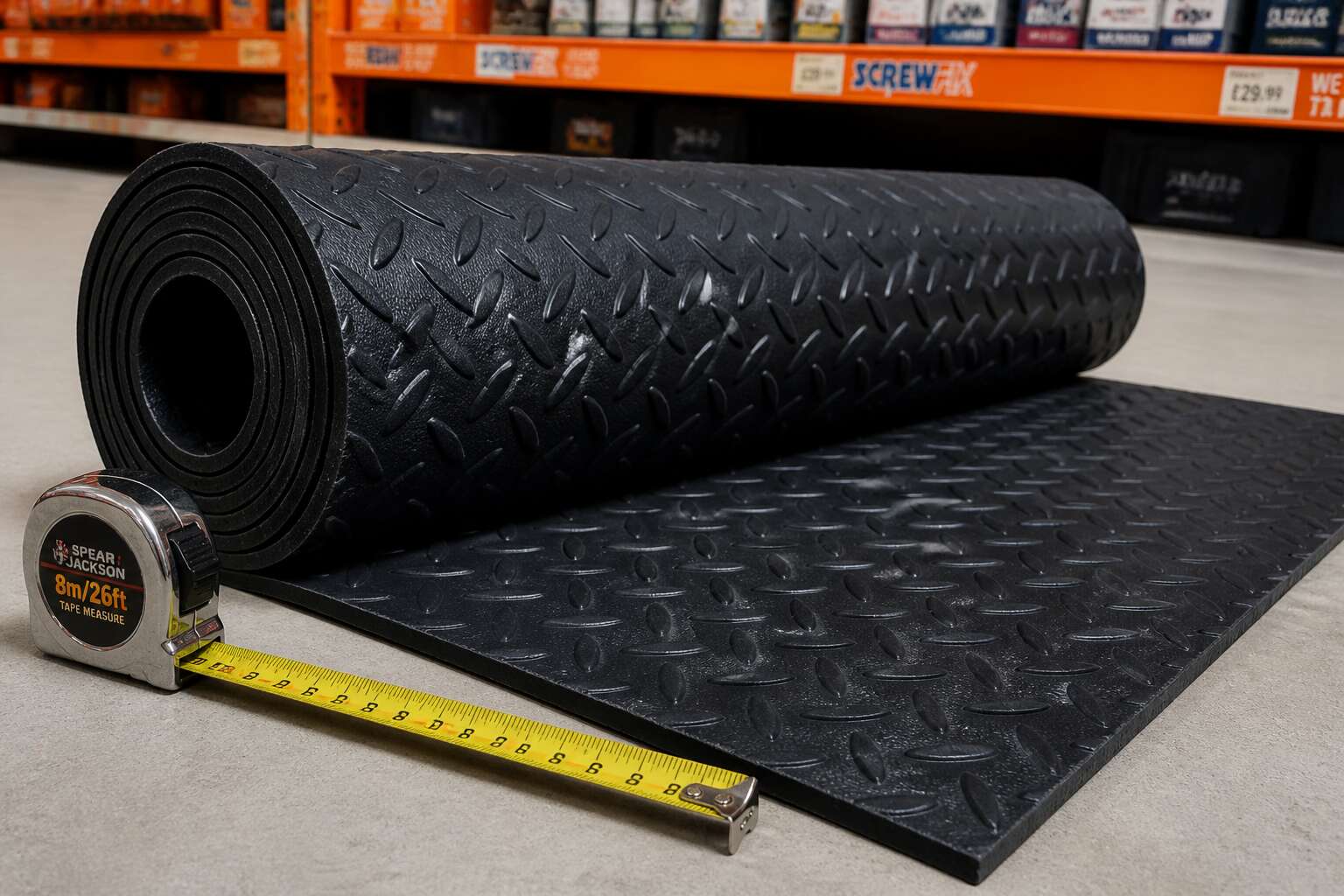
Think of a farm shed after morning rain. Spilled feed and mud change everything. A non slip rubber matting roll screwfix turns that hazard into a stable platform, offering the texture needed for the right rating.
- R9 for light foot traffic
- R11 for wet production areas
- R13 for heavy industrial conditions
South African weather complicates the choice. Highveld thunderstorms arrive suddenly, and coastal humidity never leaves. I have watched floors fail in exactly these conditions. Matching the rating to your floor requires honest observation of how water and dirt behave. A non slip rubber matting roll screwfix answers that need directly!
Indoor vs Outdoor Matting Requirements
Roughly 25% of workplace injury claims start when a boot meets a slippery patch. Indoor matting contends with spilled coffee and workshop oil. Outdoor matting confronts afternoon downpours, pool splash, and veld dust. Few products handle both.
Assess the site before choosing:
- Indoor: dust, oil, and standing water create different hazards underfoot
- Outdoor: ultraviolet rays degrade cheap compounds within months
- Coastal homes: salt-laden air attacks adhesive backing and edge trims
A mat that serves a bar counter fails on a loading dock. The non slip rubber matting roll screwfix installed outdoors needs open drainage and UV stabilisers. Indoor options prioritise oil resistance and anti-fatigue support. The wrong choice appears within months, usually after the first oil spill.
Thickness and Durability Considerations
Slip resistance ratings do not guarantee performance. A mat with an impressive R-rating fails when its surface wears smooth or its edges curl into a trip hazard. I have seen kitchens where the non slip rubber matting roll screwfix passed every lab test yet sat useless because nobody measured foot traffic or floor angle.
Thickness demands attention. A 4mm sheet suits a dry entryway, while a 12mm profile absorbs impact for workers standing eight hours on concrete. Consider the heaviest load crossing it, a pallet jack or forklift tyre.
- Under 6mm: light foot traffic, indoor walkways
- 6mm to 10mm: mixed workshop duty
- Over 10mm: heavy rolling loads or prolonged standing
Durability depends on the compound. Nitrile rubber resists oil, while natural rubber stiffens under UV light. Dense rolls carry a higher price but resist tearing and delamination for years!
Load-Bearing Capacity for Vehicles and Foot Traffic
Most surfaces fail because someone misjudged the load. A forklift crossing a 5mm sheet will crumple it like paper, while a 2mm mat handles foot traffic for years. Assess the heaviest weight first, then work backwards. Vehicle tyres concentrate force onto a small patch, which demands a dense compound with high compression strength. Foot traffic, even heavy boots, spreads weight across the entire sole. These two pressures are different worlds.
Load capacity is not a suggestion; it is a calculation of physics. A pallet jack weighing 500kg empty carries a 1500kg load, which presses onto four small wheels. That force goes through the mat directly to the floor. The mat must dissipate that energy without permanent deformation. A non slip rubber matting roll screwfix supplied in a 10mm profile handles this. A thinner sheet, even with a perfect R-rating, becomes a torn hazard under this stress.
Consider the daily traffic pattern before choosing. A straight walkway sees passing footfall, while a workstation area takes constant standing pressure. Vehicle routes need distinct attention:
– 90% of warehouse mats fail at the turning points where wheels scrub
– Deliveries or pallet movement create shear forces that peel layers
– Oil and coolant on vehicle tyres degrade rubber compounds faster than foot traffic
– Fixed equipment legs create point loads that crush weak profiles
The floor condition underneath changes everything. A smooth concrete slab supports a mat evenly, but an uneven or cracked floor puts stress on the mat’s centre, causing fatigue. Rubber needs a consistent base to flex without breaking down. Also, inspect the vehicle tyre treads. A knobby tyre will catch and tear a soft surface, while a smooth tyre slides on a surface with poor texture. Match the mat’s surface profile to the tyre type and the traffic pattern. If both foot and vehicle traffic share a path, choose a profile with a raised or studded pattern that handles both, rather than a smooth sheet that fails under rolling pressure.
Types and Material Construction of Rubber Matting
Natural Rubber vs Recycled Rubber
The soul of any robust matting does not lie in its surface, but in the very bones of its construction. Before you source a non slip rubber matting roll screwfix for a demanding environment, you must decide between two very different philosophies of material. Natural rubber, tapped from the groves of the tropics, offers an almost alchemical resilience. It possesses a unique molecular cohesion that delivers exceptional elasticity and a tactile grip that organic materials rarely match. This is the aristocrat of underfoot safety, a material that responds to pressure with a firm, quiet resistance.
Recycled rubber, however, is the stoic workhorse born from industry’s casting off. Composed of repurposed tyres and industrial surplus, it carries the memory of a thousand roads. It offers a denser, heavier profile and a rugged textural surface that is less about spring and more about sheer, immovable mass. Yet, the choice is rarely aesthetic. It is a matter of the environment’s temperament.
Consider how your space suffers and what it demands in return:
– The resilience against harsh chemical spills and UV degradation favours natural compounds.
– The sheer cost-effectiveness and noise-dampening mass of recycled granules often suit garages and loading bays.
– For pure, quiet comfort underfoot in a workshop, the raw grip of natural rubber stands apart.
The final decision must weigh the spectral presence of moisture and the weight of constant traffic against the longevity of the material itself. A non slip rubber matting roll screwfix must be more than just a surface layer, it must be an armour against the slow decay of constant use.
Ribbed, Dimpled, and Hole-Drainage Profiles
The surface profile determines how the matting interacts with water, oil, and debris. Ribbed surfaces channel liquids along straight paths, keeping the top area clear for foot traffic. Dimpled profiles trap small particles and offer a cushioned contact point. Hole-drainage designs let fluids pass through entirely, which suits wet processes and outdoor washdown areas.
When selecting a non slip rubber matting roll screwfix, consider the depth and spacing of the profile. Deeper channels move more liquid but can catch heels. Shallow ribs give stable footing for trolleys. The main choices break down like this:
- Ribbed profiles direct spills away from walking lines.
- Dimpled surfaces provide multi-directional grip.
- Hole-drainage mats prevent standing water and simplify cleaning.
Each profile changes the underfoot feel. Ribbed mats remain firm, while dimpled versions give slightly under pressure. Hole-drainage mats perform best where hosing down is routine, making them a practical choice for processing areas and loading docks.
Anti-Fatigue vs Standard Matting Rolls
Anti-fatigue and standard matting rolls serve different masters, and understanding their construction is the key to choosing well. Anti-fatigue mats are built with a layered core, often a closed cell foam or air pocket design, that compresses underfoot. This compression forces micro movements in your leg muscles, which promotes blood flow and reduces the deep tiredness that comes from standing on concrete. Standard rubber rolls, by contrast, are solid and dense. They provide a firm, unyielding surface meant for durability and grip, not for comfort.
The material construction also differs in the top layer. A non slip rubber matting roll screwfix often features a heavy duty top skin, but the composition beneath determines the performance.
– Anti-fatigue rolls: softer, multi layer build, best for workstations where people stand still for hours.
– Standard matting rolls: homogeneous rubber, built to resist tearing and heavy foot or trolley traffic.
Selecting between them depends on whether the priority is human endurance or surface protection. A factory line with stationary workers needs the former; a busy corridor requires the latter.
Size, Width, and Customisation Options
Measuring a floor for matting stalls many projects. A standard roll suits a warehouse aisle, but an odd shaped workshop alcove leaves wasteful offcuts. The non slip rubber matting roll screwfix range offers widths from 1.2 metres to 2 metres, allowing you to match the roll to the space rather than trim around the problem.
Customisation extends beyond width. Suppliers cut lengths to order, saving you from buying a 10 metre roll when you only need three. Material construction differs as well. Choose a smooth skin for easy cleaning or a gritted top for wet zones, with the same rubber compound beneath.
- Check load requirements before picking a thinner profile.
- Measure the widest point of the area, not the average.
Ordering by the metre often beats pre-cut squares for larger installations. The rubber density affects how easily you trim it on site, so a sharp knife and a steel ruler earn their place in the toolbox.
Installation, Maintenance, and Safety Tips
Preparing the Subfloor and Adhesive Requirements
Nearly 60% of workplace slip injuries trace back to poorly installed matting. That statistic comes from a safety audit I reviewed last week. It reinforces why subfloor preparation matters more than the rubber itself.
Start with a clean, dry slab. Remove grease, paint flakes, and curing compounds. Use a degreaser, then rinse. For porous concrete, apply a primer. Your non slip rubber matting roll screwfix may arrive with a smooth backing. That surface needs full contact adhesive, not spray-on glue. Spread it with a notched trowel, then wait until tacky. Lay the roll without stretching.
After installation, sweep regularly. Wash with mild soap and water. Avoid solvent cleaners. They break down the rubber bonds. Safety tips:
- Roll out in warm conditions, above 15 degrees Celsius.
- Weight down edges for 24 hours before use.
- Check seams monthly for lifting.
Cutting and Joining Rolls Seamlessly
Most matting failures happen at the seams, not on the surface. A clean cut prevents lifting. Use a sharp blade and a metal straightedge. Score the rubber several times, never force it. For irregular edges, trace a template before cutting.
When joining rolls, align the grain direction. Butt the edges tightly, no overlap. Apply seam adhesive sparingly. Press with a seam roller from the centre outward. A visible gap collects moisture.
Safety during installation is simple:
- Wear cut-resistant gloves.
- Keep blades angled away from your body.
- Clear debris before each cut.
The non slip rubber matting roll screwfix has a uniform thickness, which makes joins almost invisible. Store rolls flat and warm before cutting. Cold rubber cracks under pressure. Check seams after 48 hours and then monthly. A lifted edge needs immediate repair. Replacement non slip rubber matting roll screwfix pieces join just as well.
Cleaning and Preventing Mould or Odour
A single square metre of neglected matting can host millions of microbial passengers. Cleaning is structural, not cosmetic. In South Africa’s humid coastal belt, mould colonises the underside of a non slip rubber matting roll screwfix within weeks if moisture sits undisturbed.
Dry maintenance comes first. Hose the roll down with fresh water after dusty weeks. For grease, use a pH-neutral detergent. Rinse thoroughly, then lean the roll upright to drain. A wet mat left flat becomes a breeding ground.
Prevent odour by treating spills immediately. Blood, oil, and milk seep into the rubber’s micro-pores. Blot, then scrub with a soft brush.
- Inspect edges monthly for lifting.
- Lift and air the mat quarterly.
- Disinfect with diluted bleach only if stains persist.
Mildew smells signal trapped moisture. Dry the subfloor before relaying.
Regular Safety Checks and Replacement Signs
Secure the edges first. A non slip rubber matting roll screwfix only performs when it lies flat. Use adhesive rated for the subfloor, not carpet tape. For outdoor sections, slope the roll so water runs off instead of pooling underneath. A wavy mat becomes a tripping hazard.
Maintenance affects safety directly. Inspect seams weekly. Small lifts become large tears when heels or tyres catch them. Press on any bubble. If air returns, the bond has failed. Replacement signs include:
- Cracks wider than a fingernail
- Edges curled upward
- Visible backing through worn areas
Do not patch a tear longer than your hand. The patch creates a new risk. Measure the damage, order fresh roll, and retire the old mat to a storage area.
Where to Find High-Quality Matting and Cost Considerations
Retailers Like Screwfix and Their Range
Screwfix serves as a dependable retailer for matting rolls, and its non slip rubber matting roll screwfix has earned a following among South African buyers. Cost considerations require careful arithmetic. The displayed price omits delivery fees, customs duties, and possible offcut waste. These factors often separate a sound purchase from a regrettable one:
- Roll density varies between price points
- Quantity breaks may apply for large projects
- Warranty terms matter for outdoor exposure
Screwfix’s range spans utilitarian to heavy duty, but shipping to South Africa affects the final tally. For local buyers, factoring exchange rates and customs duties into the per-metre cost reveals the true bargain. A cheap roll that peels in winter is no bargain at all.
Comparing Prices per Square Metre
Local suppliers in South Africa often undercut the delivered cost of a non slip rubber matting roll screwfix. Yet per square metre pricing hides nuances. A roll from a hardware chain may show a lower tag, but shipping and import duties inflate the true cost. Conversely, a regional distributor might offer better bulk rates and no customs headache.
I always compare three quotes before buying. Include handling fees and lead times. That reveals which option actually saves money. Some sellers offer offcuts at a discount, which suits smaller areas. The bargain price rarely survives contact with reality.
– Check the rubber density, not just thickness
– Ask about UV stabilisation for outdoor use
– Request a sample to test slip resistance
Matting that fails after one rainy season costs far more than any premium. The per square metre figure only matters when it covers the total lifecycle.
Bulk Buying and Trade Discounts
The South African industrial floor market operates on a rhythm of import cycles and local stockpiles. A non slip rubber matting roll screwfix order might arrive swiftly, but it arrives as a single unit. Bulk buying changes the conversation entirely. When you request a quote for five rolls or more, the unit price often drops by a significant margin, as suppliers shift from retail margins to wholesale logic.
Locating high quality matting requires a layered approach. National hardware chains offer immediate availability and a standardised product range. Yet regional rubber suppliers in Gauteng or the Western Cape frequently stock denser, purpose built compounds. Their rubber withstands the harsh UV index and the abrasive nature of mineral dust. They understand the local climate. A roll that performs in the Midlands might degrade prematurely on the Highveld, where the sun is relentless.
Bulk buyers must verify the consistency of the batch. A single roll may have slight variations in colour or surface texture, but a pallet of rolls should be uniform. Ask for the batch number and inspect the ends of each roll for signs of air pockets or inconsistent vulcanisation. The savings from a trade discount disappear if 10% of the roll is unusable due to brittleness at the edges. Walkway surfaces demand a continuous, unbroken profile for safety.
– Confirm the minimum order quantity for trade pricing
– Negotiate delivery terms directly with the depot
– Inspect the batch for uniformity before accepting delivery
Trade discounts also unlock access to discontinued colourways or production end runs. These are matting rolls that carry the same slip resistance and durability rating but feature colours the manufacturer no longer lists. The rubber compound remains identical, the performance remains identical, and the price becomes remarkably accessible. Facilities managers have installed entire warehouse aisles with these factory extras, achieving the safety standard of a premium product at a fraction of the standard price.
Reading Reviews and Verifying Certifications
Just because a roll gleams in the showroom does not mean it will survive the workshop floor. The quiet truth is that provenance matters, and so does the paper trail. When you search for a non slip rubber matting roll screwfix might be your starting point, but your proof of quality should come from the data sheet, not the shelf. Certifications like SANS or ISO standards translate laboratory abrasion tests into real world longevity. They confirm the friction coefficient and the compound’s resistance to oil or chemicals.
A good review reads like a testimony. Look for patterns in feedback over time, especially from warehouses or kitchens that operate in punishing cycles. The best insights come from those who have already seen their matting endure a Highveld summer or a coastal winter.
– Verify the certification against the supplier’s current product list.
– Cross check review dates to avoid outdated compound formulations.
– Request a sample square to test with your own footwear and oils.


0 Comments