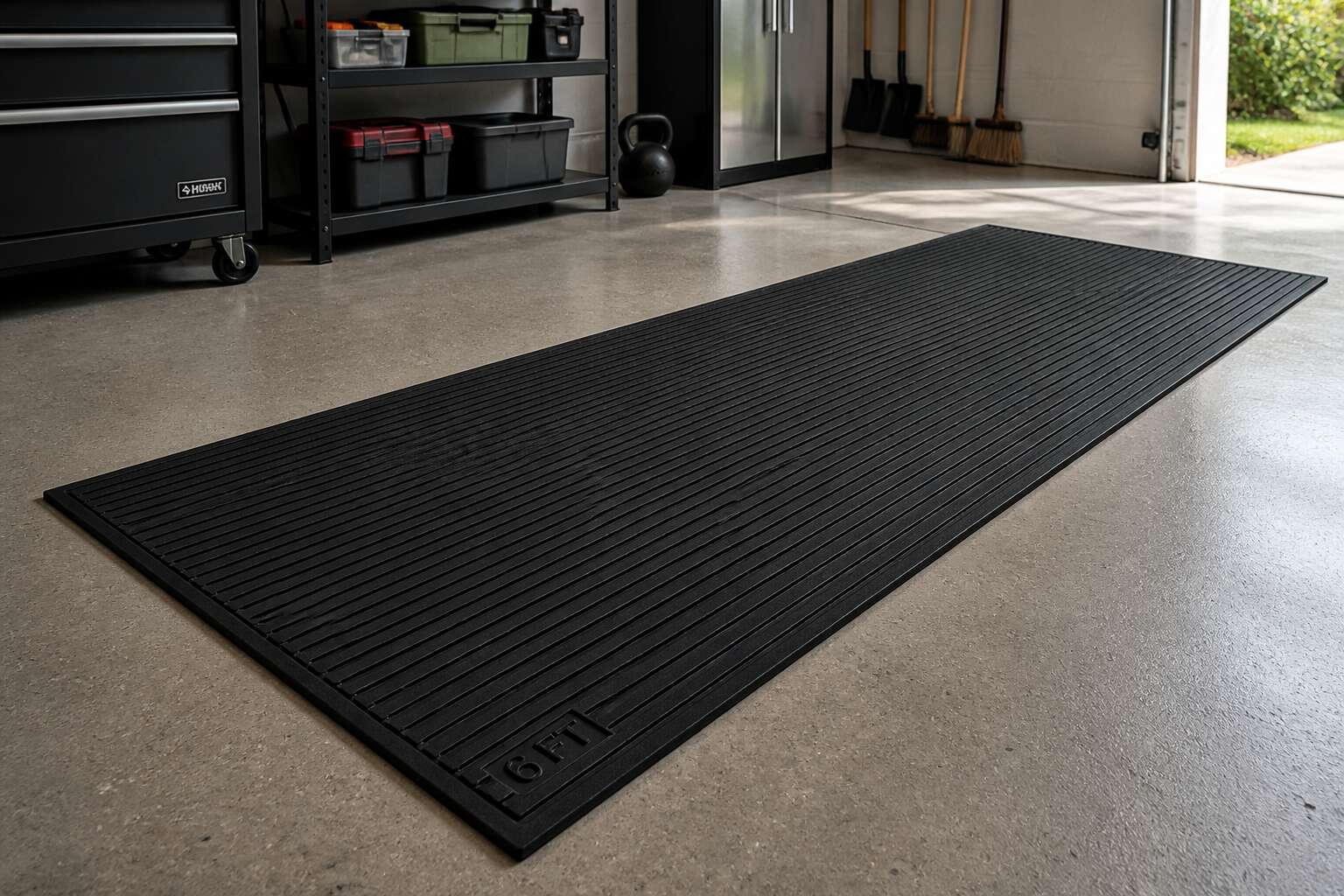
Key Benefits of a 6-Foot Rubber Mat
Floor Protection and Impact Absorption
Concrete floors in South African industrial spaces absorb relentless punishment from machinery, trolleys, and accidental drops. Over time, this micro-damage compounds into costly repairs. A rubber mat 6ft acts as a sacrificial layer, taking the brunt of the impact so the substrate beneath remains intact.
- Distributing concentrated point loads across a wider surface area
- Reducing the transmission of shock to underlying seams and joints
- Preventing scuffs, chips, and water damage from daily operations
The material’s closed-cell structure compresses under load, converting kinetic energy into heat rather than structural stress. This absorption protects both the floor and the equipment. Drop a heavy object on a bare slab and you risk a spall; drop it on a 6-foot rubber mat and you hear a dull thud instead of a sharp crack.
Slip Resistance and Safety Features
In a country where sudden Highveld thunderstorms turn loading docks into slick hazards, the rubber mat 6ft provides reliable grip. Its textured surface, engineered with a diamond pattern, holds boot soles and trolley wheels. Water, oil, or dust no longer compromise a worker’s footing.
Consider the safety features embedded in this mat’s design. Raised nubs channel moisture away from the contact point. Perimeter edges taper into a low ramp, reducing trip risks at thresholds. The material’s innate elasticity absorbs the initial slip energy before it becomes a fall.
- High-traction rubber compound for wet or greasy conditions
- Chamfered borders prevent snagging under heavy foot traffic
- Slip-resistant backing keeps the mat stationary even during forklift turns
Each feature works together, making the rubber mat 6ft a dependable safety layer. The floor beneath stays dry and clean, while workers move with confidence across surfaces that once demanded caution.
Long-Lasting Durability and Wear Resistance
Six feet of continuous rubber offers a resilience that outlasts cheaper alternatives. This mat absorbs the daily grind of pallet jacks, steel-toed boots, and dragging cargo without cracking or thinning. The rubber mat 6ft survives years of warehouse traffic because its dense compound resists abrasion and UV degradation. Unlike foam or PVC options, it does not peel or compress permanently.
Consider the stress points: forklift wheels pivot, boxes scrape, and sharp edges dig in. The mat’s thickness and vulcanized construction keep it intact. It also retains its shape in extreme heat or cold, which matters across South African climates. A durable surface means fewer replacements and lower long-term costs.
Here is what contributes to that longevity:
– High-density rubber that shrugs off scrapes and impact
– Reinforced edges that stop fraying or splitting
– UV stabilizers to prevent cracking under harsh sun
Ultimately, the rubber mat 6ft delivers consistent performance over thousands of hours. Investing in this kind of wear resistance protects your floor and your budget.
Easy Cleaning and Low Maintenance
Hosed down at the end of a shift, a rubber mat 6ft sheds dust and grime that would permanently stain carpet or absorb into foam. A quick sweep handles the daily build-up. For stubborn residues, warm soapy water and a stiff brush restore the surface to like-new condition.
This low maintenance extends beyond simple cleaning. The non-porous compound shrugs off oil, hydraulic fluid, and chemical spills without swelling or discoloration. Consider the time saved:
- No vacuuming or extraction needed
- No special cleaning agents required
- No drying period before putting it back
I have watched teams replace other mats monthly. With this mat, a weekly wipe keeps it presentable and hygienic. That is the quiet advantage of a surface that asks for almost nothing in return.
Versatility Across Different Environments
In a country where workshops contend with both coastal humidity and Highveld dust, the rubber mat 6ft works in every setting. One day it sits on a concrete factory floor, the next it lines a pedestrian walkway, the day after it serves as a station pad in an outdoor wash bay. The compound resists UV damage, moisture absorption, and temperature swings that degrade other materials.
Environments that suit this mat include:
- Factories and assembly lines
- Outdoor loading zones
- Change rooms and ablution areas
Each space demands different performance. The mat shifts between them without modification.
How to Select the Right Thickness and Material
Common Thickness Options and Their Ideal Uses
The difference between a mat that lasts a decade and one that fails in a year often comes down to a few millimetres. When I select a rubber mat 6ft, I measure the load it will carry, not the look.
For light foot traffic in a retail entry, a 6mm profile works. An 8mm to 10mm mat handles the weight of a car or a workbench. Industrial workshops with forklifts demand a 12mm thickness. Here are the common thickness options and their ideal settings:
– 6mm: entryways and dry areas.
– 8mm: gyms and moderate machinery.
– 10mm: wet environments and rolling loads.
– 12mm: extreme impact or point loading.
Material selection matters just as much. EPDM resists sun and rain, so it works outdoors. Nitrile repels oil and fuel, making it the choice for mechanics. Recycled SBR offers a sturdy, budget friendly option. Match the compound to the environment, and your rubber mat 6ft will perform.
Natural Rubber vs. Synthetic Rubber Blends
South Africa’s UV index is not a suggestion; it is a verdict. Selecting a rubber mat 6ft is a dialogue with this reality. Natural rubber, harvested from hevea trees, offers an almost organic elasticity, yet it wilts under relentless exposure. In the Highveld’s harsh sunlight, it becomes brittle faster than a synthetic counterpart. Synthetic blends are engineered for endurance against specific foes, whether ozone, oil, or coastal salt air.
The thickness selection of a rubber mat 6ft follows the same principle of scrutiny. A light footfall in a Johannesburg showroom demands a thin profile, but a workshop subject to rolling pallet jacks requires a firmer commitment. I fitted a 6mm mat in a mechanic’s bay and watched it buckle within months. The margin between a few millimetres is the margin between failure and quiet longevity! Match the compound and gauge to the load, not to the price tag.
Surface Texture and Grip Patterns
Surface texture dictates how a rubber mat 6ft behaves underfoot or under wheel. A smooth surface suits display floors where trolleys glide, while raised diamonds or a pebbled finish lock boots in place against accidental slides. Thickness works with the texture; a 9mm mat with a deep ribbed pattern offers a different grip level than a 3mm mat with a fine mesh.
For oily workshop floors, consider these grip patterns:
- Open grid, which allows fluids to escape beneath the mat
- Ribbed, to channel water and debris toward edges
- Pebbled, for quiet comfort during prolonged standing
An open grid pattern prevents slick patches from forming. A close cellular texture, however, collects dust and demands constant attention. Match the surface character to the real conditions of your floor, not to a showroom shine.
Weight, Portability, and Installation Considerations
Choosing the correct thickness for a rubber mat 6ft begins with traffic volume. A 3mm sheet suits light domestic use, while 9mm absorbs impact in workshops. Heavier material brings stability. A 12kg mat resists curling, but moving it alone becomes a chore. For portability, split large areas into smaller mats. Installation demands attention to subfloor condition. Dust and grease ruin adhesion. When rolling out, let the rubber settle for an hour. Use weights at corners. Check for these essentials:
- Subfloor is clean and completely dry
- Edges are flush against walls
- Expansion gaps of 2mm for temperature shifts
The wrong weight leads to slippage or difficult handling. Choose what you can manage.
Top Applications for a Large Rubber Mat
Home Gyms and Heavy Equipment Bases
Seventy percent of industrial floor failures in Gauteng begin with a single misplaced machine foot. That is why a rubber mat 6ft has become the essential layer for home gyms and heavy equipment bases!
For home setups, the mat designates a clean zone for your deadlift platform or spin bike, keeping chalk dust contained. For industrial bases, the same mat provides a stable footing for a 500 kg compressor or a hydraulic press. Common applications include:
- Under a treadmill that sees daily sprints.
- Beneath a generator on a concrete slab.
- Below a lathe with coolant leaks.
Each spot benefits from the mat’s uniform surface. The rubber mat 6ft offers a simple, effective way to keep equipment level and floors intact, without resorting to plywood shims or creative engineering.
Garage Flooring and Workshop Protection
Garage floors carry the weight of vehicles and the scars of dropped tools. A single spanner can crack a concrete slab that has held a bakkie for years. The rubber mat 6ft changes that by absorbing impacts and separating the work from the raw floor.
In a typical workshop, you have a workbench with a vice, a grinder that throws sparks, and a parts washer that drips solvent. Placing a rubber mat 6ft under these stations catches spills and cushions dropped components before they chip the concrete.
- Under a workbench where tools and metal offcuts drop repeatedly
- Across a garage bay where engine oil and brake fluid spill during maintenance
- Beneath a welding table where sparks and slag fall
Each position uses the mat to keep the concrete clean and the equipment stable. It is a straightforward layer that turns a harsh surface into a forgiving workspace. For any workshop owner, that is money well spent.
Pet Areas and Kennel Flooring
The South African backyard is a place of hard work and hard play, for humans and their dogs alike. A patch of bare earth under a favourite tree is a testament to a dog’s daily patrols, but that dirt becomes a problem in winter. A rubber mat 6ft provides a stable, clean barrier that stands up to the relentless wear of claws and the constant traffic of an active pet.
For kennel flooring, the mat functions as a simple layer of insulation against the cold concrete underneath. It offers a surface that is far kinder on joints than a hard slab, especially for larger breeds prone to hip issues. The material is also inherently waterproof. This quality makes it an effective barrier against urine and spilled water, preventing them from seeping into the concrete where they become a permanent odour problem.
Beyond the kennel itself, a large rubber mat has a place in the feeding area. It catches the inevitable splashes and dropped kibble that attract ants and other pests. A 6ft size covers a generous footprint, creating a clean staging zone for food and water bowls. It keeps the area tidy and gives the floor a layer of protection that is easy to manage with a simple hose down.
– Prevents the formation of muddy patches in high-traffic gateways
– Reduces the transfer of dirt and debris into the house on wet days
– Provides a non-slip surface for elderly dogs finding their footing
The material handles the harsh South African sun without cracking or becoming brittle. It also offers a forgiving surface for dogs that spend hours lying down, providing a slight cushion that concrete cannot offer. This makes the rubber mat 6ft a practical addition for any pet owner looking to manage the high wear and tear that comes with a multi-dog household.
Commercial Entrances and High-Traffic Zones
Commercial entrances bear the brunt of daily foot traffic. Each visitor tracks in dust, grit, and moisture from the pavement. A rubber mat 6ft placed at the threshold intercepts this debris before it migrates deeper into the building. The large footprint covers wide doorways and double doors effectively, capturing contaminants across the full path of entry.
High-traffic zones such as reception areas, lift lobbies, and corridors face constant abrasion. The mat absorbs this wear, protecting the permanent flooring beneath. It also reduces the risk of slips during rainy spells when shoes carry water indoors. Maintenance staff appreciate the simple cleaning routine, a quick sweep or mop keeps the mat presentable.
- Reception areas and waiting rooms
- Lift lobbies and stairwell landings
- Corridors linking office sections
- Retail store entrances and exits
In these spaces, the rubber mat 6ft offers a professional appearance while performing a utilitarian role.
Outdoor Patios, Decks, and Camping Setups
Sun, dust, and sudden Highveld rain all test your deck material. I place a rubber mat 6ft beneath the outdoor dining set to keep fine grit from grinding into the wooden boards. That single sheet absorbs the constant scraping of chair legs, protecting the sealant below.
Camping setups demand a different performance from the same large mat. You can layer it under your tent to stop moisture from wicking up through the floor. Laid just outside the flap, it creates a dry surface for your boots and camp stove. It also stands up to sharp twigs and muddy ground during the rainy months. These specific placements work well:
– Running it beneath a gazebo to prevent pole slippage.
– Using it as a stable, clean staging area for the braai.
Moving from the patio to a mountain campsite is straightforward because the rubber mat 6ft rolls up compactly. That thick buffer keeps your entire outdoor setup in place.
Playgrounds and Recreational Spaces
Playgrounds see more collisions than most public spaces. A rubber mat 6ft under a swing set or climbing frame turns hard falls into softer landings. The material flexes under impact, reducing scrapes and fractures. It also gives wheelchairs and prams a firm surface that doesn’t sink into mud or grass. I appreciate how the mat rinses clean with a hose, and so do maintenance crews. For recreational spaces, the applications are practical:
- Under outdoor fitness equipment to protect knees during exercises.
- Around picnic tables to keep sand and grit off seating areas.
The same mat handles South African sun without cracking. It stays put during strong gusts, so games and gatherings aren’t interrupted. That durability is a relief!
Installation, Cleaning, and Maintenance Best Practices
Preparing the Surface and Proper Placement
Most rubber mat 6ft installations fail within the first year. The culprit is rarely material fatigue. Careless surface preparation causes the damage. I have watched this happen in workshops across Durban. The substrate dictates everything!
Preparing the surface properly involves:
- Sweeping away loose grit and dust
- Degreasing oil patches with a mild degreaser
- Ensuring the concrete is fully cured and dry
For proper placement, let the rubber rest flat for several hours after delivery. Temperature shifts cause expansion, so leave a small gap at the edges. Secure the perimeter with tape or contact adhesive to prevent curling.
Cleaning demands consistency. Rinse with fresh water and scrub with mild detergent. Avoid petroleum solvents. Maintenance requires routine checks for lifted corners and trapped moisture. When a rubber mat 6ft shifts, realign it and rotate it to distribute wear evenly.
Cleaning Solutions and Routine Upkeep
Installation goes beyond the initial lay. Give the rubber a full day to acclimatise. When you roll out a rubber mat 6ft, press from the centre outward to expel trapped air. Use a seam sealer where sheets meet, but after checking edges align. A heavy roller over the surface after adhesive sets helps.
For cleaning solutions, use pH neutral products. Warm water and a capful of dish soap work better than anything fancy. I avoid bleach and aromatic solvents, they break down polymers. Rinse thoroughly, soap residue attracts grime.
Routine upkeep is about timing. Give the floor a dry mop daily in dusty workshops. Schedule a deep clean monthly with a soft brush attachment. Check the underside when you lift a rubber mat 6ft, a damp slab leads to mildew.
- Wipe oil spills with absorbent cloth
- Use a fan to dry wet patches
- Mark heavy equipment positions and shift them
Preventing Odors, Stains, and Mold Buildup
Installation only sets the stage. Give the rubber mat 6ft a full day to acclimatise after unrolling. Press from the centre outward to expel trapped air. Seam sealer goes on only after edges align perfectly. A heavy roller over the adhesive set surface locks everything down.
Cleaning starts with pH neutral products. Warm water with a capful of dish soap outperforms fancy chemical blends. Bleach and aromatic solvents break down polymers. Rinse thoroughly because soap residue attracts grime.
Odours, stains, and mold need proactive routines:
- Dry mop daily in dusty workshops.
- Deep clean monthly with a soft brush attachment.
- Lift the rubber mat 6ft periodically to check for damp slabs underneath.
Wipe oil spills with absorbent cloth immediately. Use a fan to dry wet patches. Mark heavy equipment positions and shift them occasionally so moisture never traps beneath.
Pricing, Value, and Where to Buy
Average Cost Range for a 6-Foot Mat
Pricing a rubber mat 6ft varies widely. In South Africa, the average cost range for a 6-foot mat sits between R800 and R2,500, depending on thickness and compound. Thicker mats with natural rubber blends cost more. You can find them at builders’ merchants, fitness equipment stores, and online marketplaces. I have seen the best deals at local distributors who cut mats to size. Compare shipping costs before you commit! They can add 15% to the total. Check the R-value and density ratings. These indicate durability, not brand hype.
- Thickness: 10mm mats cost less than 20mm ones.
- Material: synthetic blends are cheaper than natural rubber.
- Finish: textured surfaces add a bit to the price.
Where you buy matters. Specialised suppliers often include delivery, while big box stores do not. A rubber mat 6ft from a reputable source outlasts two cheap ones. That is the real value.
Comparing Online Retailers vs. Local Stores
Pricing a rubber mat 6ft online often looks sharper at first glance. Yet once courier fees and handling charges land on the invoice, that saving can vanish. I have seen online quotes for a 6ft rubber mat that undercut local shops by a few hundred rand, only to end up pricier after delivery to a Johannesburg address.
Local stores let you touch the material and check the density before paying. You can negotiate when buying multiple mats. Online retailers usually offer broader stock, including natural rubber blends, but you rely on photos and specifications. For a rubber mat 6ft, the real value sits in matching the product to your space, more than the sticker price alone.
Warranty Coverage and Return Policies
Pricing for a rubber mat 6ft should always be weighed against the warranty attached to it. A bargain without a clear returns protocol is a gamble, especially in the Highveld heat where rubber can age unpredictably. I always ask for the manufacturer’s guarantee in writing before I hand over a cent.
Value emerges when the supplier honours their obligations. A rock-bottom price from a clearance bin often means zero backup. Local distributors in Gauteng typically offer a 12 month warranty, while online marketplaces might only provide a 7 day inspection period.
- Check if the warranty covers delamination or cracking.
- Confirm who pays for return shipping if the mat arrives damaged.
- Ask about restocking fees for a 6ft mat you ordered but decided against.
Warranty coverage and return policies are the true test of a seller’s confidence. I prefer a supplier who lets me return a rubber mat 6ft that doesn’t lie flat, without arguing about courier costs.
Customer Reviews and Performance Ratings
Most buyers ignore performance ratings until a mat fails. A rubber mat 6ft from a reputable supplier in Johannesburg might cost R800, while the same size from an online marketplace goes for R500. The difference often shows in customer reviews. I have seen reviews that praise grip, and others that complain about curling edges after three months. Price alone never tells you that.
Where do you find honest assessments? Local hardware stores allow you to inspect the mat, but their staff rarely know the long term behaviour. Online platforms gather verified buyer experiences. For a rubber mat 6ft, search for reviews that mention load bearing and surface temperature. Skip the generic praise, and focus on what owners actually report!
- Does the mat stay flat on concrete?
- How does it respond to tyre or boot marks?
- Is the thickness consistent across the entire length?


0 Comments