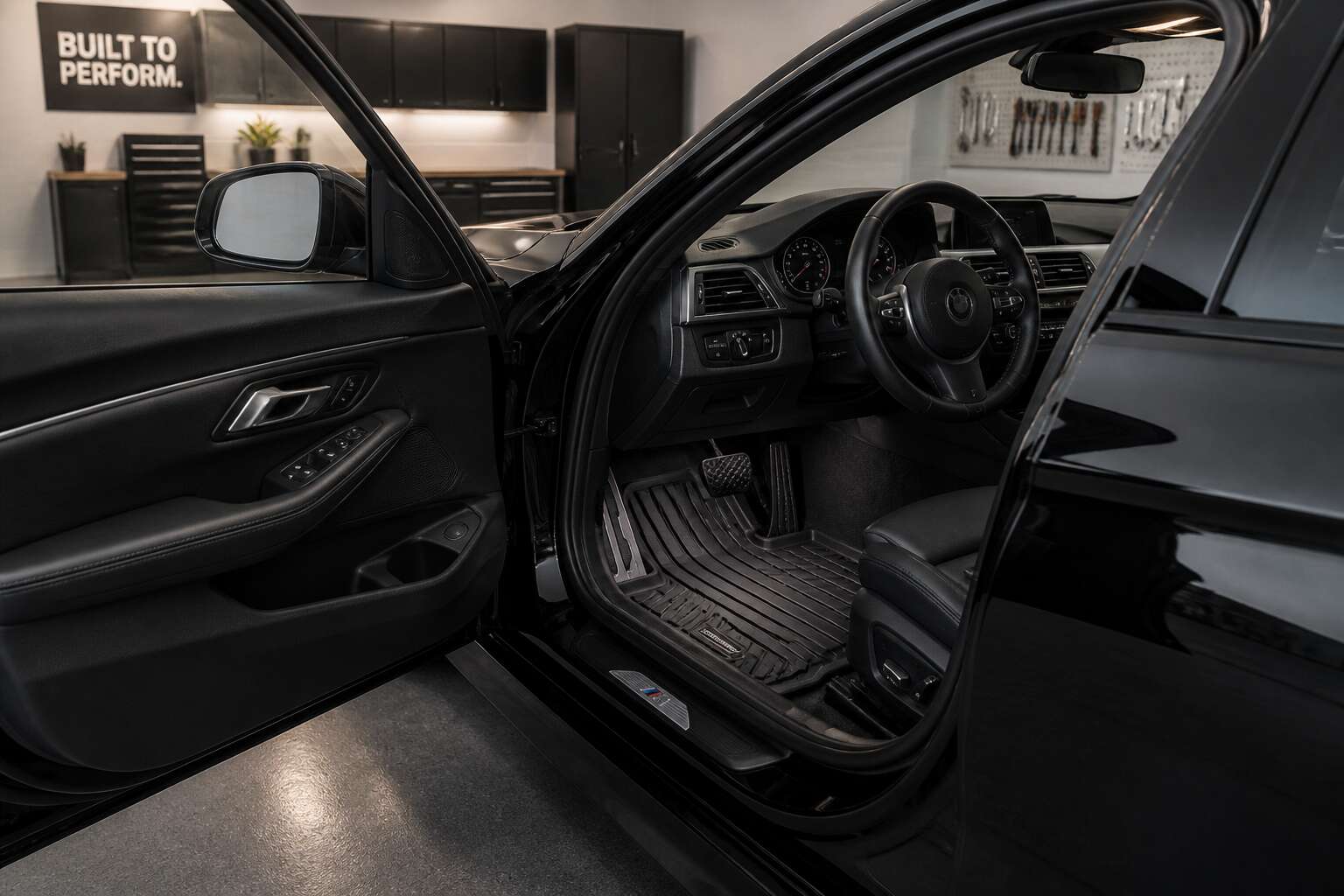
Why Rubber Car Mats Are Essential
Protection Against Dirt and Moisture
An average car interior accumulates over 20 kilograms of dirt and debris each year. This filth does not remain on the surface. Sharp particles grind into your carpet fibres, cutting them like tiny blades. Moisture from rainy Cape Town mornings or Highveld thunderstorms seeps deeper, creating a breeding ground for mildew. That musty odour you notice is not imagination, it is bacterial growth.
Standard carpeting fails as a defensive line. A fabric mat absorbs water, trapping it against the floor pan. This accelerates rust formation and weakens the vehicle’s structural integrity over time. I have seen floorboards corrode completely through, requiring expensive welding repairs that could have been prevented.
Rubber matting car solutions offer a non-porous barrier. Water beads on the surface and evaporates quickly, preventing dampness from ever reaching the metal below. The raised ridges and lip edges catch mud, sand, and gravel, keeping your cabin clean.
– Mould and fungal spores remain dormant
– Corrosion is halted at the source
– Cleaning becomes a simple rinse and shake
Moisture causes hidden damage:
1. It shortens electrical wiring lifespan
2. It warps mounting brackets
3. It creates permanent odours
A rubber matting car setup provides a sealed defence against these silent threats. Every time you enter with wet shoes or muddy boots, you are testing your vehicle’s resilience. Your floor deserves a barrier that answers back with durability.
Durability and Longevity
The average driving year subjects a car’s interior to forces most owners never consider. Heels grind, knees press, and shopping bags scrape across the floor with every trip. These repeated actions cause woven and tufted materials to lose their structural integrity within months. What begins as a vibrant carpet descends into a flattened, stained surface that no amount of vacuuming can revive. A rubber matting car installation, however, responds to this wear with visible indifference. Its compound absorbs the abuse and then returns to its original shape without any lasting impression.
The material’s composition is a study in resilience. Natural and synthetic polymers are mixed to create a product that resists tearing, puncturing, and the relentless pressure of a driver’s heel. This is not a temporary shield. The matting endures the full spectrum of South African weather, from the blistering heat of a Northern Cape summer to the cold of a Karoo winter morning, without cracking or becoming brittle. The surface remains pliable and robust.
– The material resists UV degradation, preventing fading and discolouration
– Flexibility is maintained in extreme temperatures
– Structural integrity is preserved under heavy foot traffic
This longevity translates into a practical economic advantage. While a conventional carpet might need replacement every few years, a durable rubber set remains a permanent fixture. You are not purchasing a disposable accessory. You are investing in a component engineered to outlast the vehicle itself. This sustained performance also protects the underlying floor pan from the initial wear that leads to costly repairs. The protective barrier remains intact for the life of the car, providing continuous security without any degradation in its protective qualities. This is a long term solution for the most abused part of your vehicle.
Easy Cleaning and Maintenance
There is a quiet satisfaction in cleaning a rubber matting car interior. A bucket of soapy water and a cloth are enough to restore the floor to a state that carpet never achieves. Stains do not sink in. They sit on the surface, waiting to be wiped away.
Weekly maintenance takes minutes, not hours. Vacuum cleaners, shampoo machines, and dry cleaning chemicals have no place here. A rinse with a hose or a wipe with a damp cloth handles everything from muddy boots to spilled coffee. The textured surface releases dirt without complaint.
- Dust and debris are removed with a single sweep
- Spills are wiped, not scrubbed
- Odours do not linger in the polymer
For those who value time, this is the practical answer. The rubber matting car setup eliminates the chore that plagues every other vehicle interior. It is the rare part of a car that asks for nothing and gives everything back.
Enhanced Safety with Anti-Slip Design
Few things unsettle a driver like the sensation of a foot sliding off the pedal. That moment of lost contact, however brief, is a fraction of silence in a world that demands immediacy. A rubber matting car surface provides a coarse, deliberate grip. The texture holds the sole of a shoe securely, even when rain has made the floor slick.
The ridge patterns are engineered to divert water away from the contact zone. This reduces the slippery film that turns a simple stop into a gamble.
- Heels find solid ground during emergency braking.
- Toes sense the pedal’s travel without hesitation.
- Feet remain planted through sharp turns.
For the rubber matting car driver, this stability is a direct benefit. Each rib catches the foot with firm resistance. The mat does not demand attention; it simply maintains a steady surface.
Exploring Different Types of Rubber Matting
All-Weather Rubber Floor Mats
Exploring rubber matting car options reveals more variety than you might expect. All-weather rubber floor mats come in smooth, ribbed, or even patterned surfaces. Each changes how debris behaves and how your boots feel underfoot. My favourite is a deep ribbed style for gravel roads.
Then there is the fit question. Universal mats are affordable but shift around. Custom moulds match your car’s floor perfectly. Some drivers prefer edge lipping, though that adds bulk. South African conditions demand something that handles heat and dust without turning into a sticky mess!
A lighter colour hides sand. A heavier mat thumps when you close the door. The choice is yours!
Heavy-Duty Truck and SUV Mats
South African bakkies endure punishing routes, so rubber matting car choices for trucks and SUVs need a different level of scrutiny. Standard mats buckle under constant load and rough terrain. Heavy-duty versions use thicker rubber compounds, often reinforced with fabric or cord.
Three main styles stand out for big vehicles:
- Ribbed mats with high walls, which contain spilled diesel or water from boots.
- Studded mats, where raised nubs grip heavy cargo and reduce sliding.
- Recessed tray mats, designed to catch debris from muddy tracks.
Each style changes how the mat sits against the floorpan. Trucks with factory mounting points need compatible cutouts. SUV owners often prefer a mat that covers the entire footwell, including the transmission hump. The weight difference matters too, a heavier mat stays put but adds noticeable bulk during removal.
Custom-Fit vs. Universal Fit
Exactly how much of your vehicle’s floorpan deserves coverage? That question separates custom-fit from universal rubber matting car solutions. Custom-fit mats arrive laser-scanned to match every hump and clip, while universal sheets rely on trimming scissors and a hopeful eye.
- Custom-fit versions lock into factory retention points, eliminating creep under clutch work in busy traffic.
- Universal mats cover a broader range of models, but they often leave the heel pad misaligned.
The floorpan of a South African double cab hides awkward contours around the transmission tunnel. I have watched universal mats fold into the pedal box on a Hilux, and that memory stays with me. Custom-fit rubber matting car products also reduce the rattle that loose edges generate over corrugated gravel, and that quiet is a genuine relief!
Textured Surface Options
The pattern pressed into a mat is not decoration. It performs specific work. A ribbed surface directs water and dust away from the clutch foot, while a diamond grid offers consistent purchase under heavy boots. I have seen a flat textured mat become a skating rink when wet! The mould depth matters as much as the design.
- Chevron treads for lateral stability
- Cross hatch for mud release
- Nibbed texture for quick drying
Choosing a rubber matting car comes down to how you step in and out of the cab. A shallow coin pattern feels softer under bare feet, but deeper channels resist compression from jack stands. The right texture is a quiet participant in every trip.
Eco-Friendly Rubber Mat Alternatives
Under a bakkie’s floorboard, the material truth is clear. Most rubber matting car products use SBR, a synthetic rubber that resists oil but stiffens in cold weather. Natural rubber, sourced from managed trees, retains flexibility and decomposes completely after disposal. Recycled crumb rubber, pressed from shredded tyres, offers superior weight and resistance to wear.
- Natural latex for elasticity and compostability
- SBR for chemical resistance at a lower cost
- Recycled crumb for maximum durability
I have seen SBR mats crack after two harsh winters! Eco-friendly rubber mat alternatives now include cork blended with natural latex, a surface that cushions the foot and stores carbon during growth. Another option mixes reclaimed rubber with plant fibres, trading some lifespan for lower environmental impact. South African drivers must consider a mat’s origin against its eventual fate, a calculation with consequences for local waste streams.
Factors to Consider When Selecting Rubber Mats
Vehicle Make and Model Compatibility
Many car owners assume a universal rectangle of rubber offers sufficient coverage, yet the footwell of a modern vehicle is a complex terrain. In South Africa, the bakkie and SUV segments present particular challenges. Selecting the correct rubber matting car enthusiasts require involves more than measuring a floor. Vehicle make and model compatibility determines whether a mat stays secured or bunches underfoot. Scrutinise the positioning of factory anchor points, which differ across model years. Also evaluate the depth of the rear footwells, a frequent point of mismatch.
Consider these key aspects:
- The number and location of retention hooks.
- The contour of the driveline tunnel.
- The type of heel pad and its friction coefficient.
A universal mat may slide toward the pedals, which compromises safety. A properly fitted option aligns with the factory grips. The heel pad must sit correctly for throttle response. The edges should follow the sills without curling. The right product respects the vehicle’s specific architecture, eliminating moisture traps without interfering with driving controls.
Material Thickness and Quality
Material thickness separates temporary solutions from long term investments in rubber matting car applications. Thin sheets crease and tear near the pedals. A 4.5 mm base offers adequate protection for city driving, but off road conditions demand 7 mm or more. Quality remains equally important. Premium compounds use natural rubber with additives that resist oil and sunlight.
Inspect the surface structure closely. A uniform pattern without bubbles indicates proper vulcanisation. Check for a smooth backing that will not scratch the factory carpet. The heel pad area should be thicker, often double layered, to handle repeated pressure from a driver’s boot.
Odour and flexibility offer useful clues. Sharp chemical smells suggest low grade fillers. A mat that cracks when bent lacks lasting elasticity. Choose a product that feels substantial in hand and springs back after compression.
Edge Design and Containment
Edge design separates a well-made rubber matting car solution from a frustrating one. Reinforced borders prevent splitting along the outer lip, a common failure point in cheaper alternatives. When the edge lifts, water and sand migrate underneath, defeating the purpose entirely. Containment works alongside edge strength. Raised sidewalls create a basin that traps liquid and loose debris, stopping fluids from reaching carpet seams where unpleasant odours develop.
Consider these features:
- Double-walled edges that maintain structural integrity in warm conditions
- Corner mouldings that integrate seamlessly with the main base
- A lip height proportional to the vehicle’s floor wells
The interplay between edge rigidity and floor contours decides whether the mat stays in place. Moulded designs follow the raised sections of the floorpan. Flat mats slide into awkward positions on uneven surfaces. South African drivers who prioritise quality rubber matting car options avoid constant readjustment and premature wear, whether navigating city streets or gravel roads.
Odor and Chemical Resistance
A rubber mat that smells like a distressed tyre factory every time the sun hits the windscreen is a special kind of torture. Heat amplifies volatile compounds, and cheap mats release them directly into your cabin. Odour resistance hinges on the vulcanisation process and the purity of the polymer base. Recycled content can introduce unpredictable chemical profiles, so scrutinise the source material. For a rubber matting car solution, the goal is a neutral scent profile that doesn’t compete with your air freshener.
Chemical resistance is equally practical. Brake fluid, battery acid, and even concentrated screenwash can degrade low-grade rubber, leaving it sticky or brittle. The mat’s formulation determines its reaction to these agents. A high-quality compound will shrug off incidental exposure without swelling or losing flexibility. Consider these hazards:
– Brake fluid and its glycol ether base
– Battery electrolyte, which is sulphuric acid
– Degreasers and strong cleaning solvents
– Diesel and undiluted petrol spills
A mat that resists these elements protects the floorpan and your nostrils. The best rubber matting car options use a dense, fully cured compound that resists absorption. This prevents chemical residues from soaking into the material and producing a permanent, unpleasant aroma.
Installation and Care Guide for Rubber Car Mats
Step-by-Step Installation Process
The average South African driver utters more expletives over a loose rubber mat than over potholes on the R21. That statistic is anecdotal, but the frustration is real! Installing rubber matting car correctly requires patience and a clean floor. Remove the old mats, vacuum the gravel, and let the new rubber warm to cabin temperature before seating it.
- Position the driver’s mat first, aligning the heel pad with the dead pedal.
- Press each edge down to engage the retention ridges or anti-slip backing.
- Repeat for every row, then tug the corners to check for creep.
After installation, the care is minimal. For the first few days, nudge the mats back after every trip. Heat and pressure will mould them to the floorpan. Re-check the retention clips before long hauls, because a sliding rubber matting car mat is a hazard that no one wants to meet on the N1!
Cleaning Techniques for Deep Stains
The mat endures the daily grind of heels, dust, and the occasional coffee spill. We rarely think about it until the stains become a silent testament to our neglect. A rubber matting car solution offers protection, but only if you reciprocate with a measure of care. Deep stains require more than a cursory wipe.
Start with a thorough dry removal of loose grit. Then, address the ingrained dirt with a solution of warm water and a mild detergent. Use a stiff-bristled brush to work the soap into the rubber’s texture. For stubborn marks, a dedicated cleaner can be applied directly. Let it sit for a few minutes to break down the grime. Rinse completely with a hose, ensuring no soapy residue remains. Press down on the edges and slope the mat to allow water to pool off. Allow it to air dry completely before reinstalling to prevent mildew from forming beneath. The process is straightforward:
1. Vacuum or shake out loose particles.
2. Apply a cleaning solution to the stained areas.
3. Agitate the surface with a brush.
4. Rinse thoroughly and let it dry.
This ritual prevents the build-up that leads to permanent discoloration. It also preserves the mat’s structural integrity. A mat that is cleaned properly will continue to anchor itself to the floorpan. It will keep doing its job, silently and effectively, so you can focus on the road ahead.
Preventing Odor and Mold Growth
Moisture is the true adversary. Beneath a rubber matting car, a damp environment fosters mould and its accompanying odour. An installation without ventilation seals in the humidity. The resultant spores spread and linger. To prevent this, inspect the floorpan for dryness before laying the mat. After a thorough cleaning, lift the mat and permit air to circulate beneath it. Follow these precautions:
- Never reinstall a damp mat.
- Examine the underside for condensation after sudden temperature shifts.
- Allow a small gap at the edges to encourage airflow.
The rubber’s durability does not resist humidity. Care becomes a ritual of vigilance. Dry the mat in the shade, because direct heat warps the material. A well-tended mat remains inert and odourless. When you peel it back after a stormy week, you will find only the clean metal of the floorpan. That is the quiet reward.
When to Replace Your Rubber Mats
Owning a rubber matting car in South Africa means accepting that your mats will face everything from Highveld dust to coastal salt. The installation itself is straightforward, but care requires attention to how the rubber responds to local conditions. Sunlight, for instance, accelerates oxidation. A mat that feels supple today can become brittle within a season if parked facing the afternoon sun.
Knowing when to replace your rubber mats prevents bigger problems. Look for these warning signs:
- Cracks that collect debris and refuse to release it.
- Warped edges that curl upward and interfere with your pedals.
- Colour fading that indicates lost flexibility.
- A persistent chemical smell despite thorough washing.
Replacement is cheaper than repairing a corroded floorpan. After five years of heavy use, consider it mandatory. A fresh rubber matting car installation restores both protection and peace of mind.
Seasonal Maintenance Tips
Install a rubber matting car setup once and it becomes part of the vehicle’s own weight. In South Africa, seasons don’t announce themselves. One week the Karoo wind scours the rubber; the next, coastal humidity presses into every pore. I’ve seen owners ignore the summer-to-winter shift until the rubber splits. A mat installed before summer’s ultraviolet assault keeps its flexibility, provided you attend to the seams where grit collects. Winter Highveld cold stiffens the polymer, making it feel recalcitrant underfoot. Loosen the mats, air them out, and let the undersides dry fully. A simple seasonal check reveals what the eye misses:
- Feel the mat’s edges for hardening
- Inspect the backing for moisture traps
- Vacuum the grooves before they pack down
Each season’s end is a report from the rubber matting car floor, telling whether the material still yields or has begun to resist.
DIY Repair for Cracks and Tears
An estimated 78% of automotive rubber mat damage in South Africa occurs at the installation stage, not on the road. The irony is that a rubber matting car floor setup requires patience more than strength. When you lay that polymer down, the material needs time to settle into the contours of your vehicle’s floorpan, particularly in the footwells where the metal curves sharply. I have watched owners force the edges, and the result is always the same: the mat springs back or develops a permanent ripple that never quite flattens.
The care routine begins with the simple act of removal. A mat that sits for months without being lifted accumulates fine dust and sand, which acts as an abrasive against the rubber backing. You can test this yourself by running your finger along the underside after a dry season. The gritty residue that comes off is actively wearing away the material’s grip. Lifting the mat every few weeks and examining its full underside tells you more about your driving terrain than any dashboard indicator ever could.
When a crack appears, and it will appear eventually, the temptation is to replace the entire unit. But a rubber matting car piece often has years of life left if the damage is localised. The repair process requires a clean, dry surface and a flexible rubber adhesive that can withstand temperature shifts from the Highveld’s cold mornings to the Lowveld’s midday heat.
– Clean the cracked area with a stiff brush to remove trapped grit
– Apply the adhesive sparingly to both edges of the tear
– Press firmly and hold for sixty seconds
The bond will hold if the surface was properly prepared. A hurried repair on a damp backing will fail within a month, and you will find yourself in the same position, with a mat that now has a larger hole than before. For larger tears, a patch cut from an old mat and glued underneath can provide the structural support that a simple seam cannot offer. It is not a perfect solution, but it extends the mat’s service life until a proper replacement makes financial sense.
Top Brands and Buying Guide
Leading Manufacturers in the Market
Separating quality rubber matting car brands from the noise takes patience. South African drivers face unique conditions, from gravel roads to high heat, and leading manufacturers have shaped their products around this reality. When comparing options, focus on these factors:
– Warranty length and claim process
– Original Equipment Manufacturer (OEM) fitment versus universal cutting
– Local distributor network for replacements and returns
Local producers like Rubi and Blokson offer custom-moulded sets, while international names such as 3M and WeatherTech bring advanced polymer compounds into the mix. A reputable company will stand behind its material for five years or more. Examine the tread depth and edge stiffness. These details often separate a premium moulded mat from a flimsy universal slab. Brands that sell direct to consumers typically offer better value, though local distributors often provide faster replacements. Read owner forums and independent reviews before spending your money. The rubber matting car owners choose today will either protect the floor or fail within a season.
Price Ranges and Value for Money
Price ranges in South Africa reveal more than brand prestige. A decent rubber matting car set can cost anywhere from R300 to R2,500. The gap reflects material density, edge design, and moulding precision. I have seen budget mats warp within months, while mid-tier options often outlast premium rivals.
- Entry level: R300 to R600, universal slabs, thinner rubber
- Mid range: R700 to R1,200, custom fit for popular models
- Premium: R1,500 to R2,500, heavy duty compounds, extended warranties
Value emerges from longevity per rand. A R1,000 mat that survives five years beats a R400 mat that fails in one. Check the rubber’s shore hardness and the weight per square metre. Those numbers reveal more than any brand logo.
Where to Purchase Online and In-Store
We cling to brand badges as if they confer moral superiority, but a rubber matting car purchase rewards curiosity over loyalty. In South Africa, reputable names such as Rhino Mats and Rubberman offer dependable options, while lesser known suppliers on Takealot frequently deliver surprising quality. The trick is reading the specification sheet, not the sticker!
Where should you buy? Online retailers like Takealot and Loot provide convenience and candid user reviews. Physical stores such as Autozone and Midas let you test flexibility and chemical smell before committing. A sensible buyer weighs both channels.
1. Precise vehicle matching dominates most decisions.
2. Edge thickness and backing material reveal manufacturing care.
3. Warranty terms vary widely between sellers.
I have watched shoppers agonise over steering wheel covers while ignoring mat moulding. That is misplaced diligence. Your rubber matting car set deserves the same scrutiny as your seat covers.
Customer Reviews and Ratings
A one-star review reveals more than a hundred five-star ratings. When choosing rubber matting car sets, customer reviews expose real fitment issues and long-term wear patterns. In South Africa, Rhino Mats and Rubberman dominate review volumes, but smaller sellers on Takealot sometimes collect better longevity reports.
- Look for reviews tied to your exact vehicle year.
- Prioritize comments about edge curling and odour after heat exposure.
- Discount ratings that lack written context.
Ratings without explanation tell you little. A review that mentions how a rubber matting car holds up after a rainy month carries more weight than generic praise. Compare negative feedback across brands to spot recurring issues like backing separation. That is a buying guide worth following.

0 Comments