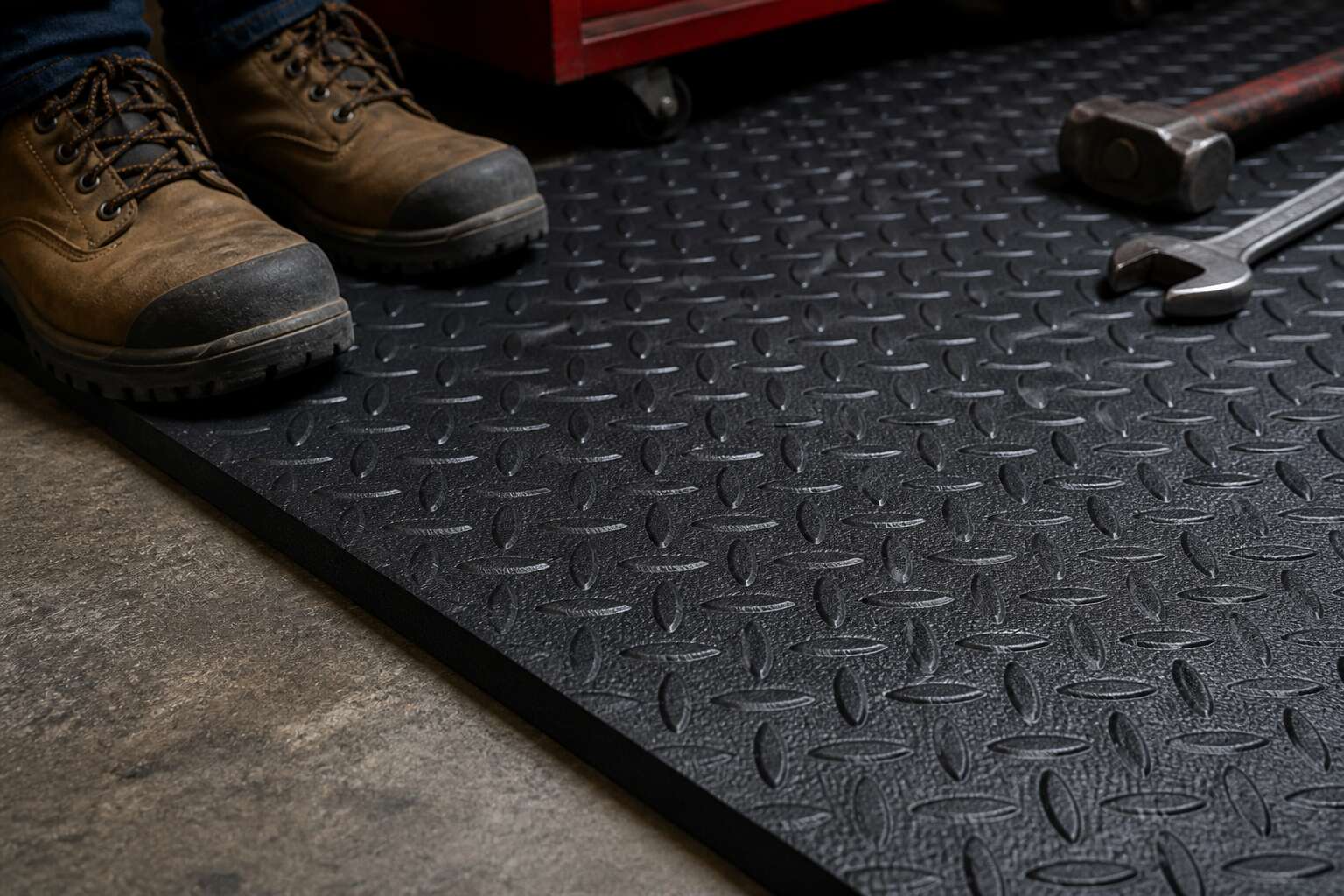
Key Benefits of Thick Rubber Flooring
Shock Absorption and Impact Resistance
Every time a heavy tool or weighty piece of equipment meets a concrete floor, the resulting force has to go somewhere. Without proper protection, that energy transfers directly into the structure of the building and the joints of anyone standing nearby. Industrial spaces and home gyms alike face this constant physical stress. This is where the practical value of rubber matting 18mm becomes immediately apparent. This specific thickness acts as a substantial buffer, absorbing vertical compression and distributing weight across a wider surface area to prevent damage over time.
The material composition of this flooring plays a significant role in its protective capabilities. Dense rubber granules are compressed under high pressure, creating a surface that resists permanent indentation while maintaining a degree of flexibility. This balance is critical for impact resistance. A dropped barbell or a rolling engine block will experience a softer landing, reducing the risk of sparks, cracks, or structural fatigue in the floor beneath. The thickness provides a margin of safety that thinner roll goods simply cannot offer.
For facilities that prioritize safety, the benefits extend beyond just protecting the substrate.
– Reduces whole-body vibration, minimizing strain on ankles and knees.
– Provides a non-slip surface, even when exposed to water or light oils.
– Limits noise pollution by damping the sound of dropped objects.
– Creates a thermal barrier that isolates users from cold concrete.
These features combine to create a working environment that is more forgiving and less fatiguing over prolonged periods of standing or lifting.
The true measure of this material, however, lies in its long-term durability. A 18mm profile is engineered for heavy point loads, ensuring that caster wheels or machine feet do not crush the matting over time. This resilience translates into fewer replacements and lower maintenance costs across the lifespan of a workshop or fitness area. Choosing this grade of protection is a direct response to the harsh realities of high-traffic zones. It is a simple, physical barrier that safeguards both capital investments and the individuals who work on top of it.
Durability in High-Traffic Environments
Traffic does not give a reprieve. Boots drag, trolley wheels grind along the same route, and heavy items scrape the floor during every move. That rubber matting 18mm exists to interrupt the damage before it begins, because it is formed as a single block. The wearing surface is identical to the rest of the thickness, so scrapes stay shallow and never open a weak seam between layers.
That unity matters in South African facilities where warm conditions and abrasive dust combine. Instead of compressing into a thin, brittle shell, rubber matting 18mm maintains its consistency from top to bottom. Point loads from equipment feet do not deform it permanently, and the surface honours the demands of repeated mechanical handling without shredding or separation. The result is a floor that remains presentable and understated, season after season.
Noise Reduction and Acoustic Insulation
The average South African workshop or processing plant generates a relentless 85 to 95 decibels of operational clatter, a level that erodes concentration and masks critical auditory warnings. This is where the acoustic profile of rubber matting 18mm becomes a functional asset, not merely a comfort feature. The material’s volumetric mass acts as a barrier, dampening the transmission of impact frequencies that would otherwise travel straight through a bare concrete slab into adjoining workspaces.
Within the material itself, the high-density cellular structure converts kinetic energy from falling objects or moving equipment into negligible heat, rather than sound. This internal damping is immediate and localized. While a solid floor reflects and amplifies, the rubber sheeting absorbs. The time it takes for a sound wave to decay, known as reverberation time, is shortened, which sharpens speech clarity and reduces overall fatigue for personnel standing on it for hours.
Specific acoustic benefits include:
– Reduction in flanking noise transmitted through structural floors.
– Attenuation of high-frequency vibration from mechanical feet.
– Prevention of the hollow, echoing resonance characteristic of open-plan tiled areas.
Because the matting is fixed directly to the substrate, it avoids the air gap that often turns lighter mats into ineffective soundboards. For spaces adjacent to offices or control rooms, this flooring offers a practical degree of isolation that keeps daily operations discreet and professional.
Slip Resistance and Safety Underfoot
Slips and falls account for roughly 25% of workplace injury claims in South Africa, often in areas where floors turn greasy or wet within minutes. The surface of rubber matting 18mm is engineered with a textured profile that grips footwear even when oil, water, or dust are present. This is a direct response to the reality of industrial floors that become treacherous during a normal shift.
Underfoot, the material offers a stability that concrete or tile cannot match. The slight give in the rubber reduces the chance of a twisted ankle, while the high friction coefficient keeps workers planted during rapid movement. For spaces where liquids are unavoidable, this flooring performs without becoming slick.
- Enhanced traction in wet or greasy conditions
- Reduced physical strain from a more forgiving surface
- Clear visual demarcation of safe walking routes
I have seen facilities where installing this matting cut incident reports dramatically. The safety benefit is tangible, not theoretical. Workers move with more confidence, and supervisors spend less time managing avoidable accidents.
Ideal Applications for 18mm Rubber Tiles
Home Gym and Weightlifting Areas
Most South African homes are adapting spare rooms and garages into dedicated training zones. A single 1m x 1m tile of rubber matting 18mm transforms a cold concrete slab into a functional platform for serious lifting. This specific thickness offers the structural integrity needed to protect the subfloor from dropped dumbbells and the repetitive impact of heavy deadlifts. The dense nature of the material prevents energy from transferring through to the foundation, which is vital for maintaining the integrity of the building over time.
For a home gym, the layout should prioritise the zones where equipment sits static, as well as the spaces where you walk or stand. The protective layer eliminates the relentless wear from metal plates and barbell knurling.
– Place tiles under squat racks and benches to prevent the frame from slipping.
– Install them in the dedicated area for kettlebell swings and Olympic lifts.
– Cover the entire floor for a seamless, cohesive training surface.
The practicality of this setup extends beyond simple placement. You can create a stable base for a treadmill or rowing machine, absorbing the cyclical motion that often causes misalignment. In a country where power consistency can fluctuate, your equipment deserves a stable footing. The matting also offers a barrier against the cold emanating from the concrete, making early morning sessions more comfortable. This isn’t just a purchase; it is an investment in the longevity of your training space, ensuring the surface keeps up with your intensity without complaint. This thickness provides the necessary rigidity for heavy, static loads, while the surface texture offers enough grip for dynamic movements, making it the standard for serious athletes.
Commercial Fitness Centers and CrossFit Boxes
Commercial fitness centers and CrossFit boxes operate at a scale that home setups never experience. In a busy Johannesburg facility, dozens of athletes cycle through the same floor space every hour. The surface must absorb repeated overhead drops and heavy foot traffic from the first class to the last. Rubber matting 18mm handles that load without breaking down.
These environments need a continuous, flush surface connecting every training zone into one coherent space. I have seen boxes in Cape Town try to piece together thinner mats and regret it within months.
- Open floor areas for Olympic lifts
- Walkways between platforms where loaded barbells are carried
- Fixed zones for sleds and conditioning work
Rubber matting 18mm delivers that coverage with the density to resist cuts from metal plates and the texture to keep athletes grounded during fast transitions.
Industrial Workspaces and Loading Docks
A warehouse floor in Johannesburg takes more punishment in one morning than a home gym sees in a decade. Forklifts pivot on the same square metre until the concrete beneath them begins to fray. Rubber matting 18mm changes this. It absorbs the grind of castors, the impact of dropped pallets, and the constant scuff of steel-tipped boots.
Loading docks are a different test. Workers stand stationary for hours. Diesel, hydraulic fluid, and rain from open bay doors find their way underfoot. The worst spots share a common profile:
- Stationary workstations where staff spend full shifts
- Transfer zones between interior floors and truck beds
- Areas exposed to moisture and chemical residue
I have watched these floors in Durban fail within a year. Rubber matting 18mm buffers workers from the fatigue that concrete imposes by hour three of a shift. It also resists the chemical residue that breaks down lesser flooring.
Equestrian and Animal Housing
Horses stand for up to 16 hours a day. That constant pressure on joints leads to swollen legs and stiffness. Rubber matting 18mm gives them a forgiving surface without sacrificing stability. In a stable aisle, it also means less straw gets kicked into drainage channels, which reduces mucking out time.
For dairy cows, the same thickness counters concrete’s weakness. Slippery floors cause injuries during mounting and movement. The matting provides grip even when urine and slurry are present. It also stops heat loss from the animal’s body, which directly improves feed conversion. I have seen herds thrive on this surface.
Common places where this matting performs:
- Stabling stalls and tie stalls
- Grooming areas and wash bays
- Trotting lanes and walkways
Playgrounds and Recreational Spaces
Playground safety is a product of careful engineering, not just hope. The Consumer Product Safety Commission reports that over 200,000 children visit emergency rooms annually for playground equipment related injuries. A fall onto unforgiving ground is a primary culprit. Here, the role of adequate surfacing becomes paramount, and the choice of material dictates the outcome.
For public parks and school play areas, the physical properties of rubber matting 18mm offer a reliable strategy for risk mitigation. This thickness provides a significant buffer, effectively shortening the distance a child’s head might travel before meeting a hard surface. Unlike loose fill materials that can shift or compact over time, these tiles create a stable, consistent plane. This stability ensures the impact attenuation rating remains constant, regardless of weather conditions or foot traffic.
The application extends beyond mere fall zones. These mats prove invaluable for creating access routes and sensory paths within recreational spaces.
– Perimeter surfacing around climbing frames and slides
– Connecting pathways between play structures
– Quiet zones for seating or picnic areas
– Surfaces for wheeled toys like scooters and tricycles
One of the most compelling arguments for using rubber matting 18mm in this context is its performance under harsh African sun. Granular rubber can absorb excessive heat, making it uncomfortable for bare feet. However, the dense, solid construction of these tiles reflects more heat, keeping the surface cooler. Additionally, the seamless installation prevents weed growth and eliminates the constant maintenance required for bark or sand. A surface that remains intact and hygienic encourages longer, safer play sessions for the community.
Material Composition and Manufacturing Process
Recycled vs. Virgin Rubber Blends
The manufacturing process of rubber matting 18mm is a study in controlled chemistry, and the choice between recycled and virgin rubber blends dictates the final product’s character. From a performance standpoint, it is a trade-off between inherent density and molecular stability. Virgin rubber offers a predictable, homogenous surface ideal for applications requiring uniform resistance. In contrast, recycled blends, often sourced from repurposed tyres, introduce an element of variability that is intellectually fascinating.
This variability, however, is not a flaw but a feature of versatility, impacting the pliability and resilience of the matting. A deeper look reveals the significant decisions a supplier makes:
– Virgin blends provide superior elasticity and resistance to oils and chemicals, making them optimal for industrial workspaces.
– Recycled blends are commonly chosen for equestrian settings where natural absorption and grip are paramount.
The processing temperature, pressure, and curing time all affect the final hardness. For the South African climate, the specific ratio of these rubber types determines how well the rubber matting 18mm handles intense UV exposure without becoming brittle. The synergy of these materials creates a final product that is far more complex than a simple sheet of rubber. Your selection between these foundational components will define the mat’s longevity and performance under demanding local conditions.
Particle Size and Density Factors
Particle size dictates performance. Silently. Without exception. In rubber matting 18mm, the crumb granules range from fine 0.5mm powders to coarse 8mm chips. Each particle carries its own thermal history, shaped by ambient grinding or cryogenic processing. That history determines how the granule bonds with its neighbours.
Finer particles pack tighter during vulcanisation, creating a denser sheet with fewer void spaces. Coarser particles leave micro-channels that alter compression behaviour, water migration, and response to thermal cycling. The balance between these extremes is engineered, never accidental.
- Fine crumb yields higher density, smoother surface, lower water absorption.
- Coarse crumb yields lighter weight, better drainage, increased flexibility.
Density determines how the matting settles under sustained load. A calibrated blend ensures rubber matting 18mm holds dimensional stability through South African temperature swings without delamination.
Vulcanization and Binding Agents
Most people never stop to consider what actually goes into a rubber mat. They see a black slab, assume it is all the same, and move on. That assumption costs them money and performance. The truth is that rubber matting 18mm thick is a carefully engineered product, and its behaviour starts with the raw materials.
The base polymer is usually SBR (styrene-butadiene rubber) or a blend with natural rubber for added resilience. SBR handles abrasion well. Natural rubber gives better elasticity and recovery. Manufacturers mix in fillers like carbon black to strengthen the structure and resist UV damage. Plasticisers soften the compound, while antioxidants slow down the inevitable cracking that sunlight and ozone cause. The exact recipe changes based on the intended use, but for heavy-duty applications, the blend is dense and tough.
The manufacturing process itself determines whether that 18mm thickness performs or fails. Most mats are produced through compression moulding or continuous vulcanisation. In compression moulding, the uncured rubber is placed into a heated mould under extreme pressure. This forces the material into the desired shape and creates that dense, closed surface. Continuous vulcanisation runs the rubber through a heated drum or belt system, which works well for roll goods. Both methods rely on precise temperature control. Too little heat leaves the rubber soft and weak. Too much heat degrades the polymer chains and makes the mat brittle.
Vulcanisation is where the magic happens, and sulphur is the star. Sulphur molecules create cross-links between the polymer chains, transforming a sticky, pliable compound into a stable, elastic solid. The binding agents matter just as much. Tackifiers help the rubber stick to itself during processing, while resins improve the bond between the rubber and any reinforcing fibres. Without the right binding agents, the mat can delaminate under stress or when exposed to oils and chemicals.
Here is a quick look at what is typically found in a quality mix:
– SBR or natural rubber as the base
– Carbon black for strength and UV resistance
– Sulphur for cross-linking
– Zinc oxide as an activator
– Stearic acid to control the cure rate
– Plasticisers for flexibility
– Antioxidants and antiozonants for longevity
When these components come together correctly, the result is a rubber matting 18mm that holds its shape, resists tearing, and survives the kind of abuse you expect from a workshop floor or loading bay. The next time you stand on a heavy-duty mat, remember that its performance was set in the mixing room, long before it ever reached your feet.
Surface Texture and Top Finish Options
The chemistry is set, but the mould does the shaping. That 18mm profile starts as a compressed sheet, pressed into its final dimensions while the vulcanisation process locks the molecular structure in place. The result is a consistent thickness across the full surface.
Surface finish is where purpose meets practicality. A smooth top is easy to clean, but it offers no bite. For any area where people walk or stand, the texture matters more than the colour. The pattern determines how the mat sheds water, dirt, and impact.
Here is where the distinction gets real:
– Smooth or polished tops are for high-traffic areas where cleaning speed matters
– Diamond or chevron patterns provide directional grip and fluid drainage
– Pebble or studded finishes offer maximum slip resistance underfoot
– Ribbed profiles are best for scraping mud and debris before it enters a building
These finishes are not decorative. The raised sections act as compression zones. They flex under load, absorbing shock while the base remains stable. For rubber matting 18mm, the top texture works with the dense core to handle everything from a heavy pallet truck to a sweaty gym session. The finish also hides scuffs. A uniform texture masks the surface wear that a flat mat would show within months. Each pattern has a job, and choosing the right one without understanding the trade-offs leads to premature replacement.
Installation Methods and Best Practices
Subfloor Preparation and Leveling
It is tempting to think a 25 kilogram slab of dense rubber can forgive an uneven floor. It cannot. The true test of any installation is what lies beneath, and for rubber matting 18mm, the subfloor is the silent judge. A level base is not merely a preference; it is the single most critical factor determining whether your investment lasts or fails prematurely.
Without a perfectly prepared base, the matting will telegraph every undulation to the surface. This creates puddles in equestrian settings and unstable footing in industrial zones. The preparation process requires a forensic eye for detail. You must scan for old adhesive residue, paint flecks, and grease stains. Any contaminant compromises the bond or causes localised swelling.
The leveling process itself is straightforward but demands patience. For larger areas, a self-leveling compound is essential. However, the substrate must be clean and primed first. Check the moisture content of concrete slabs before you pour anything. High humidity will ruin the curing process. Here is a practical sequence to follow:
1. Remove all existing flooring and debris.
2. Grind down high spots and fill low spots with repair mortar.
3. Apply a primer to seal the porous concrete.
4. Pour the leveling compound and use a spiked roller to release air bubbles.
If you skip the primer, the moisture will wick up into the compound, causing it to crack. This leaves you with a brittle, uneven surface that cannot support the weight and impact of heavy foot traffic. The ghost of a poorly prepared floor will haunt your gym or workshop for years, manifesting as premature wear and surface tears.
Loose-Laid vs. Adhered Installation
Once the subfloor passes inspection, the next decision is how to secure the rubber matting 18mm. Loose-laid installation places mats directly onto the prepared surface without adhesive. This suits temporary setups or areas needing regular floor access. The weight of rubber matting 18mm usually holds it in place, though edges can curl under point loads. I have watched loose-laid mats creep across warehouse floors.
Adhered installation uses a trowel-spread or pressure-sensitive adhesive to bond the matting permanently. This prevents shifting, edge lifting, and moisture accumulation underneath. It suits commercial fitness centres and industrial floors where equipment drags across the surface.
Best practices for both methods:
- Acclimate mats in the installation space for 24 hours before laying.
- Stagger the joints in a brickwork pattern to avoid continuous seam lines.
- Use a roller to press adhered mats firmly into the adhesive bed.
Even loose-laid floors need perimeter securing against trip hazards.
Cutting and Shaping Around Obstacles
Cutting rubber matting 18mm demands a sharp hook blade and a steady hand. I have found that scoring the surface twice, rather than forcing a single deep cut, produces cleaner edges without tearing the rubber. For straight lines, clamp a steel straightedge firmly before running the blade along it. Circular cuts around pillars or drains require a different approach. Trace the obstacle onto the mat, then use a jigsaw with a fine-tooth blade set to a slow speed. This method handles curves with remarkable precision.
Shaping around door frames or irregular machinery bases often calls for a cardboard template. Lay the template over the rubber matting 18mm and mark with chalk, then cut slightly inside the line. A light sanding of the cut edge removes burrs. Keep a few millimetres of expansion gap at walls and fixed objects. That space lets the thick rubber breathe under temperature shifts.
- Use a sharp knife for straight cuts.
- Apply a jigsaw for curves.
- Always work from a template for odd shapes.
The real skill lies in patience. Rushing any cut on a heavy mat leads to ragged seams that collect dirt and compromise the floor. I always recommend cutting from the underside of the mat, since the top texture can deflect the blade.
Seaming and Joining Techniques
A seam in rubber matting 18mm is the first point that breaks. If the edges are flush and tight, the thick rubber will still pull apart under constant thermal cycling. I learned to cut a slanted bevel on the underside of each sheet before commencing the join. This chamfer creates a depression that holds the adhesive in a thicker layer.
That bond acts as a hinge, absorbing the tension without telegraphing it to the surface. When I join two mats, I apply solvent-based contact cement to both freshly bevelled edges. I let it sit for eight minutes until it turns tacky. Then I press the edges together and run a heavy steel roller over the seam, forcing any small air pockets out to the ends.
Expansion Gaps and Edging
In Johannesburg’s thermal swings, rubber matting 18mm moves more than installers expect. Seams fail when the perimeter leaves no room for growth. A 6 to 10 millimetre void against every wall acts as a pressure release, absorbing daily creep and shrink.
Edging completes the barrier. A raw rubber edge curls and catches trolley wheels. An aluminium transition strip or rubber cove base covers the gap yet allows movement. Several factors govern the gap size:
- Local temperature range across summer and winter.
- Orientation of the floor relative to direct sunlight.
The result is a floor that stays intact under load.
Weight Considerations and Handling
Lifting a roll of rubber matting 18mm is a two person job, no exceptions. A standard roll can weigh close to 150 kilograms. I learned this during a warehouse install in Durban. Rolls are best kept upright and unrolled on site, allowing the material to relax for several hours before cutting. Dragging a heavy roll across a rough floor stretches the backing, and that distortion never fully settles.
Once laid, the sheer mass of rubber matting 18mm is an advantage. The matting stays put without adhesive in many cases, and seam creep becomes a non issue. The weight also demands thoughtful staging near the installation area, since moving a partially unrolled sheet across a finished threshold requires planning. Two workers with a coordinated grip beat any mechanical lifter on uneven ground.
Ongoing Maintenance and Longevity
Cleaning and Stain Removal Procedures
A common query about rubber matting 18mm is how to preserve its integrity after years of punishing use. The secret lies in a routine that treats the material with respect. Most installations need only a soft broom and a damp mop with mild, soapy water to remove the daily accumulation of grime. Products containing solvents or petroleum distillates are a mistake; they soften the protective surface and cause premature cracking.
The routine for deep cleaning builds value over time. Avoid aggressive scrubbing with wire brushes or steel wool, as these create microscopic tears where dirt embeds itself. Instead, consider this simple sequence for heavy soiling:
1. Sweep or vacuum the area to lift loose particles.
2. Apply a diluted solution of warm water and pH-neutral detergent.
3. Agitate with a stiff bristle brush, moving with the grain.
4. Rinse thoroughly with clean water and allow to dry completely.
Stubborn stains from grease or hydraulic fluid require immediate attention. Blot the spill with absorbent cloth, then apply a small amount of citrus-based degreaser. For equestrian spaces, a weekly rinse with a garden hose handles most urine and feed residue, preventing odor penetration. Abrasive powders rob the matting of its dense texture. The pieces stay resilient and visually consistent with minimal effort, making this heavy material a worthwhile investment for South African conditions where sun and dust place extreme demands on flooring.
Protective Coatings and Sealants
Rubber matting 18mm carries a dense cellular structure that repels most chemicals, yet sunlight and ozone remain silent adversaries. A quality UV stabiliser, applied annually, prevents surface fading and micro-cracking. This matters in South Africa, where summer irradiance tests every material.
Sealants serve a narrow purpose. For floors exposed to aggressive disinfectants or animal urine, a breathable rubber dressing creates a sacrificial layer that takes the chemical punishment. Reapply every six months. Do not use film-forming varnishes; they flex with the matting’s surface and peel within weeks.
Choose a water-based protective coating designed for recycled rubber. Roll on thin coats, allowing full cure between passes. This routine preserves the depth and resilience of rubber matting 18mm without altering its slip properties.
Repairing Cuts, Tears, or Indentations
A single tear in rubber matting 18mm can grow eightfold in a season. South African winters, with their wild temperature swings, make it worse. The rubber expands and contracts. Cracks open further. Water slips in and loosens the binder.
Repair begins with assessment. A cut that resists compression needs immediate attention. Clean the damaged pocket. Remove debris with a stiff brush. Blow out dust. Apply a rubber repair compound that matches the mat’s cellular structure. Press it down. Let it cure completely.
For indentations left by sharp objects or heavy static loads, the process differs. Shallow depressions relax on their own given warmth. Deeper pits need filling. Use a trowel to lay down layers no thicker than three millimetres. Overfill slightly, then sand flush.
The repair sequence looks like this:
– Inspect the affected zone and surrounding edges.
– Measure the damage with a straightedge.
– Fill and cure in stages for deep wounds.
– Sand and seal the finished surface.
A properly repaired floor holds up for years. Regular inspection of rubber matting 18mm prevents big failures from small beginnings. The material rewards attention.
Expected Lifespan and Warranty Insights
Twenty years of service hinges on fifteen minutes of weekly attention. That is the reality of rubber matting 18mm. Sweep away grit. Rinse with water each month. The surface stays resilient.
Lifespan expectations shift with environment. Direct sunlight and chemical spills shorten the top layer. Inside a controlled warehouse, this flooring holds its structure for decades.
Warranty insights from South African manufacturers center on defects. Typical coverage spans five to ten years. Wear, fading, and indentation fall outside warranty terms.
Protect your claim by:
- Keeping purchase records.
- Avoiding harsh solvents.
- Scheduling annual inspections.


0 Comments