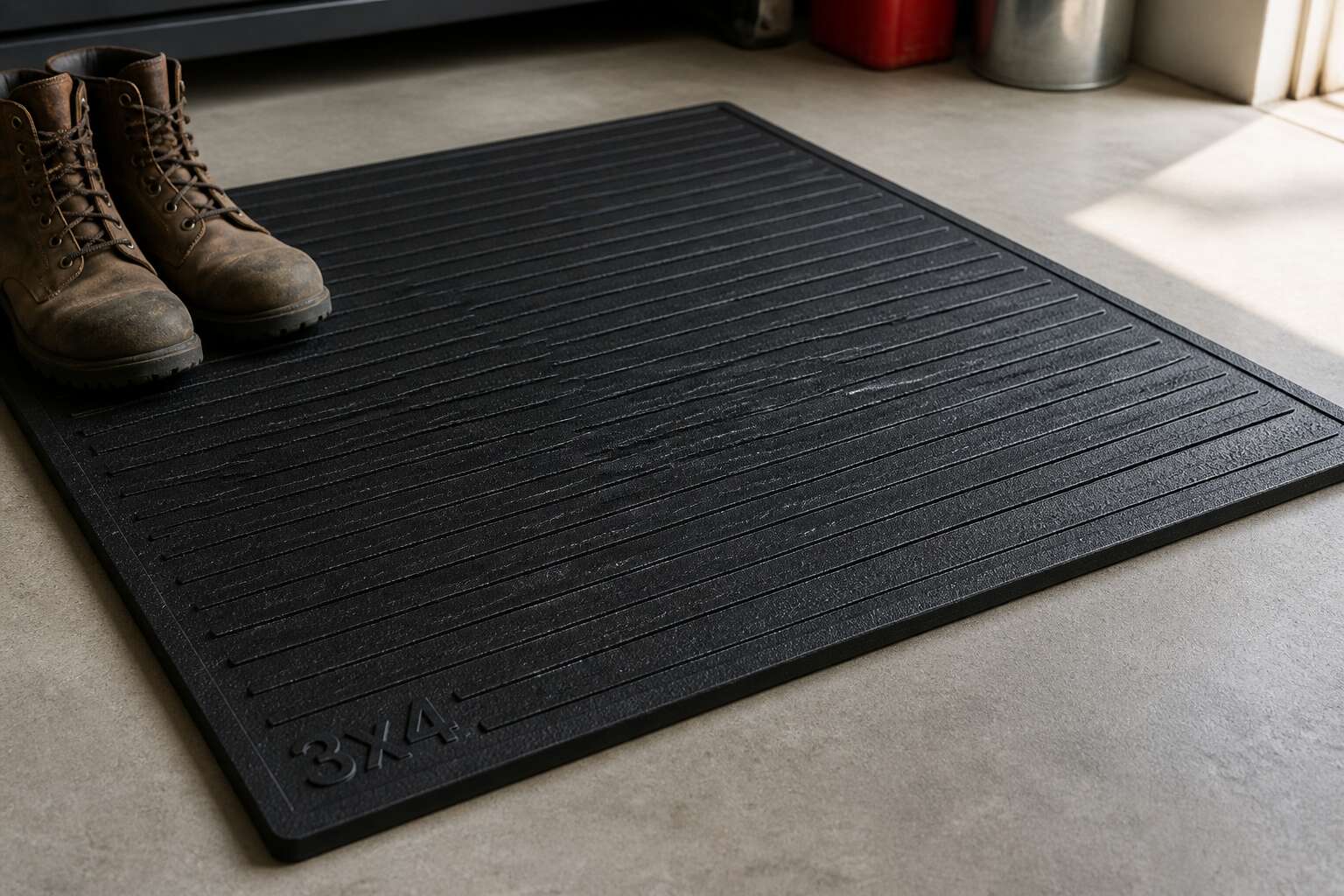
Selecting the Right Material for a 3×4 Rubber Mat
Comparing Natural Rubber and Synthetic Blends
Nearly 40% of flooring failures trace back to material selection. For a rubber mat 3×4, the choice between natural rubber and synthetic blends defines durability, grip, and cost. Natural rubber offers superior elasticity and tear resistance, ideal for high-abrasion areas like workshops. Synthetic blends, such as SBR or nitrile, excel in oil resistance and UV stability.
- Natural rubber handles heavy impacts without cracking.
- Synthetic blends resist chemicals and extreme heat better.
In South Africa’s harsh climate, synthetic options often outlast natural types. However, a mat with natural rubber provides better cushioning for standing workers. Assess your environment first! I have seen both fail when the wrong compound meets the wrong application.
Thickness and Durability Factors
The most common mistake with a rubber mat 3×4 is picking the wrong thickness for the actual load. You measure the static weight, but you must also consider the dynamic impact. A dropped spanner or heavy crate lands with more force than the label suggests. Material selection is about compression set and compound density, not just the surface texture. The material must recover its shape to keep the mat anchored and safe.
Thickness determines overall structural integrity. A thin mat works for anti-fatigue use where workers shift weight. A thicker rubber mat 3×4 handles stationary machinery or heavy storage. I have seen these failure points occur more often than not:
- Edges curling up from foot traffic or castor wheels
- Permanent dents left on the surface
- A rocking motion when pressing down on the center
These signs mean the material matrix is failing. Manufacturers rate these mats by gauge. Know the exact weight you need to support. Durometer dictates how the rubber responds. Harder is not always better; a rubber mat 3×4 rated at 70 Shore A feels different than one rated at 85. The compound must match the specific workshop conditions for the mat to survive its intended duty cycle.
Texture and Traction Considerations
In South Africa, the sun does more damage to a rubber mat 3×4 than most forklifts do. The right compound depends on what you spill, what you drag, and what you want to avoid slipping on. Nitrile blends resist oil and grease. EPDM handles UV and ozone. A rubber mat 3×4 that survives Durban humidity may crumble in Upington heat.
Texture decides whether the mat helps or harms. Smooth surfaces look neat but turn treacherous once dust settles. Ribbed patterns channel liquids and keep boots planted. Deep treads offer grip but trap debris. Consider the actual floor conditions:
- Is the mat on concrete, tiles, or compacted earth?
- Do workers track in water or solvents?
- Will castors roll over the texture daily?
Match the tread pattern to the traffic, not the catalogue photo. A rubber mat 3×4 with the correct surface profile prevents falls without becoming a dirt magnet.
Temperature and Weather Resistance
Selecting the right material for a rubber mat 3×4 is a decision about chemistry, not just cost. South Africa’s climate is a punishing variable. The Karoo can bake a work surface at 40°C, while coastal provinces deliver relentless UV and salt spray.
Different polymers react to this stress in distinct ways. A mat that performs in Cape Town’s wet winters might perish in the Free State’s brittle cold. The wrong compound becomes sticky in heat or rock-hard in frost, leading to cracking and premature failure.
Consider the specific environmental conditions the mat will face:
– Direct, prolonged sunlight exposure for more than six hours daily
– Frequent temperature swings between night and day, common on the Highveld
– High humidity combined with industrial chemicals
– Ozone exposure from electrical equipment or welding operations
EPDM rubber compounds resist UV degradation and ozone damage better than most alternatives. For a rubber mat 3×4 destined for outdoor industrial use or unventilated storage areas, this material offers the longest service life. Nitrile rubber, while excellent for oil resistance, degrades faster under constant solar load.
The thickness matters, but compound choice determines whether that thickness holds up over time. A heavy mat made from the wrong blend will still crack, just later than a thin one. Assess the local weather patterns and fit the polymer to the environment.
Where to Place a 3×4 Rubber Floor Covering
Home Gym and Workout Areas
A floor absorbs the shock you throw at it, whether you plan for it or not. In a garage or a spare room converted to training space, the slab takes a beating. A rubber mat 3×4 should sit where that beating happens, not in the corner. The mat marks the operational zone of each lift.
I place my rubber mat 3×4 directly under the deadlift and squat path. That is the strip where the bar travels from hinge to reach. It is the point of pressure and the loudest place in my gym.
- The front of the rack
- The landing zone for box jumps
- The floor space beneath a heavy dumbbell row
Keep the mat out of the walkway. Put it where the force lands, and it does the only job that matters.
Entryways and Mudrooms
The front door is a border crossing. Every shoe that enters carries something from the pavement. I have watched a rubber mat 3×4 change the way a mudroom holds up through a rainy week, and I still smile at that small victory!
Place it directly on the inside of the threshold. The mat should occupy the space where people pause to shift their weight and kick off boots. Another good position is beneath a wall-mounted rack, where wet jackets drip onto the surface instead of the wood.
These are the spots that matter:
– The step-down from the exterior door.
– The area in front of a boot tray.
– The corner where umbrellas are left to dry.
The 3×4 size catches the chaos without swallowing the room. It stays where feet land, not where eyes wander. That is the difference between a mat and a decoration.
Workshop and Garage Floors
When it comes to workshop floors, every surface is a compromise. Concrete is durable but unforgiving on the knees after a long project. Plywood subfloors absorb spills but look tired within a season. The trick is knowing where a 3×4 rubber mat will do the heaviest lifting without getting in the way. It is a versatile size that fits between larger pieces of equipment and open floor space, making it a practical choice for targeted coverage rather than wall-to-wall protection.
Position the mat directly in front of your workbench. This is the spot where you stand for hours, and the cushioning reduces fatigue in your legs and back. The size gives you enough room to shift your stance without stepping off the surface onto a cold slab. It also catches stray screws and small parts that bounce off the bench, keeping them within reach. If you use a rolling stool, the mat holds it steady, which is an advantage over hard floors where casters roll unpredictably.
A secondary placement is at the entrance to your workshop from the garage. This is a transition zone where dirt, mud, and water get tracked in from outside. A rubber mat 3×4 acts as a scraper, catching debris before it spreads across your entire workspace. You can also place a second one under a standing drill press or a band saw. These tools vibrate during operation, and the mat dampens that movement, which improves accuracy and reduces noise.
For garage floors, the approach is a bit different. You have to consider both the vehicle and the foot traffic around it.
– Place one mat under the front creeper position if you work on cars, giving you a clean, dry surface when you slide underneath.
– Put another near the side door where you step in and out, catching oil drips from your work boots before they mark the concrete.
– Use one at the base of a shelving unit to create a soft landing zone for dropped tools and heavy parts.
The key is to avoid placing the mat where you drive over it with a car. The edges will catch and roll, becoming a trip hazard. Instead, keep it in walking paths and standing zones. A 3×4 rubber mat covers enough ground to be useful but is light enough to pick up and reposition when the job changes. It is a matter of matching the surface to the activity, and knowing where you plant your feet makes all the difference in how the floor works for you.
Commercial and Retail Spaces
The checkout queue forces people to stand in one place, a skill many have lost. Cashiers develop a particular stance, favouring one leg after six hours. A rubber mat 3×4 placed at the till offers relief. It also catches the stray coins and screws that fall from a customer’s pocket, keeping them from rolling under the shelving.
In the stockroom, the floor suffers from repetitive footwork. Workers pivot between the shelf and the dolly, and their heels press hard into the concrete. Position a rubber mat 3×4 where that movement ends, at the loading counter’s base. The mat absorbs the shock of a dropped carton and dampens the clatter that echoes through the corridor.
- Under the self-service kiosk, where customers dump bags and fumble for their phones.
- At the returns desk, where people set down heavy appliances and wait with crossed arms.
Outdoor and Patio Use
Outdoor paving turns unforgiving after the first hour of standing. A braai. A birthday. A slow afternoon watching the kids. The concrete radiates heat, and your heels start to complain.
A rubber mat 3×4 changes that. Place it under the braai stand. It catches the ash and grease before they stain the paving. It also dampens the screech of dragging cast iron legs. Position another near the outdoor table. Chairs scrape back constantly. The mat absorbs the friction, saving both the legs and the surface below.
For patio areas with pool decks, the mat’s drainage holes let water pass through, so your feet stay dry. It also stops gravel from migrating into the house. Common placements include:
– Directly in front of the outdoor kitchen counter
– Under the swing chair or hammock stand
– At the base of steps leading down from the patio
The mat doesn’t just protect a surface. It protects your joints when you stand over a hot grill or kneel to fix a garden tap. The rubber grips the ground in high wind, so it stays put without weights. A rubber mat 3×4 is the tidy, quiet workhorse of an outdoor entertaining area.
Sizing and Fit Guidelines for 3×4 Mats
Measuring Your Space Accurately
A rubber mat 3×4 covers 12 square feet, yet most installation errors stem from hasty measurements. I have seen countless buyers assume their floor is perfectly square, only to discover a 2 centimeter gap along the wall. Measuring your space accurately requires more than a tape measure.
Start by clearing the area completely. Then follow these steps:
- Measure the length and width at multiple points, not just the corners.
- Record the smallest dimension to avoid overhang.
- Check for baseboards or uneven edges that reduce usable space.
For a rubber mat 3×4, always account for expansion in warm conditions. A tight fit today may buckle tomorrow. Leave a small gap on all sides, especially in rooms with temperature swings. This approach ensures the mat sits flush without forcing it into place.
Custom Trimming and Cutting Tips
A gap of a few millimetres can be the difference between a clean fit and a predictable failure. Once the space is mapped, the rubber mat 3×4 is rarely fit in South African rooms. Corners and skirting reduce the true floor area, so leave a gap around every edge. Let the mat rest in the room for a day, allowing it to settle to ambient temperature.
Trim the mat only when it is cool and firm. Use a steel ruler along your intended line and cut in shallow passes with a new utility knife. Then deepen the score slowly. This method avoids tearing while keeping the edge clean where it meets the floor.
Thickness vs. Door Clearance Issues
Twenty millimetres of rubber mat 3×4 can turn a solid door into a doorstop. I have watched it happen. The mat fits the floor, yet the swing arc catches the edge, and the door refuses to close.
Thickness feels luxurious until it meets your door jamb. Measure the gap under the closed door first! That gap determines the maximum height. Any mat taller than that will scrape, bind, or warp.
Use this sequence before you buy:
- Check the swing arc in both directions.
- Subtract 5 millimetres for floor settlement.
- Choose a mat that leaves 3 millimetres of air.
Most South African interiors allow 10 to 15 millimetres. An 8 millimetre rubber mat 3×4 works. A 12 millimetre one invites trouble.
Edge and Border Options for a Clean Look
A rubber mat 3×4 rarely fits a room like a glove. The gap between the mat and the wall collects dust and looks unfinished. Measure the actual floor area, not the mat’s nominal size. The fit depends on the tolerance for movement.
Edge options change how the mat sits. Some prefer a straight cut for a flush install. Others choose a bevelled border, which reduces trip hazards where the mat meets a corridor or doorway.
Consider these borders:
– Straight cut for tight fits
– Bevelled edges for doorways
– Rounded corners for high foot traffic
A rubber mat 3×4 with a bevelled edge lies flatter and stays put. The border protects against curling at the corners. Choose a border that matches your traffic flow, and you get a clean look without the fuss.
Maintenance and Longevity of Rubber Mats
Cleaning Techniques for Different Materials
_
Sample
Preventing Mold and Odor Build-Up
A rubber mat 3×4 can serve for many seasons if you control moisture. Water trapped underneath is the main cause of mold and stubborn odors. I lift mine every few days, especially after storms. Allowing the underside to breathe for a few minutes prevents the dull smell that signals decay.
Watch for these early warnings:
- Dark flecks or streaks under the mat
- A musty scent when you flip it
- A slick film on the surface
Act quickly when any appear. A robust mat rewards regular attention. In coastal towns with high humidity, extra vigilance matters. Keep the surrounding area free of standing puddles and debris. With consistent care, your mat stays reliable for years.
UV Protection and Color Fading
South Africa’s sun is unforgiving. It bleaches everything eventually, and rubber mat 3×4 products are no exception. The ultraviolet radiation breaks down polymer chains over time, which manifests as colour fading before structural failure occurs.
A rubber mat 3×4 that starts deep black can turn chalky grey within a year of constant exposure. That grey film is oxidised rubber, not just cosmetic damage. Once it appears, the surface becomes brittle and prone to cracking.
Here is what accelerates the process:
– Prolonged midday exposure in high-altitude regions
– Reflected UV from concrete or sand
– Salt-laden coastal air combined with direct sunlight
Carbon black pigments act as a UV block, which is why darker mats outperform coloured ones outdoors. If you need a specific colour, expect a shorter lifespan. The chemical stabilisers in pigmented rubber cannot match the protective properties of carbon black.
Signs That It Is Time to Replace Your Mat
Even a quality rubber mat 3×4 will eventually surrender to gravity, spills, and the drag of trolley wheels. The lifespan depends on how much abuse it absorbs. A mat in a quiet study might last a decade, while the same size mat in a loading bay could fail within eighteen months.
Signs that retirement is due include surface crumbling, tears that catch shoe heels, or a permanent sponge effect underfoot. When the rubber no longer springs back after compression, the internal structure has broken down.
- Visible cracks that travel across the full surface
- A lingering odour after repeated cleaning
- Warping that creates trip hazards
Any of these signs mean the rubber mat 3×4 has stopped doing its job. A failed mat invites injury and damage to equipment rolling across it.
Purchasing Considerations for a 3×4 Rubber Mat
Price Range and Value for Money
They say a bargain is something you don’t need, bought at a price you can’t resist. In the world of flooring, that sentiment can cost you a pretty penny in the long run. When you start surveying the market for a rubber mat 3×4, the price discrepancy between the cheapest import and a locally trusted brand can be jarring.
The initial outlay for a rubber mat 3×4 is rarely the true cost of ownership. A flimsy mat that curls at the edges after one Highveld winter, or one that disintegrates under the weight of a bakkie, forces you into a second purchase. Higher-grade materials, specifically those with a higher virgin rubber content, often command a premium, but they offer a lifespan that makes the per-year cost substantially lower. You are effectively paying for the resilience of the surface.
Understanding the construction is vital. Cheaper options often use a crumb rubber or a heavily filled synthetic blend, which feels dense initially but can become brittle and crumble over time. Before you commit, consider the specifics of your environment.
– Check the hardness rating (Shore A) to ensure it matches your expected foot traffic.
– Inspect the backing; a smoother backing may require adhesives for certain floors.
– Verify the weight; a genuine rubber mat 3×4 of quality thickness is surprisingly heavy.
– Allow for shipping costs in your comparison, as bulky items often negate the savings of a low sticker price.
Ultimately, assess the cost against the frequency of use. For a weekend garage or a spare room, a mid-range option might suffice. For a bustling braai area or a retail counter, you need the durability that only a premium rubber mat 3×4 provides. It is a matter of arithmetic, not impulse, where the lifespan divides the price you pay.
Top Brands and Product Recommendations
Purchasing a rubber mat 3×4 starts with supplier accountability. A vendor that provides the Shore A hardness, compression set, and tensile details is worth your attention. A bare dimensions sheet is an invitation for disappointment.
What separates the top brands:
– Dimensional tolerance; the actual rubber mat 3×4 should align within a millimetre or two of stated size.
– Third party test reports for UV stability and rebound duration.
I have personally seen products from Aerobol and Gripper hold a strict edge in South African conditions. Those suppliers stand behind the production numbers. Confirm the label claims cover a reasonable fit, and you will own a genuine investment.
The same attention applies to any order process. A serious manufacturer will send a sample rubber mat 3×4 piece for inspection. Slow response times usually signal a weak batch. Ask for the date of manufacture and the batch code. That single conversation reveals more than any marketing claim.
How to Read Reviews and Ratings
A five star rating means little if the reviewer used the mat indoors. The Karoo sun and the Cape’s damp winters test materials differently. A buyer who mentions their province, their floor type, and their months of use gives you data. The rest says little.
I scan reviews for specific markers:
- Does the reviewer report the true dimensions after unpacking?
- Did they test it under weight, like a vehicle or heavy equipment?
- Do they mention odour, which is common with new rubber in heat?
- How long have they owned it before posting?
A rubber mat 3×4 that arrives flawless can still disappoint after June rains. The most useful reviews describe failure points, not praise. A review that mentions edge curling or a persistent smell after three months tells you far more. Also, check whether the reviewer bought from the same supplier you are considering. Many online stores mix stock from different factories. That context matters more than the star count.
Shipping and Handling for Large Mats
A rubber mat 3×4 weighs more than most parcels you have ever carried. Freight companies charge by volumetric weight, and a rolled mat can measure over a meter long while weighing 20 kilograms or more. That changes what you pay and how it arrives.
Shipping a rubber mat 3×4 involves heavy, awkward dimensions. Large mats often travel folded or rolled, and creases may never relax completely. Consider whether your supplier offers pallet delivery or courier drop-off. A curb-side drop means you move the mat yourself.
Here is what to clarify before checkout:
- Does the price include delivery or only the mat?
- Will the courier bring it inside or leave it at the gate?
- What happens if the mat arrives bent or dented?
Handling matters too. A folded mat can develop permanent memory. Rolled mats are easier to manage, but they need flat storage after arrival. Unpack and lay the mat flat within 24 hours of delivery, especially in Cape Town’s humidity!
Warranty and Return Policies
Warranties are the promise that waits until something goes wrong. When you buy a rubber mat 3×4, read the warranty text before it rolls onto your floor. Some suppliers cover manufacturing defects but classify cuts from furniture legs as user damage. That single line can make the policy feel hollow at the exact moment you need it.
The return process matters equally. A seller may expect your prepaid transport, national agent, or original packaging for weeks after delivery. Get clear answers to these three points:
- What does the warranty classify as a defect, and what is your proof?
- When does coverage begin, from invoice date or delivery confirmation?
- Who contributes for transport if a return or replacement is approved?
A return policy that requires impossible steps is not a policy, it is a paper. A rubber mat 3×4 that outlasts an unclear warranty is rare. The mat protects concrete; the warranty description should protect you.
Eco-Friendly and Recycled Options
Recycled rubber is never identical. That is its strength. A rubber mat 3×4 pressed from reclaimed tyres carries slight variations in speckle and density, proof that no two batches are alike. Buyers in South Africa should ask where the recycled material originates. Local suppliers often source from Durban’s scrap tyre trade, shortening the supply chain. Imported mats may be cheaper, but their environmental cost is higher. A rubber mat 3×4 from a transparent supplier reveals its whole story.
Virgin rubber offers uniformity, though it demands new resources. Recycled blends cost less and keep waste from landfills. The difference appears in flexibility. Older recycled batches can stiffen in cold winters, while newer formulations match virgin performance.
Three questions matter before purchase:
1. What percentage of the mat is actually recycled?
2. Which binder holds the rubber crumbs together?
3. Does the supplier disclose the original tyre source?
The mat that answers these honestly is the one worth your floor.


0 Comments