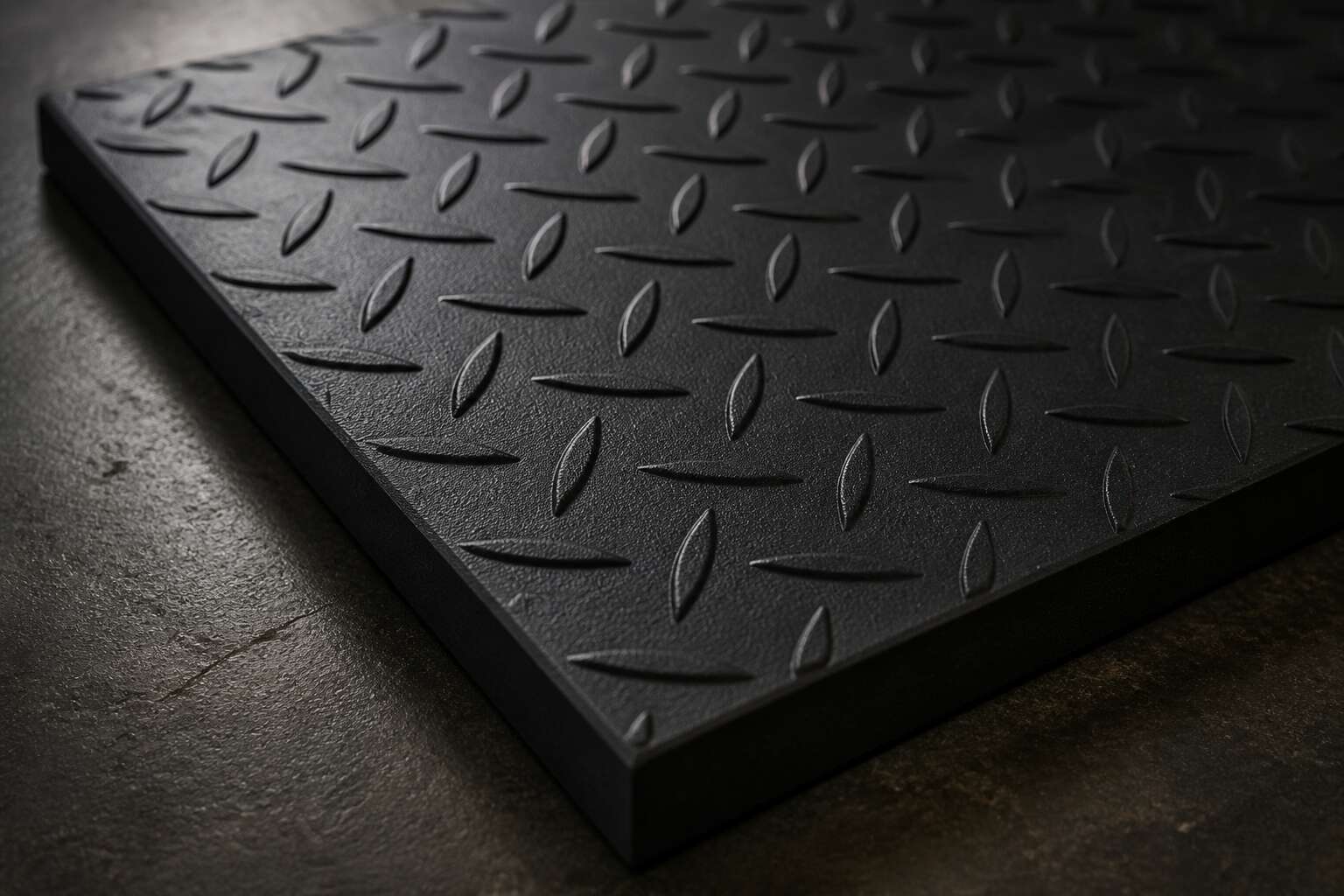
Why Black Rubber Flooring Stands Out in Commercial and Residential Settings
Aesthetic Flexibility: Blending with Minimalist and Industrial Design
In Johannesburg’s newest loft developments, architects are turning to a material once reserved for gyms and loading docks. The rubber mat black has become an unexpected protagonist in the country’s design narrative, anchoring spaces with quiet authority.
Its matte surface absorbs light rather than reflecting it, creating depth against white plaster walls and exposed concrete. This tactile quality invites touch while remaining utilitarian. The color black does not compete; it establishes parameters.
Consider where this flooring excels:
- Open-plan kitchens with raw timber cabinetry
- Industrial warehouses converted to galleries
- Entryways that demand resilience without sacrificing style
The rubber mat black offers designers a rare union. It withstands Cape Town’s damp winters and Gauteng’s dust, yet photographs beautifully in architectural magazines. For those seeking spaces that feel grounded rather than decorated, this material delivers a particular kind of honesty. Its presence suggests permanence, which is perhaps the most luxurious quality of all.
Superior Traction and Safety in High-Moisture Zones
Every rainy season, South Africans relearn the art of cautious walking. A rubber mat black surface, however, removes the performance entirely. With a coefficient of friction that stays consistent even when drenched, it offers the kind of grip that ceramic tile professes to have but never delivers.
Commercial spaces, from restaurant kitchens to hotel entrances, face liability when floors turn slick. Residential bathrooms present the same hazard behind closed doors. The rubber mat black responds with a textured surface that channels water away, maintaining traction without a full redesign. The open structure allows moisture to dissipate quickly, shrinking the window for a fall.
Consider the places where this matters most:
- Poolside change rooms with bare feet and dripping swimwear
- Dairy processing floors where spills are constant
- Guest bathrooms where visitors judge your hospitality by their footing
That last point is not trivial. Safety is a social courtesy.
Long-Term Durability Against Heavy Equipment and Foot Traffic
A pallet jack wheel presses the same spot for years and leaves its mark on concrete. A rubber mat black, however, recovers its shape. Its elastic composition enables that recovery, so commercial kitchens and workshops avoid the cost of frequent floor replacements.
Foot traffic is no gentler. Retail entrances and clinic waiting rooms see thousands of steps daily. Vinyl and tile show scuffs within months. Rubber’s abrasion resistance endures that load for decades.
- Compression set resistance prevents dents from heavy equipment
- Tensile strength withstands tearing from sharp objects
- Surface integrity survives continuous pedestrian flow
Sound Absorption and Impact Reduction Benefits
In a Johannesburg workshop, the clatter of a dropped spanner travels through concrete and tin roofing, disturbing an entire household. A rubber mat black changes that story. Its dense cellular structure absorbs impact energy at the source, turning a sharp crack into a dull thud. This material performs best where noise is relentless, such as home gyms, stairwells, and brewing corners.
Impact reduction goes beyond comfort. When heavy objects strike a floor, the force transfers to the subfloor and the joints above. Black rubber disperses that force laterally, sparing the foundation from shock. For upstairs flats in Cape Town or retail storerooms in Durban, this cushioning protects both the structure and the people moving across it.
- Quieter movement in high-traffic corridors
- Reduced vibration transfer to adjacent rooms
- Less echo in open-plan living spaces
I have stood on factory floors where rubber mat black deadened the roar of machines, and it felt like a different world. The same principle applies at home, where children run and furniture scrapes. Sound absorption is not a luxury here; it is a daily reprieve that keeps walls intact and nerves steady.
Key Applications and Environments for Dark Rubber Flooring Solutions
Gyms and Fitness Centers: Protecting Floors and Athletes
Walking into a packed gym, the floor endures tremendous punishment before noon. Dropped dumbbells, heavy squats, and relentless foot traffic combine to crack concrete and strain joints. A rubber mat black delivers the cushioning athletes need to land safely while shielding the slab beneath from impact fractures. We have seen Olympic lifts cause visible damage on unprepared surfaces within weeks.
The demanding zones of any facility each stress flooring differently. Consider how differently these areas behave!
- The free weights section endures sudden, concentrated drops that test surface integrity.
- The functional training area sees rapid pivoting, dragging, and jumping movements.
- The cardio deck faces continuous abrasion from machines and repetitive foot strikes.
A rubber mat black handles every one of these challenges. This flooring also copes with the constant wipe-downs and disinfectants used after each session. Sweat and chalk wipe away with ease, keeping the environment hygienic!
Industrial Workshops and Warehouse Loading Areas
Industrial workshops and warehouse loading areas punish floors in ways that gyms do not. A pallet jack weighing 500 kg drops a load from a few centimetres high. The repeated shock fractures concrete over months. A rubber mat black absorbs that kinetic energy. It spreads the force across its dense surface, protecting the substrate beneath.
These zones also expose flooring to oils, solvents, and metal debris. A rubber mat black resists these chemicals without swelling, and workers can sweep or flush it clean. It remains flexible in cold winters and stable in coastal humidity.
Install it in these critical spots:
- Dispatch bays where forklift wheels turn sharply
- Maintenance pits with frequent tool drops
- Pallet racking aisles where loads shift
The result is a floor that survives both impact and contamination. A rubber mat black outperforms paint or coating under continuous industrial abuse.
Entryways and Foyers: Managing Dirt and Moisture
The first minute inside a building often decides how visitors perceive it. In South Africa, that minute involves wet shoes, dusty wheels, and kapok seeds dragged from the pavement. A rubber mat black placed at the threshold absorbs that moisture and abrasive grit before they reach the reception floor. The mat’s cellular surface traps particles, while its dense backing prevents water from seeping through to the concrete beneath.
Foyers with heavy daily traffic, such as medical offices, banks, or municipal buildings, need a solution that works silently. Consider these high-risk zones:
- Revolving door exits where rain pools into puddles
- Stairwell landings that connect outdoor parking to lifts
- Reception counters where employees stand for long shifts
A rubber mat black also reduces cleaning frequency. Facilities managers in coastal regions like Durban see less residue build-up because the mat captures most of the load. This reactive surface handles both the morning rush and the quiet afternoon, without shifting under foot or curling at the edges.
Animal Housing and Veterinary Clinics: Easy Cleaning and Comfort
Veterinary practices in South Africa face a peculiar challenge. Every patient arrives anxious, often wet from the rain or dusty from the kennel. A rubber mat black in the consulting room gives the animal secure footing, which calms the nervous creature more effectively than any verbal reassurance. The surface is gentle on joints for older pets recovering from surgery.
Cleaning protocols demand speed. Spills, fur, and disinfectant solutions accumulate quickly in these spaces. The mat handles all of them.
– Kennel runs where urine and water mix constantly
– Treatment tables where antiseptic drips onto the floor
– Recovery wards where patients rest between procedures
A rubber mat black withstands the chemical cleaners used in sterilisation routines. The dense surface resists claw marks and does not harbour bacteria. Staff spend less time scrubbing and more time attending to animals.
Choosing the Right Thickness, Texture, and Peel-and-Stick Options
Thickness Guide: From 2mm to 10mm and Beyond
Think of a rubber mat black surface as a silent operator, working behind the scenes of daily operations. Selecting the right material involves more than a glance at colour, since thickness dictates durability. A 2mm profile suits light, pedestrian traffic or temporary protective layers where you need a slim profile. Conversely, industrial environments and workshop floors demand a 10mm profile, which absorbs substantial impact and resists heavy abrasion.
Texture plays a functional role. Diamond and ribbed patterns offer channel drainage, directing moisture away from the footpath. This reduces slip risk in wet zones while making regular cleaning quicker. For high-traction areas, consider:
– Diamond-patterned surfaces for sculleries and mechanics’ pits
– Ribbed profiles for entrance ramps and production lines
– Smooth top surfaces for commercial kitchens and laboratories
Peel-and-stick options deliver instant installation without adhesive residue or complex tools. The pressure-sensitive layer bonds firmly to wood, concrete, and steel. You simply measure, cut, and press into place. These are ideal for rental properties or temporary retrofits.
Here is where the rubber mat black excels: it pairs functionality with discreet sophistication. This material anchors equipment, dampens motor noise, and provides comfort underfoot, yet it remains unobtrusive. From a 2mm anti-fatigue layer in a standing workstation to a 12mm fortress beneath heavy machinery, the correct substrate protects your surfaces. Choose based on the stress you anticipate, balancing cushioning against structural support. The mat should serve your space, adapting silently to the demands placed upon it.
Surface Textures: Diamond Plate, Ribbed, and Smooth Finishes
A single rubber mat black can absorb a falling spanner or support a standing worker for eight hours. The difference lies in three choices: thickness, texture, and adhesion.
Thickness must match the punishment you expect. A 3mm sheet suits light footfall in a retail back office. A 9mm core endures workshop traffic and machine vibration. Never guess; examine the heaviest object that will cross the surface.
Texture controls safety and cleaning. Diamond plate directs water away from wet areas. Ribbed surfaces provide grip on inclined ramps. Smooth finishes wipe clean in laboratories and food preparation spaces.
- Diamond plate for wet or oily floors
- Ribbed for ramps and conveyor lines
- Smooth for sterile environments
Peel-and-stick versions simplify installation. The pressure-sensitive backing bonds to timber, concrete, or steel. You measure, cut, and press into position. This method suits rental properties or temporary workstations where removal is inevitable.
Rolls vs. Interlocking Tiles vs. Peel-and-Stick Sheets
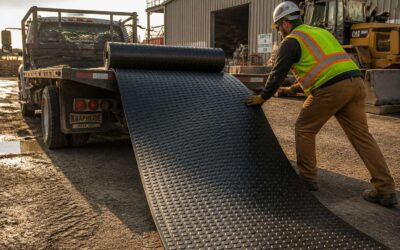
Format decides whether a rubber mat black survives its first year. Thickness and texture dictate performance under impact and moisture, but the format determines how it fits your floor plan. Rolls, interlocking tiles, and peel-and-stick sheets each serve a different installation need.
Rolls cover large continuous spaces with minimal seams. Interlocking tiles let you expand or reconfigure without tools. Peel-and-stick sheets fix permanently to clean timber, concrete, or steel, which suits rental areas only if you never intend to lift them.
- Rolls: best for warehouses and corridors
- Tiles: best for changing room layouts
- Sheets: best for fixed workstations
A roll can stretch or curl in heat. Interlocking tiles leave seams that trap dirt. Peel-and-stick sheets bond tightly but resist repositioning. Each format carries different trade-offs for maintenance and longevity.
Proper Installation and Maintenance for Long-Lasting Dark Rubber Surfaces
Surface Preparation: Cleaning, Priming, and Acclimation
Properly placing a rubber mat black is a matter of respect for the floor beneath it. In South Africa, with our sharp sunlight and the dampness of coastal cities, a badly prepared slab extracts a revenge that appears within weeks. You might see blisters, or the edge curving like an insect wing, and that is the beginning. Start by cleaning any layer of old cement film or impurities. A degreaser works, but you must let it dwell and then flush with water. Let the concrete become bone dry.
Acclimation is the second half of the gospel. Roll out the mat in the installation room for a full two days, unwrapped. The rubber must stretch, take on the room’s humidity, and lose the memory of its factory roll. The prime becomes almost unnecessary if you simply wait.
The best sequence to follow is ordered by logic or complication:
- Remove loose soil and strippers with a vacuum
- Use an emulsifying solvent on any oil spots.
- Apply a foam applicator of bonding the rubber.
- Do not press the rubber mat black until it has reached 48 hours.
The floor may look clean. But the surface is the sole witness of your technique, and it will testify through the iconic dark lines that this material is forced to hold.
Adhesive Selection and Installation Best Practices
The reality is that the adhesive is the only witness to your patience, and in South Africa, the humidity decides whether that patience survives the first summer. For any rubber mat black, the adhesive must be selected against the specific floor temperature during application. A solvent-based adhesive works best for a rough concrete slab, while a moisture-cured urethane system holds where coastal air pushes water vapour upward.
Then comes the technique. Apply the adhesive evenly with a trowel. You must leave 48 hours for the bond to function before you walk across the rubber mat black. But of course, most workers will never read this, and their timing reflects it. For the rubber, lowering it too early creates void spaces that loosen the edges at the first heavy weight.
Do this first:
- Work from the centre outward, pressing the rubber flat in one direction.
- Failure to apply the pressure across the full width causes the mat to lift exactly there. You will discover this when the humidity arrives.
There is no coding in the factory that will forgive a separation from the floor. The re-restoration starts at once, or the rubber returns to the creases where the concrete hurt it.
Daily Cleaning Routines to Prevent Staining and Scuffing
A black rubber mat is a workhorse, not a show pony. It takes the abuse so your floors don’t have to. But even the toughest surface needs a proper start. Get the groundwork wrong, and you will be peeling up corners sooner than you think, replacing a perfectly good product due to a preventable failure.
The secret lies in preparation. An adhesive is only as strong as the surface it touches. Sweeping is not enough; you need to scrub away dust, grease, and old sealers. For a rough concrete slab, consider a grinder to open up the pores. This gives the glue something to bite into. A moisture test is non-negotiable for South African climates, especially near the coast. If your slab is emitting water vapour, no adhesive will hold. Skip this step, and you are gambling with your time and money.
The choice of glue matters more than many realise. A solvent-based adhesive works well for most indoor applications, creating a strong initial bond. But for areas with high humidity, a moisture-cured urethane system is your safety net. It reacts with the air to form a permanent, waterproof bond. Do not use a general-purpose carpet tape for a high-traffic area; that is a temporary fix, not a permanent installation.
The technique of application is where patience pays off. Use a notched trowel and spread the adhesive evenly. You are not painting the floor; you are creating a uniform layer. Too much glue causes bumps; too little creates weak spots. Once the mat is down, you must wait. Rolling it with a heavy roller squeezes out trapped air and ensures full contact. Walk away for 48 hours. It feels too long, but that is how long the bond needs to reach full strength.
- Clean the slab with a degreaser and let it dry completely.
- Test moisture levels with a plastic sheet taped down overnight.
- Select a urethane adhesive for coastal or damp environments.
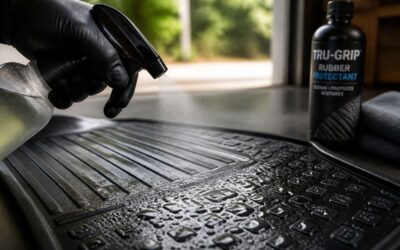
Once installed, the black mat requires a simple routine. The goal is to remove abrasive particles before they get ground into the surface. A stiff broom or a vacuum with a brush attachment works daily. For deeper cleaning, a damp mop with a neutral pH cleaner handles spills. Avoid harsh solvents or oil-based degreasers; they can break down the rubber compound and cause it to become brittle.
A stubborn stain or a scuff mark from a boot heel happens. Use a soft nylon brush with soapy water to agitate the spot. Rinse thoroughly and let it air dry. Do not use a pressure washer; it forces water to the edges, where it can lift the adhesive over time. The mat will fade slightly in direct sunlight, which is a natural characteristic of rubber and does not affect its performance.
The longevity of a black rubber mat is directly tied to the care it receives in the first week. If you do the heavy lifting upfront, you will get years of service. If you rush the drying time or ignore the adhesive instructions, you are back to square one. It is a simple equation. The mat is ready to work; you just have to let it.
Deep Cleaning Techniques and Chemical Recommendations
Deep cleaning a rubber mat black surface is an occasional procedure, not a daily chore. Monthly, or after heavy contamination, use a rotary floor machine fitted with a soft nylon brush. Work in overlapping passes with a neutral pH cleaner diluted exactly per the label. Chemicals matter! Alkalis attack the rubber matrix, while citrus solvents leave a greasy film. Stick to approved options: mild soap, ammonia-free glass cleaner, or a purpose-made rubber floor conditioner.
- Approved: pH neutral detergent, isopropyl alcohol at 10% dilution
- Avoid: bleach, pine oil, mineral spirits, undiluted degreasers
Rinse with clean water and extract the liquid promptly. Standing moisture migrates to the seams and weakens the adhesive below. Once dry, inspect the perimeter. Catch a lifted edge early and re-bond it with urethane cement. That is the maintenance that counts, because a rubber mat black floor fails at the borders first, and the borders deserve your eyes.
Repairing Cuts, Tears, and Loose Edges Over Time
A rubber mat black surface only performs as well as the foundation beneath it. Installation errors cause premature failure, and ignoring small damage accelerates the process. When a mat lifts, curls, or tears, the problem spreads quickly. Fixing these issues requires attention to the material’s specific properties and the conditions that caused the damage.
Assess the Damage First
Before any repair, examine the affected area. A clean cut from a sharp object is straightforward to mend. A torn section with ragged edges indicates stress or dragging. Loose edges often point to adhesive failure or insufficient surface preparation during the initial install.
Check the subfloor. If moisture seeps through concrete, no adhesive will hold the rubber mat black in place. Test for dampness by taping a plastic sheet to the floor for 24 hours. If condensation forms underneath, you must solve the moisture problem before repairing the mat. Otherwise, the repair will fail quickly.
Repairing Cuts and Tears
For clean cuts, you can fuse the rubber back together. Use a rubber-specific adhesive that remains flexible after curing. Apply it sparingly to both edges. Press the sides together firmly. Wipe away any excess adhesive immediately before it cures. Place a heavy weight over the repair and leave it for 24 hours.
For larger tears with missing sections, you need a patch. Cut a piece of matching rubber mat black material. Make the patch larger than the damaged area. Round the corners to prevent future peeling. Apply adhesive to the patch and the recessed area. Press it into place. The patch should sit level with the surrounding surface. A slight bump will catch foot traffic and eventually wear through.
Re-Bonding Loose Edges
Loose edges require a different approach. Lift the mat carefully. Scrape away old adhesive and dirt from both the mat backing and the floor. Clean both surfaces with isopropyl alcohol and let them dry completely. Apply fresh adhesive to the floor only. Press the mat down and roll it with a heavy roller to force out air pockets. Weight the edge overnight.
If the mat keeps lifting, the issue might be the mat itself. Rubber mats can develop a memory for their curled shape. In this case, lay the mat flat and apply heat with a heat gun. Warm the curled edge until it becomes pliable. Then, apply adhesive and press it down. Hold it in place as it cools. This method works well for rolled edges that resist lying flat.
Managing the Perimeter
The perimeter of a rubber mat black surface endures the most abuse. It catches shoes, cart wheels, and cleaning equipment. A loose edge becomes a trip hazard. It also allows moisture and dirt to get underneath, which breaks down the adhesive bond.
On a damaged perimeter, consider trimming the affected section. Cut a straight line through the mat and remove the compromised portion. If the gap is small, you can butt the remaining edge against a wall or threshold. For larger sections, install a transition strip. This metal or rubber profile covers the cut edge and protects it from further damage. It also creates a finished look.
Preventing Future Damage
Repairing a cut extends the mat’s life. Preventing new damage requires ongoing care. Place a walk-off mat at entry points to reduce grit that acts like sandpaper on the rubber. Do not drag heavy equipment across the floor. Lift and carry instead.
Clean spills immediately, especially oils and solvents. These chemicals break down rubber compounds. Even a rubber mat black surface that seems tough will degrade over time if exposed to the wrong substances. Use a soft brush for routine cleaning. Avoid stiff bristles which can scratch the surface and create rough spots where dirt collects.
The goal is to keep the mat intact and bonded to the floor. A secure installation resists damage. A damaged mat invites more damage. Address issues early, use the right materials, and the surface will remain functional for years.


0 Comments