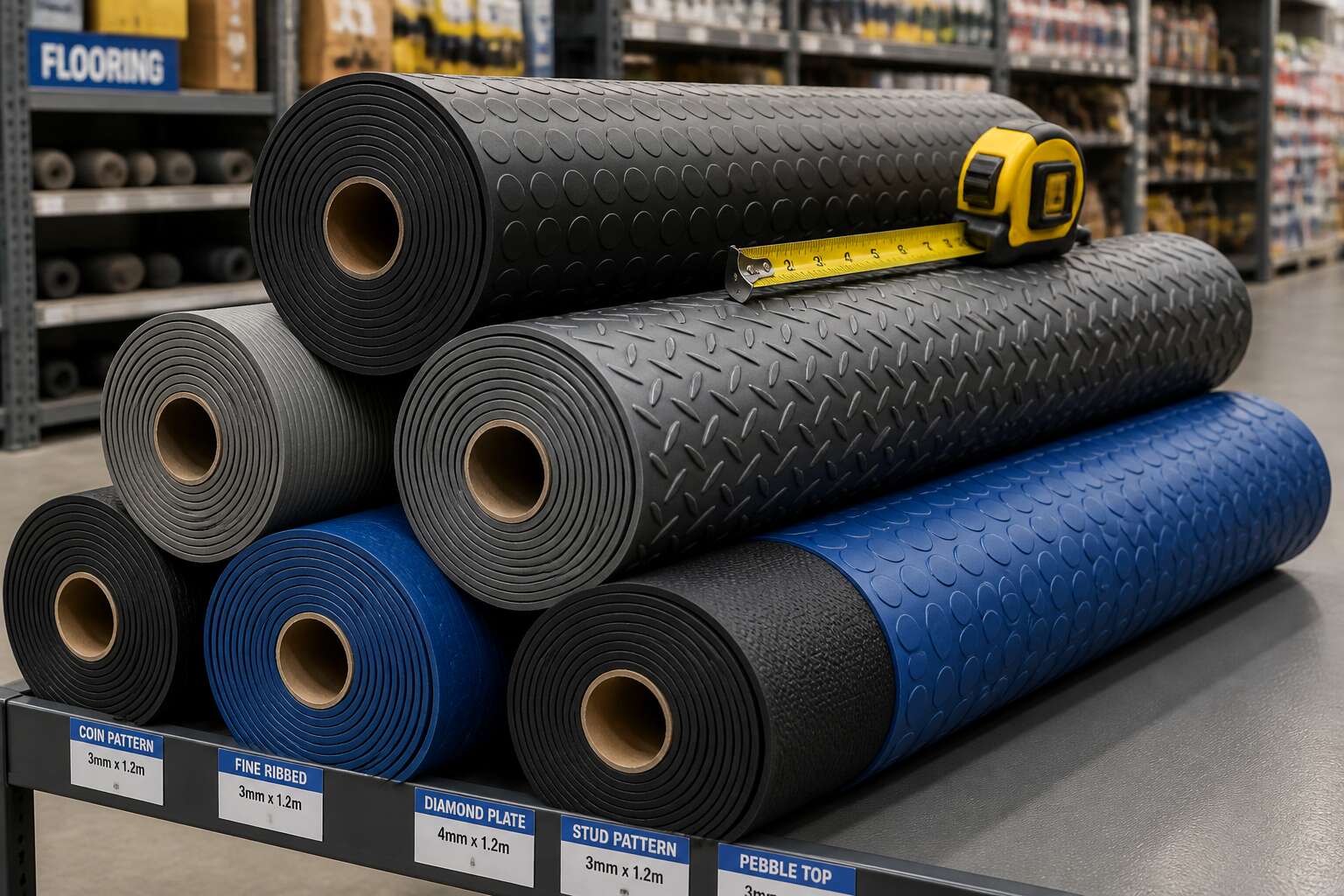
Evaluating Your Rubber Matting Needs Before Purchase
Identify the Primary Application and Environment
Before you start searching for rubber matting where to buy, take a hard look at your floor’s future. Will it battle oil drips from a beloved bakkie, or host gentle yoga classes? This distinction matters. A mat that withstands workshop abuse could be too rough for bare feet. Consider the temperature, the sunlight, and the chance of chemical spills. I once bought a grip mat for a garage that turned into a slippery mess when diesel arrived. Avoid that mistake!
- Exposure to water, oil, or UV rays
- Foot traffic or heavy machinery loads
- Required thickness for cushioning and durability
Each variable changes the rubber compound and backing you need. Answering these honestly determines whether your matting lasts a decade or disappoints within months. The correct environment and application narrow your choices before you ever compare prices.
Calculate Coverage Area and Set a Budget
A single miscalculation in square metres can add thousands of rand. Measure the length and width of every distinct floor area, including bays, walkways, and storage nooks. Multiply for the total, then add a 10% wastage allowance to cover trimming and irregular edges. When you search for rubber matting where to buy, present these exact figures to the supplier!
Budgeting demands the same precision. The quoted price per square metre rarely covers the full bill. Delivery charges, adhesive, edge trims, and underlay are often quoted separately. Itemise your costs:
- Core matting price per square metre in rand
- Delivery and handling fees
- Adhesive, tape, or edge trims
- Underlay, if cushioning matters
I compare quotes from three suppliers before committing. Offcuts and roll ends often get discounted for smaller installations. Rubber matting where to buy becomes straightforward when your measurements and budget align.
Check Safety Standards and Compliance Ratings
Safety certifications separate premium rubber matting from the lookalikes. In South Africa, SANS compliance is the benchmark for industrial and public spaces. A mat that fails the slip resistance test, typically a coefficient of friction below 0.5, can become a liability. When you search for rubber matting where to buy, ask every supplier for their test certificates. Fire retardancy ratings matter too, especially in kitchens or workshops near open flames.
I once walked a warehouse floor with a supplier who boasted about his imported range. The certification was nothing more than a photocopy. I verify SANS 1005 or comparable standards before signing anything. These are the ratings I ask for:
- Slip resistance, wet and dry
- Fire retardancy classification
- UV stability for outdoor applications
Rubber matting where to buy becomes a simpler question when compliance is verified upfront. A non-compliant mat found during an audit erases any savings from a cheaper quote.
Consider Maintenance and Installation Preferences
A neglected rubber floor traps grime in its first month, turning a clean workspace into a contamination source. Before you search for rubber matting where to buy, evaluate how the mat will be cleaned and laid. A mat requiring chemical stripping every quarter is a different investment than one needing only a hose down.
Installation preferences often dictate the choice. Roller mats with seams demand taping and a level substrate. Interlocking tiles allow quick replacement but collect crumbs at the joints. I prefer loose lay for temporary setups, but permanent areas benefit from adhesive. Ask about edge bevels and drainage channels, especially if the floor will see moisture.
- Adhesive installation requires a dry, crack free base.
- Loose lay works on smooth concrete but shifts under heavy traffic.
- Tiles suit small repairs without tearing out the whole floor.
Maintenance follows installation. Some mats stand up to pressure washing; others warp under hot water. Check the cleaning chemical compatibility before signing an order. Rubber matting where to buy becomes a safer query once you know your cleaning routine and floor condition.
Online Retailers and Marketplaces for Rubber Matting
Large E-Commerce Platforms and Their Selection
The online marketplace for rubber matting has grown steadily, with local e-commerce platforms now stocking options that once required special orders. This shift means you can compare prices, read user feedback, and arrange delivery without leaving your desk. Large platforms like Takealot offer extensive catalogues, often featuring everything from ribbed rolls to interlocking tiles. Amazon also ships many non-stock sizes directly to your door, though you must factor in international shipping times.
When you search for rubber matting where to buy, focus on sellers with verified transaction histories. Marketplaces often list independent vendors alongside established retailers, so check the seller rating and return policy before committing. A few platforms worth browsing:
- Takealot for fast local dispatch
- Builders Warehouse for specialist heavy duty rolls
- Amazon for unusual dimensions
The real advantage of online buying is the ability to filter by thickness, density, and surface texture in seconds. Just watch for hidden fees, as some sellers add courier charges at checkout. With a bit of patience, you will find the right product without driving across town.
Specialty Flooring and Matting Websites
Specialty flooring and matting websites cater to specific needs. These vendors focus exclusively on rubber surfaces, so their catalogues include unusual profiles like studded rolls or anti-fatigue tiles. For anyone searching rubber matting where to buy, these outlets deliver deeper expertise. I have found that product descriptions often mention Shore hardness and abrasion resistance, details that general retailers rarely list.
Another advantage is cut-to-size options. Many specialty sites let you input exact dimensions, reducing waste. They also stock accessories such as edge trims and adhesive tapes.
Here are a few sources to inspect:
- Flooring suppliers with technical support teams
- Manufacturers selling directly to the public
- Local wholesalers with bulk pricing
Shipping within South Africa is generally reliable, though custom cuts may take longer. If you need niche options, these websites are worth a look!
Direct-from-Manufacturer Online Stores
Online marketplaces are the bargain bin of rubber matting. You will find bulk importers, auction leftovers, and some chap selling a single roll from his boot. The prices tempt you, but the quality is a box of chocolates. One listing promises virgin EPDM, the next offers recycled tyres with a fragrance best described as “mechanic’s armpit”. Still, for rubber matting where to buy, these platforms win on sheer variety.
Direct from manufacturer online stores offer the opposite experience. No middlemen, no mystery stock, just a proper catalogue and technical data sheets that make engineering sense. I have found that buying straight from the source gives you custom thicknesses and honest lead times.
- Verify the manufacturer actually ships to your province
- Ask about remnant rolls and factory overruns
- Read the fine print on minimum order quantities
Marketplaces might beat them on price, but manufacturers beat everyone on knowing exactly what you will unroll.
Comparing Shipping Costs, Edge Trimming, and Return Policies
Shipping costs for rubber matting where to buy can exceed the product price. A standard roll weighs more than a bag of cement, and couriers price by volumetric weight. I have seen Johannesburg retailers quote R400 delivery while a Pretoria outlet asks R1,200 for the same order. Distance matters, but so does the courier contract.
Edge trimming separates professional suppliers from stock movers. Some online retailers cut edges to your exact dimensions before dispatch. Others ship raw slabs and expect you to trim with a sharp blade. Ask before you pay!
- Confirm edge trimming is included
- Request the courier’s volumetric calculation
- Read the return policy before ordering
Return policies vary widely. A returned roll of rubber matting costs the seller freight both ways, so many retailers refuse. Others charge a restocking fee that reduces your refund. The cheapest listing often has the strictest returns. That is the trade-off you accept.
How to Vet Seller Reviews and Product Certifications
Online marketplaces present a paradox: abundant choice and abundant noise. The seller with 4.9 stars may have five reviews, all from colleagues. The seller with 3.8 stars may have two hundred verified purchases. Volume and specificity tell the truth. Look for reviewers who mention the roll weight, the rubber smell, the delivery timeline. Vague praise is worthless.
Product certifications are the true filter. In South Africa, SABS approval matters for industrial applications. Imported mats often carry only a manufacturer’s self-declared compliance. Cross-reference the certificate number with the issuing body.
- Check the review date
- Verify the certification number
- Request a sample before bulk ordering
That final step separates serious buyers from casual browsers. Searching rubber matting where to buy on a marketplace demands verification. A rating is a snapshot, not a guarantee.
Big Box Home Improvement and Hardware Stores
National Chains You Can Visit in Person
Most online options force you to trust photos, but a physical visit to a national hardware chain removes all doubt. You assess rubber matting where to buy by touching the surface, bending the material, and testing the slip resistance. This tactile process ensures the product matches your specific needs.
South Africa offers several chains worth visiting:
- Builders Warehouse, with its generous flooring display area
- Cashbuild, a reliable option for high traffic applications
- The Hardware Centre, where staff can guide you through various grades
Each location lets you compare products immediately. No waiting for delivery, no uncertainty over quality. You leave with the exact item in hand.
What to Look for In-Store Versus Online
Big box stores offer a paradox: the website shows every colour and thickness, while the physical shelf holds two brown rolls. When you search rubber matting where to buy, the in-store price often differs from the online price. I once saw a roll marked R450 in store and R520 online. The store manager shrugged.
Scrutinise this. In-store, check roll ends for damage, because those get discounted. Online, verify delivery radius for heavy items, since free shipping rarely covers a 20kg roll. Confirm that online inventory matches the branch. Half the time it does not!
- Ask staff about floor stock that never reaches the shelf.
- Compare the online price with the till price before you pay.
Rubber matting where to buy depends on how much hassle you accept. Big box stores win when you have time to haggle, but lose when you need it today.
Roll Goods, Interlocking Tiles, and Pre-Cut Options
Big box hardware stores stock roll goods near the loading bay. You pull from the centre and fight the crease before measuring. Request a cut and the staff produce a utility knife with resigned expertise. Inspect the cut edge, since a skipped blade shreds the rubber and complicates your plans.
Interlocking tiles encourage order, but check the puzzle lugs, for one bent tab creates a trip hazard. Pre-cut mats cost more per metre, yet for many weighing rubber matting where to buy, they remove the need for a rental van. The three formats offer:
- Roll goods for the lowest price per metre.
- Interlocking tiles for later adjustments.
- Pre-cut mats for consistency without tools.
In one visit you compare all three. Rubber matting where to buy rarely gets settled in a single aisle, but at least the comparison is physical.
Special Order Programs and Cut-to-Size Services
According to a store manager I spoke with in Durban, the average special order now takes ten days instead of six weeks. That shift matters more than most people realise. The cutting service, however, remains the real reason many visitors choose a physical branch over an online checkout.
- Order by the exact meter for a custom length.
- Order by the full sheet and perform your own trimming at home.
Many hardware retailers now offer a dedicated cutting counter near the warehouse section. You select the rubber matting in the aisle, and a staff member slaughters the sheet to your specified dimensions. The machine usually handles thicknesses up to ten millimetres without complaint. The cost stays modest, often around five rand per cut, and some locations waive the fee when you purchase the full roll. This service specifically answers the question of rubber matting where to buy for those with awkward, nonstandard areas.
Builders Warehouse branches in Cape Town and Johannesburg operate this system consistently. The staff will also split a roll into multiple smaller pieces for you, which saves considerable time. You avoid the creased, folded cuts from the shelf and get clean factory edges on every panel. For agricultural use, such as a stable aisle, the cut-to-size option beats any online purchase. Honestly, the dust from the cutting area and the noise of the machine still beat waiting for a courier with a heavy, awkward package. Just phone ahead to confirm the cutting blade is sharp. A blunt blade leaves a ragged edge that weakens the mat. I promise the extra call takes less than a minute.
Hunting Seasonal Promotions and Clearance Discounts
Big box hardware stores put their unsold rubber stock on a rotating clearance schedule. One Cape Town branch marks down floor mats every second Tuesday, and the price tags show a pattern of about 30 percent off the original. A savvy shopper checks the aisle end caps, not the main display, because that is where the overstock lands.
Seasonal shifts drive these promotions. Winter pushes stable matting to full price, while summer empties the gym flooring section. Look for these signals of a true clearance deal:
- Packaging that has one torn corner but leaves the mat intact.
- A batch number different from the current shelf stock.
- Dust on the roll, which means it has survived a few inventory cycles.
For anyone asking rubber matting where to buy, the clearance rack offers a real discount. Just inspect the edges for cuts or compression marks before paying.
Specialty Fitness and Commercial Supply Centers
Gym and Fitness Equipment Retailers
Specialty fitness retailers often stock rubber matting where to buy with attention to durability. In Johannesburg, these shops let you feel the difference between compression molded and recycled rolls. I have seen customers spend an hour comparing shore hardness values. Commercial supply centers cater to gym owners who need bulk orders. They offer load testing data and installation support.
- UV resistance matters for mats near windows.
- Swatches reveal indoor and outdoor finishes.
- Delivery fees vary between Soweto and Cape Town.
Both channels provide access to trusted brands. The staff often train on site, which builds practical knowledge. For large installations, commercial centers can arrange cut lengths. That level of service matters when your project spans multiple rooms.
Commercial Flooring Distributors
Commercial flooring distributors operate in a different register. Their showrooms are quieter, stacked with technical binders instead of display racks. When rubber matting where to buy becomes a procurement question, these suppliers answer with cut sheets and abrasion curves. They sell to contractors, schools, and industrial sites.
Requesting samples from a distributor yields more than swatches. You receive:
- Compression set data
- Slip resistance coefficients
- Fire retardant classifications
Distributors in Cape Town offer local stock, while Joburg warehouses hold larger rolls. Staff understand acoustic underlays and subfloor conditions. They will ask about your substrate before quoting. That question alone separates them from general retailers.
Restaurant and Kitchen Supply Stores
Specialty fitness supply centers stock a different inventory. They offer rubber matting where to buy for actual drop zones, skipping the decorative yoga mats. The staff here understand impact absorption. They’ll ask about your maximum fall height before showing you a 25mm interlocking tile. They often have a test piece on the floor so you can drop a dumbbell on it. You’ll find stall mats and thicker rolls that general retailers never bother to stock!
Restaurant and kitchen supply stores cater to a different hazard. Their rubber matting where to buy options focus on anti-fatigue and slip resistance. They sell the dense, oil-proof sheeting that stands behind a fryer for eight hours a day. You won’t find decorative colors. You’ll find grey, black, and deep grooves. Asking for a sample here gets you a corner piece that shows how it handles a spilled pot of hot water. These suppliers are practical, and their advice centres on daily wear, not aesthetics.
Agricultural and Industrial Supply Houses
Specialty fitness and commercial supply centers stock rubber matting where to buy for heavy traffic. These places serve gyms, workshops, and distribution hubs. Staff will ask about your impact load before showing you a 38mm ribbed tile. You can test it with a steel toe boot. This is not the fluffy yoga stuff.
Agricultural and industrial supply houses focus on endurance. Their rubber matting where to buy includes cow stall mats, anti-vibration sheeting, and drainage-friendly rolls. The advice is blunt: keep it clean, keep it dry.
Typical finds:
- 1.5m wide rolls with grooved surfaces
- Mats with reinforced edges for forklift zones
- Square tiles rated for chemical exposure
Every option here is priced for hard use, not decoration.
Advantages of Trade-Specific Advice and Bulk Pricing
Walking into a specialty fitness or commercial supply center changes everything. You get staff who know load ratings and slip coefficients. They ask about your actual workspace. One conversation beats hours of scrolling. Bulk pricing matters here. Buy fifty mats and the unit price drops. That is the trade-off for dealing with trade-specific advice. These centers stock rubber matting where to buy for high-traffic zones. They will not sell you a yoga mat. The advice is direct. They compare compounds and textures. You leave with a product matched to your floor. For example:
- Forklift aisles need diamond tread.
- Weight rooms need interlocking tiles.
- Washdown areas need drainage mats.
That specificity saves money over time. Bulk orders get pallet discounts. The staff also know delivery logistics. This is where rubber matting where to buy turns into a long-term purchase.
Local Options, Secondhand Markets, and Sustainable Sourcing
Flooring Showrooms and Local Contractors
Most buyers overlook that the search for rubber matting where to buy begins in warehouses that never advertise. Local flooring showrooms stock offcuts and discontinued lines at half the retail price. Contractors in industrial zones hold surplus rolls from finished sites, and their inventories shift weekly.
Secondhand markets such as City Deep in Johannesburg trade matting stripped from closed gyms and warehouses. Used sheets carry cracks and deep cuts, and prices reflect that condition. The savings remain substantial.
- Recycled tyre matting from Gauteng mills
- Architectural salvage yards in Cape Town
- Excess inventory from commercial building fit-outs
Sustainable sourcing reduces landfill pressure while delivering durable surfaces. A growing number of local mills press rubber matting from reclaimed tyres, giving old waste a second life in stables, workshops, and loading bays.
Recycling Centers and Scrap Matting Dealers
Scrap matting dealers operate quietly on the edges of industrial parks, buying surplus rolls and damaged batches that retailers reject. Their yards reward patience. A quick phone call often reveals stock that never reaches a showroom floor, and prices drop when you take the whole roll.
Secondhand markets in smaller towns and coastal hubs trade rubber sheets from decommissioned ships, old dairy parlours, and event staging. Condition varies wildly, so inspect edges and surfaces before paying:
- Check for deep cracks and tears that weaken the core
- Measure thickness at several points
- Smell for oil contamination that affects adhesion
Some dealers sort usable sections from worn pieces, saving you the cutting work.
Sustainable sourcing continues gaining ground. Recycling centres accept used matting and pass it to processors who granulate the rubber for new products. Scrap dealers connected to these centres sometimes offer recycled matting at competitive rates. Search rubber matting where to buy through recycling networks and you support a circular system while finding thicknesses that retail lines no longer carry.
Online Classifieds and Local Buy-Sell Groups
Somewhere in Pretoria, a frustrated DIYer is offloading six meters of rubber matting because it does not fit his trailer. Online classifieds make the hunt for rubber matting where to buy a neighbourly affair. Facebook Marketplace and Gumtree host sellers from smallholdings to industrial estates, each with a story and a negotiable price.
Secondhand markets here reward keen eyes. You find rolls from old factory floors or school gyms, often with useful wear patterns. Inspect edges and folds before agreeing.
- Query how the roll was transported
- Test flexibility with your hands
Sustainable sourcing happens automatically, keeping usable material out of landfills and cutting down on new shipping.
Remodeling Salvage Yards and Surplus Stores
Salvage yards and surplus stores offer a different kind of hunt for rubber matting where to buy. In Johannesburg’s industrial strips or Cape Town’s outer suburbs, these yards hold rolls that were overstocked, decommissioned, or simply forgotten. Prices run a fraction of retail, but you need patience.
Inspect each roll thoroughly. Check for dry rot along the cut edges. Smell for oil contamination. Bend the rubber back to see if it cracks or springs back.
- Measure the true thickness with calipers
- Look for uniform wear patterns
- Ask about the source material
Sustainable sourcing here is organic. A roll that once lined a mine’s walkway or a dairy farm’s milking parlour gets a second life in your workshop. For anyone tracking rubber matting where to buy, this route keeps vulcanised rubber out of the landfill and skips the carbon cost of new manufacturing entirely.
Wholesale Pallet Deals and Overstock Lots
Around Johannesburg and Cape Town, local options for rubber matting where to buy extend beyond storefronts. Wholesale pallet deals appear when distributors over-order or warehouses reclaim floor space. You might buy forty square metres of industrial matting that smells like a tyre shop. That is the tradeoff for paying a third of retail! A typical pallet lot includes:
- Remnants from a single production batch
- Discontinued colours or surface textures
- Mixed thicknesses that require sorting
Secondhand markets reward persistence. Liquidation auctions list matting from closed gyms and shuttered factories. Rubber survives where carpet rots. Deep cuts and oil saturation matter more than surface scuffs.
Sustainable sourcing is practical. A pallet of overstock matting avoids new manufacturing. Local options cut transport emissions. Secondhand markets keep rubber in service. That is the cycle for anyone tracking rubber matting where to buy.
How to Inspect Used Mats Before Committing
Used rubber matting carries its history invisibly. A scuffed mat might be perfectly sound, while a clean one could hide oil damage. Local options exist in every major South African city, but persistence matters more than proximity when you are researching rubber matting where to buy. Check secondhand markets through classifieds and salvage yards, where closed gyms and factories quietly release their stock. Before you commit, inspect every mat closely:
- Fold it to check for deep cracks or dry rot
- Sniff for oil or solvent saturation
- Press the surface to confirm it still springs back
Sustainable sourcing is the quiet benefit. Every used mat you buy is one less mat sent to landfill. For anyone tracking rubber matting where to buy, secondhand is the most direct route to a lower environmental footprint.

0 Comments