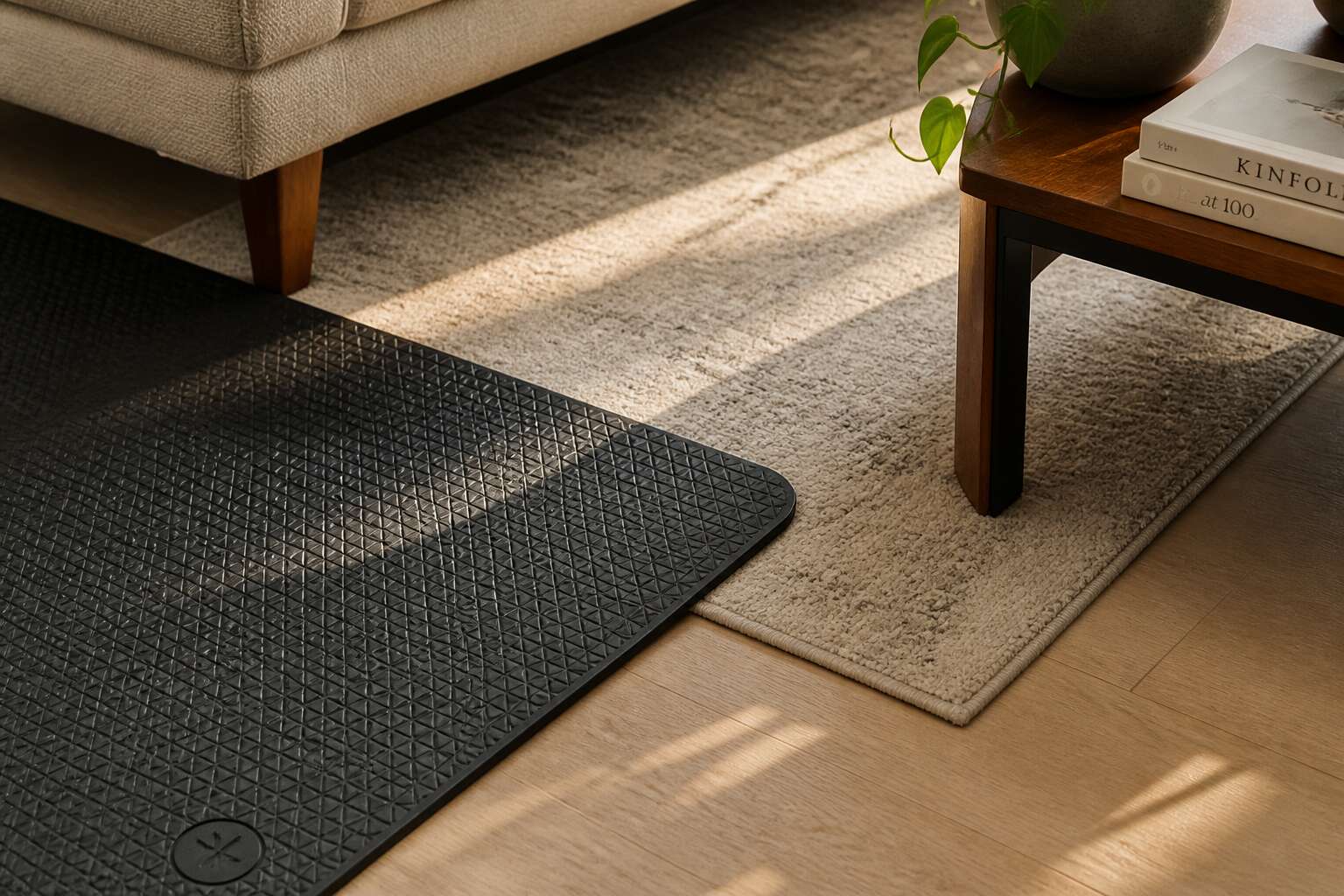
Key Differences in Material Composition
Natural Rubber vs. Synthetic Rubber
Most South Africans assume every rubber mat or carpet shares the same formula. In reality, natural rubber comes from latex sap while synthetic rubber derives from petroleum byproducts. That origin changes everything, and I have seen it matter.
Natural rubber offers superior elasticity and handles heavy foot traffic without cracking. Synthetic rubber resists oil, heat, and UV damage better, making it ideal for garages or outdoor areas. Here is the breakdown!
- Natural rubber: higher tensile strength, more expensive
- Synthetic rubber: lower cost, better chemical resistance
For a workshop, synthetic wins. For a home entrance, natural feels softer and springs back quicker.
Carpet Fibers and Backing Materials
Few shoppers inspect the underside of a rubber mat or carpet, yet that hidden layer decides whether it survives a Joburg winter or shreds within months. I have seen premium fibers fail because the backing material lacked integrity.
Carpet fibers vary in molecular structure. Nylon offers resilience and resists crushing, while polypropylene laughs at moisture but dulls faster. Wool, the aristocrat, breathes naturally but demands careful maintenance!
- Nylon: tough, springy, ideal for heavy traffic
- Polypropylene: water resistant, budget friendly
- Wool: luxurious, natural, high maintenance
Backing materials anchor these fibers. Woven polypropylene provides stability, whereas latex or bitumen add weight and grip. The interplay between fiber and backing determines the overall performance of that rubber mat or carpet. Choose poorly, and even the best fibers separate from their foundation.
Surface Texture and Grip Profiles
The difference between a mat that holds firm and one that skids across a tiled floor comes down to material composition. A rubber mat or carpet with a smooth PVC surface might look neat, but it offers little grip when wet. Pebbled or ribbed textures displace water and maintain traction. I have seen Durban kitchens turn into slip hazards because the mat lacked a proper grip profile!
That said, the same principle applies to carpet. A loop-pile carpet with a dense rubber backing provides stability on hard floors. A low-profile weave feels firm underfoot, while a deep pile creates a softer landing but shifts under heavy furniture. When you compare grip profiles, watch for:
- Ribbed surfaces that channel water away
- Pebbled finishes that resist sliding under foot traffic
- Closed-cell construction that prevents moisture absorption
A rubber mat or carpet only performs well when its surface texture matches your floor type and the demands of your space.
Environmental Impact and Recyclability
Every kilogram of flooring material carries real costs in energy, water, and eventual disposal. South Africa sends over 120 million tonnes of waste to landfills annually, and flooring contributes its share. The composition of a rubber mat or carpet decides whether it becomes a long term asset or a single use burden.
Synthetic rubber compounds resist degradation but complicate recycling. Natural rubber offers cleaner end of life processing, though vulcanisation creates cross links that limit reclamation. Carpet backing materials, particularly bitumen and PVC, present similar problems. Polypropylene face fibres can separate from backing, but the process needs machinery most local recyclers lack.
Consider the environmental variables:
- Energy recovery from incinerated flooring works, though carbon intensive.
- Mechanical granulation of rubber mat or carpet produces playground surfacing and safety tiles.
- Chemical devulcanisation, still developing, allows higher value reuse.
Performance and Durability Comparison
Wear Resistance Under Heavy Foot Traffic
Entrances in Johannesburg see more foot traffic than a taxi rank at rush hour. The real test for any floor covering is how it survives daily abuse. When you compare rubber mat or carpet under heavy foot traffic, rubber typically outlasts the fibrous alternative because it rebounds after each step. Carpet fibres crush and mat down over time, while rubber maintains its profile.
Look for these wear indicators:
- Surface pilling or fraying
- Compression marks that never recover
- Visible backing or bald patches
Rubber mat or carpet choices depend on traffic type. Pointed heels and dragging luggage damage loop pile carpet quickly. A dense rubber mat resists such abuse. For a high-traffic corridor, rubber is the more durable option.
Weather and Moisture Tolerance
The South African climate is a tale of two seasons, and floor coverings need to survive both. A summer thunderstorm in Gauteng can dump more water in an hour than some cities see in a month. When you consider the rubber mat or carpet debate under these conditions, impermeability becomes the deciding factor. Rubber is inherently waterproof, while most carpets act like a sponge, wicking moisture straight into the backing and underlay.
This moisture tolerance is critical in coastal regions like Durban where humidity is a constant companion. Moisture trapped beneath carpet becomes a breeding ground for mould and mildew, leading to a telltale musty odour that no air freshener can mask. Rubber, on the other hand, does not absorb water, so the risk of rot or fungal growth here is virtually non-existent. The material simply shrugs off the damp.
Here is the outcome of leaving standing water on each surface for a few hours:
1. Carpet absorbs the water, leaving a permanent dark patch and a compromised structure.
2. Rubber matting collects the water on its surface, which can be wiped or hosed off without a trace.
For areas prone to spillages or seasonal downpours, this difference carries real financial weight. The labour and chemicals required for professional carpet drying far exceed the simple maintenance of a rubber surface.
Slip Resistance and Safety Features
Slips and falls account for a significant share of workplace injuries in South Africa, a fact that makes the rubber mat or carpet decision one of liability, not just preference. The real difference emerges during operational use, specifically how each surface interacts with a hurried step.
Carpet offers initial softness, but this can be deceptive. Its fibrous structure provides little lateral resistance when a foot lands at an angle. Rubber matting, by contrast, often features a deliberately engineered topography, even when visually smooth. The micro-displacements under foot pressure create a mechanical lock between sole and surface that carpet simply cannot replicate.
This distinction becomes apparent in specific conditions:
– A carpet surface that is clean and dry offers consistent, but average, friction. The moment it becomes dusty or loaded with fine debris, the fibres compact into a slick, polished finish.
– A rubber tile or mat, frequently in a textured or studded profile, maintains its coefficient of friction because the material displacement channels away particulates and moisture, preserving contact.
– Wet or lubricated conditions are a worse case, where rubber matting provides a reliable grip that carpet can lose entirely due to a water film forming on the fibre tips.
The performance comparison is also a story of material memory. Rubber possesses an elastomeric resilience, the ability to return to its original form after repeated compression. A heavy pallet jack can leave a permanent divot in a carpet tile, a deformation that worsens with every subsequent pass. Rubber, even under static loads, recovers to a near-flat plane, keeping the walking surface level and reducing trip hazards. Over time, this structural retention is the primary safety feature, as it prevents the uneven surfaces that are more dangerous than any initial slip risk.
Noise Reduction and Acoustic Properties
In the hush of a busy corridor, the choice between rubber mat or carpet becomes audible. Carpet absorbs footsteps into a muffled whisper, but it also traps the clatter of trolleys in its pile, softening every strike until the sound becomes a dull, persistent hum. Rubber matting, however, turns noise into a sharper, shorter echo, one that dissipates quickly because the material itself refuses to vibrate for long.
Durability follows a similar rhythm. Carpet wears down where people turn, its loops flattening into a permanent path. Rubber mat or carpet decisions often hinge on this exact moment: a rubber surface shrugs off the scuff of a dragged crate, returning to its original grain with barely a memory. The acoustic benefit is quieter, but real. A hard rubber tile reflects less sound than concrete, while still giving the floor a resilient, grounded voice.
- Rubber maintains its thickness under rolling loads, preserving both cushion and quiet.
- Carpet compresses unevenly, creating soft patches that deaden sound inconsistently.
In a warehouse or a clinic, this balance of noise and wear shapes the daily experience. The right surface gives you a floor that endures without shouting, and that is a rare kind of comfort.
Comfort and Ergonomics Over Long Periods
Standing for eight hours on a hard floor rewires your body’s patience. Rubber mat or carpet changes that equation entirely. Carpet offers a soft, giving surface, but it also lets your feet sink unevenly, which strains the arches over time. Rubber provides a firmer yet resilient base that absorbs shock without surrendering its shape.
Consider these ergonomic realities:
- Rubber maintains consistent support across the full contact area.
- Carpet’s pile collapses under sustained pressure, creating variable comfort zones.
In a workshop or reception area, this difference accumulates daily. I have seen workers shift weight constantly on worn carpet, while rubber matting allows a steadier stance. The material’s density returns energy gently, reducing fatigue in the knees and lower back. For spaces where people stand, rubber mat or carpet becomes a quiet factor in their long term wellbeing.
Maintenance and Cleaning Considerations
Daily Cleaning Routines and Tools
Cleaning is 90% showing up, or so the floor maintenance crew says. For your rubber mat or carpet, daily attention prevents long term damage. A stiff broom clears the grit that settles into the base. A damp mop with warm water and mild soap lifts sticky residue without harming the compound. Avoid harsh solvents; they erode the surface over time and leave a tacky film.
Keep these tools within reach:
- A stiff-bristled broom for dry debris
- A microfiber mop for damp wiping
- A vacuum with a brush attachment for stubborn fibres
- A soft scrub brush for textured areas
Rotate them daily, especially in high traffic zones. Let the surface air dry completely before heavy use. Your rubber mat or carpet will retain its appearance through repeated cleaning cycles.
Stain Resistance and Removal Strategies
Stains are the folklore of any floor, tales told in coffee rings and oil shadows. A rubber mat or carpet with a dense, non-porous surface resists the bite of common spills, but not all. Certain agents, like strong acids or solvent-based inks, can breach the compound’s resilience and leave a permanent mark. Knowing the stain’s origin is the first rite of removal.
For fresh marks, blot, do not rub. I have seen surfaces ruined by scrubbing. Rubbing pushes the pigment deeper into the fibre. Choose your weapon based on the spill’s nature:
- Water-based spills respond to dish soap and warm water.
- Oil and grease require a degreaser, applied sparingly.
- Ink or dye needs a specialised removal solvent, tested on an unseen edge.
Let each solution dwell, then rinse with a clean cloth. The same rubber mat or carpet that withstands foot traffic will surrender its blemishes when treated with patience.
Odor Retention and Air Quality
Nobody walks into a boardroom and says, “Ah, I love the smell of vulcanised polymers.” Yet scent is the silent salesman of any space. I have discovered that a rubber mat or carpet can hold onto yesterday’s lunch, or worse, a week of rain-soaked boots. The porosity of the backing is the culprit. A dense compound resists, but a poor quality blend will whisper old smells every time the sun hits the window.
Odour retention is a beast of physics. Humidity in Durban or Johannesburg speeds up the breakdown of trapped organic matter. Cleaning agents with harsh solvents often release a chemical ghost that lingers. Ventilation is your ally. Airflow across the surface does more than any spray.
For maintenance, consider the following routine to keep the air fresh:
1. Vacuum with a HEPA filter to pull out fine particles.
2. Use a neutral pH cleaner, not bleach.
3. Dry the surface completely; trapped moisture is the enemy.
4. Apply a specific deodoriser for rubber compounds.
The alternative, a carpet, demands different care. Fibres trap dust mites and pollen, raising the stakes for allergy sufferers. A rubber mat or carpet with an open-cell foam backing becomes a sponge for odours. Closed-cell options are sealed. If you want a space that breathes, examine the construction. The right choice is the one that avoids the olfactory arms race entirely, leaving the air quiet and neutral.
Mold and Mildew Prevention
Mold does not announce itself. It arrives as a faint mustiness, then as dark speckles under the edges of a rubber mat or carpet. In coastal cities like Durban, humidity makes prevention a weekly task. The backing material is the first line of defense. Closed-cell rubber resists moisture, while open-cell soaks it in.
Lifting the mat regularly breaks the cycle. Air needs to reach the floor underneath. A simple inspection once a month catches early signs.
- Wipe spills immediately with a dry cloth.
- Use a fan or dehumidifier in enclosed spaces.
- Clean with a fungicidal solution designed for rubber.
If mildew appears, scrub with a soft brush and warm water. Avoid steam cleaning on rubber; it drives moisture deeper into the core. The goal is simple: keep the surface dry, and the spores stay dormant.
Cost Analysis and Long-Term Value
Upfront Material and Installation Costs
In the world of flooring, the initial price tag often tells a half truth. For a rubber mat or carpet, the upfront material and installation costs differ wildly depending on the substrate beneath your feet and the quality you choose. On average, South African businesses find that a commercial grade rubber mat or carpet can cost between R180 and R450 per square metre before installation labour is even considered. Installation factors, such as subfloor preparation and site access, add a further margin, meaning the tender price is rarely the final number on the invoice.
But here is where the calculation bends. A cheaper carpet fibre may save R50 per square metre at the outset, yet the longevity of that choice is what commands your bank balance in the long run.
– A premium rubber mat or carpet often requires adhesive and rolling equipment for proper installation.
– Heavy-duty rubber options may demand a professional floor sander for seams, adding to the labour quote.
– Carpet tiles with a dense backing are easier to install, but the material cost per unit is higher than broadloom.
When you extrapolate the cost over a ten year lifecycle, the narrative shifts. Replacing a worn carpet twice in a decade double the initial expense outright. The resilience of a solid rubber surface, though expensive to transport due to weight, often outlives its fibrous counterpart by several years. That durability translates to fewer procurement cycles, less downtime for your operation, and a lower total cost per metre. For the budget-conscious facility manager, this long term value makes the rubber mat or carpet a compelling financial instrument, not just a decorative one.
Expected Lifespan and Replacement Frequency
The real measure is lifespan, not the sticker price. A commercial carpet under heavy foot traffic in a Johannesburg retail space often fails between five and seven years. A rubber mat or carpet, depending on compound and thickness, commonly serves fifteen years or more. That is the difference between two or three procurement cycles and one.
Every replacement event requires moving stock, halting operations, and paying for disposal. Add those costs to the invoice and the gap widens further. My own experience with a Durban warehouse floor proved this plainly. The carpet needed replacement twice in a decade. The rubber surface alongside it still shows original wear patterns.
- Carpet: 5 to 8 years in busy corridors
- Rubber surface: 15 to 20 years with routine cleaning
The replacement frequency of a rubber mat or carpet is lower, which changes budgeting entirely. You plan for one capital outlay instead of a recurring expense.
Hidden Costs of Maintenance and Repairs
Maintenance budgets are where the real surprises live. A carpet in a Cape Town office needs frequent deep cleaning, and every stain removal session eats into your monthly outlay. For a rubber mat or carpet, the story shifts. Repairs are rare, and when they happen, they are localised. You replace a section, not the entire floor.
Consider the hidden costs: downtime during cleaning, specialised equipment, and the inevitable call-out fees. My own ledger from a Pretoria showroom showed carpet cleaning costs tripled over three years. The rubber surface next to it needed nothing beyond a weekly sweep.
- Carpet repair: seam splits and delamination
- Rubber mat or carpet: minor surface cuts, easily patched
That is the difference between a maintenance line item and a maintenance footnote.
Resale Value and Warranty Considerations
Property valuations in South Africa rarely account for flooring, but buyers notice. A tired carpet can reduce a showroom’s perceived value by measurable margins. The rubber mat or carpet alternative holds its own on resale day, since condition outweighs material preference.
Warranty terms differ sharply. Most carpets carry pro-rata coverage that shrinks annually, leaving you with a fraction of protection by year five. Rubber mat or carpet products often carry fixed-term guarantees against manufacturing defects, not wear. That distinction reshapes your total cost per year of service.
- Some warranties exclude commercial traffic entirely
- Others demand certified installation to remain valid
- Most ignore moisture damage from improper cleaning
Long-term value appears where lifespan and resale value intersect. A surface that survives a decade without replacement, and still lifts a building’s asking price, outperforms any floor demanding constant attention. The total cost calculation over a decade settles the argument.
Application-Specific Recommendations
Residential Entryways and Mudrooms
A single rainstorm can turn a Cape Town entryway into a muddy swamp. I have seen many homeowners struggle with soggy carpets that reek after a wet winter. For mudrooms, a rubber mat or carpet with a drainage-friendly profile performs well. Matching the product to your actual foot traffic is essential.
Consider these factors for a hardworking entrance:
- Choose a scraper texture for shoes caked with garden soil.
- Prioritize a low-profile edge to prevent tripping.
- Verify the material can handle direct sunlight without fading.
A dense, looped carpet offers comfort for barefoot family members, but it demands more frequent vacuuming. Meanwhile, a ribbed rubber surface cleans easily with a hose. Both options have merit, so the final choice depends on your household’s rhythm.
Home Gyms and Fitness Areas
In a home gym, flooring faces a relentless workload. Dropped dumbbells, rubberised sled pulls, and the constant friction of a treadmill belt wear down surfaces unevenly. I have seen a thin carpet shred under a rowing machine within months, while a misplaced rubber tile left permanent scuffs on the concrete beneath. The right choice depends on your workout style.
For most setups, a rubber mat or carpet with a dense, closed-cell structure handles the load. Consider the specific zones in your training space:
- Heavy lifting areas need maximum shock absorption.
- Cardio machines require a stable, non-flexing base.
- Stretching or yoga corners benefit from a softer, warmer surface.
I personally use a hybrid approach. A rubber mat or carpet under the squat rack, and a smaller, washable mat for floor work. Sweat soaks into anything porous, which is why I prioritise materials that wipe clean in seconds.
Commercial Kitchens and Restaurants
In the culinary world, the floor is not a backdrop; it is a participant. Every shift is a campaign against grease, boiling stock, and the occasional avalanche of peeled potatoes. I have leaned over a pass counter and watched a perfectly good line cook perform an impromptu tap dance on a slick of duck fat. A commercial kitchen floor endures thermal shock, chemical attacks from sanitisers, and the ceaseless impact of dropped cast iron. A thin rubber mat or carpet can fail catastrophically under a 200-degree spill, fusing to itself and becoming a permanent trip hazard.
Selecting the right rubber mat or carpet for a restaurant is a matter of public safety and staff morale. Unlike a home gym, your kitchen’s hazard profile changes by the hour. You need a surface that tolerates constant hosing, resists oil absorption, and does not harbour bacteria in its weave.
Consider the specific zones in your kitchen where the floor works hardest:
– The grill and fryer line: Needs maximum resistance to heat and grease. Closed-cell rubber excels here.
– The prep and plating area: Requires grip without being abrasive. A textured surface reduces knife slips.
– The dish pit: Demands rapid drainage and zero water pooling. A mat with a waffle design works best.
I have seen kitchens use the same rubber mat or carpet for years, only to wonder why the health inspector frowns at the stained edges. The secret is not just material choice, but the willingness to lift and deep-clean those zones weekly. A floor that looks clean at 6 PM can be a biohazard by midnight if the wrong surface traps moisture. In high-volume South African kitchens, where the pace is frantic and the standards are high, a smart investment in a durable rubber mat or carpet is cheaper than a single day of lost reputation.
Industrial Workspaces and Garages
The first rule of workshop maintenance is that everything eventually drips. A sump pan, a coolant line, a forgotten cup of coffee. A rubber mat or carpet catches that mess before it becomes a permanent feature. The surface must face heavy loads and sharp edges without tearing.
- Service pit areas: resist hydraulic fluid
- Tool benches: absorb dropped impact
- Paint booths: easy to wipe down
Concrete absorbs every drop and retains the smell for years. The right mat lifts clean in minutes. I have seen a workshop floor survive years of abuse when the mat is chosen for the specific hazard, not for appearance. A closed cell material stops moisture from creeping into the backing.
Pet-Friendly Spaces and Kennels
For pet friendly spaces, the floor faces urine, claw scratches, and constant washing. A rubber mat or carpet must drain and dry quickly, or ammonia odours will settle into the backing. I prefer mats with raised drainage channels in kennels, since they keep animals above the mess.
Choose a formulation that resists claw gouging. Softer surfaces feel comfortable for resting dogs, but they tear. Dense rubber handles repeated disinfectant scrubbing without swelling.
- Kennel runs: ribbed rubber for drainage
- Grooming stations: closed cell to trap fur and water
- Recovery wards: cushioned carpet for joint comfort
Seams trap bacteria, so use continuous rolls or weld the joints. A rubber mat or carpet that peels at the edge becomes a trip hazard and a hiding place for bacteria.
Kids’ Play Areas and Educational Settings
On any given morning, a South African playroom floor takes a beating. Tiny chairs scrape, juice boxes spill, and little knees hit the surface during games. The right rubber mat or carpet changes how safe and calm that space feels.
I have watched children move from a hard tiled hall into a room with cushioned flooring. The difference is immediate. Play becomes quieter, and the mood settles. For educational settings, the surface must handle both messy art sessions and quiet reading time. A rubber mat or carpet that resists moisture and cleans easily will last longer than one chosen for colour alone.
- Sand and water tables need a sealed surface
- Nap corners need softness without sinking
- Doorways need drainage and grip
South African humidity can trap moisture under flooring. Choose a backing that lets air circulate, or you will find mould creeping in from the edges.

0 Comments