Types of Industrial Rubber Flooring
Roll Goods vs. Interlocking Tiles: Choosing the Right Format
Choosing between roll goods and interlocking tiles tests any facility manager. I have watched grown men argue about seam integrity and subfloor tolerances with surprising intensity.
Roll goods offer a continuous, seamless surface. They arrive in heavy, wide sheets that discourage bacterial harborage and fluid penetration. Professional installation is non-negotiable, as a poor cut leaves a permanent scar.
Interlocking tiles provide modularity. Individual squares can be replaced in minutes without disrupting operations. They tolerate uneven concrete and the enthusiasm of weekend do-it-yourselfers, though their edges can occasionally catch.
Your facility dictates the format. Consider these priorities:
- Seamless hygiene for food processing versus quick replacement for high-wear zones.
- Budget for professional installation versus the willingness to handle a Saturday project.
When you browse a rubber mat grainger catalogue, keep these distinctions in mind. Choose a rubber mat grainger stocks in its heavy-duty roll format or the modular tile, but know your tolerance for imperfection versus your appetite for speed.
Diamond-Plate and Ribbed Surface Profiles
Diamond plate and ribbed profiles dominate industrial rubber flooring, and the difference between them matters more than most buyers expect. I have walked countless factory floors in South Africa and watched how each surface behaves under real conditions, not just in a showroom. Diamond plate is the workhorse, a raised lozenge pattern that grips boots and pallet jacks alike. That texture provides traction in every direction, which is why it shows up on loading docks and washdown areas.
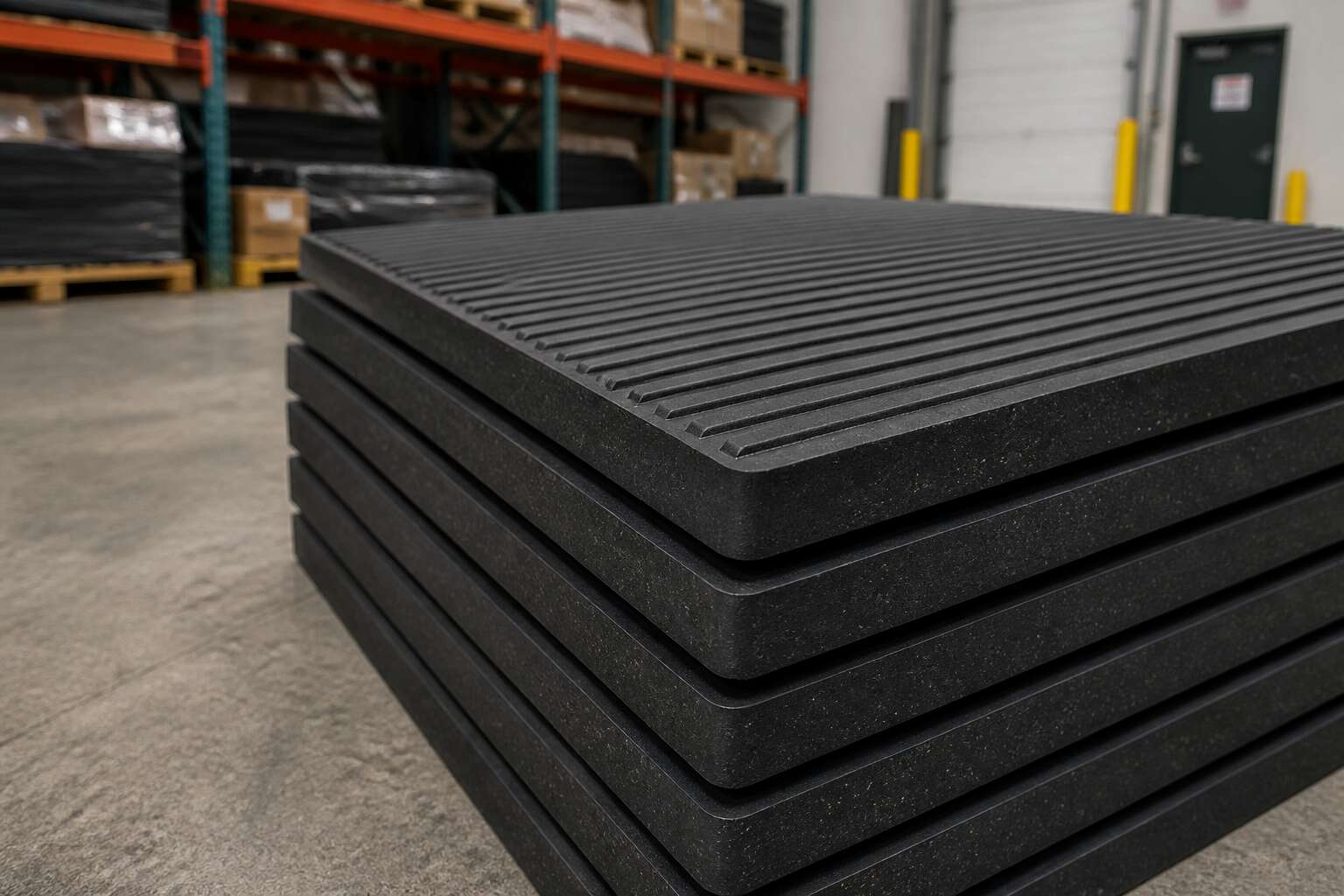
Ribbed rubber matting tells a different story. Its long, parallel ridges channel fluids away from foot traffic zones and offer a directional grip that suits conveyor lines or sloped walkways. The ribs also make the surface easier to hose clean, since debris settles between the ridges rather than embedding itself into the tread. You will find both profiles in any rubber mat grainger catalogue, but the choice often comes down to how fluid interacts with your operation.
– Diamond plate locks underfoot in every direction, ideal for workstations where workers pivot frequently.
– Ribbed profiles excel at directing water and oil toward drainage points.
– Diamond plate hides scuffs and weld sparks better than smoother surfaces.
– Ribbed rubber cleans faster in wet processing environments.
Weight and thickness vary across both profiles, and the substrate beneath them deserves as much attention as the surface pattern. A heavy diamond plate over uneven concrete will telegraph every joint and crack, while a flexible ribbed product may conform to that same subfloor without complaint. When you search for rubber mat grainger options, let the physical demands of your facility dictate the profile. The visual distinction is obvious; the functional difference takes a forensic eye to appreciate.
Anti-Fatigue Mats for Standing Workstations
Two hours on bare concrete is the threshold where discomfort turns to fatigue. Anti fatigue mats are the practical answer. These rubber platforms absorb the shock that your knees, hips, and lower back take. The key is the foam or sponge core beneath the rubber surface, which compresses under weight and rebounds as you shift. That subtle give keeps blood moving and joints from locking up.
For South African workshops where shifts run long, the best rubber mat grainger options include beveled edges to prevent tripping and a non slip bottom to resist creeping across oily floors.
Consider these features when comparing:
- Thickness: 10 mm to 15 mm suits most standing workstations.
- Surface texture: a stippled pattern offers grip without catching tools.
- Core density: softer foam reduces fatigue, firmer foam lasts longer.
A rubber mat grainger catalogue will show many variations. Match the mat to the task, not the colour.
Conductive and Static-Dissipative Rubber Flooring
An electrostatic discharge can corrupt a microchip or ignite a dust cloud. Conductive and static-dissipative rubber flooring exist for these exact scenarios. The conductive type channels electrical charges to a grounding point, while static-dissipative versions slow that flow to protect sensitive components.
In South African plants, I have seen the wrong floor become a liability. A rubber mat grainger catalogue lists these safety rated surfaces with resistance values clearly marked. When comparing, look for:
- Volume resistivity below 1 x 10^6 ohms for conductive mats
- Surface resistance between 10^6 and 10^9 ohms for static dissipative
These mats often include a carbon core or copper strips. The options also vary in thickness from 2 mm to 8 mm, with thicker sheets offering more impact resistance. Thermoplastic blends resist chemical spills better than vinyl. An ungrounded mat collects charge, which defeats the static control purpose!
Recycled Rubber vs. Virgin Rubber Compounds
A single scrapped truck tyre carries enough rubber to cover a factory floor in recycled matting. Yet that recycled material brings hidden variables. Each batch contains different polymers and carbon black. A virgin rubber compound is mixed to a precise recipe with controlled durometer.
In South African mines, I have watched recycled mats fail under hydraulic oil while virgin sheets held their surface for years. Recycled rubber resists impact at a lower cost. Virgin compounds deliver consistent chemical resistance. A rubber mat grainger catalogue separates them by sourcing and additives.
- Recycled: best for general impact zones
- Virgin: better for oil, acid, and temperature extremes
Choose based on your actual exposure. If in doubt, a rubber mat grainger spec sheet lists the durometer and oil resistance values directly.
Key Selection Criteria for Heavy-Duty Mats
Measuring Thickness and Durometer Hardness
A thick mat with low durometer hardness will crush under a pallet jack. A thinner, correctly tuned compound can outlast it. When I consider the heavy-duty rubber mat Grainger supplies, thickness is listed in millimetres, but hardness is expressed as Shore A. A 10 mm mat at 65 Shore A provides both cushioning and load support. Softer compounds at 55 Shore A feel pleasant but deform; harder ones above 75 Shore A resist abuse without comfort.
For South African warehouses, common specifications are:
- 8 mm minimum for point loads
- Shore A 60 to 70 for heavy-duty use
- Compression set below 20% for recovery
The Grainger catalogue usually lists these values.
Chemical Resistance and Oil-Proofing Capabilities
A mat that survives a pallet jack but dissolves under hydraulic fluid is a liability. Chemical resistance is the primary failure mode. Oil, diesel, and aggressive cleaning agents in South African facilities attack polymer bonds. When selecting a heavy-duty mat, the Grainger spec sheet must include a chemical compatibility chart. Nitrile rubber stands up to petroleum products, while EPDM handles acids and bleaching agents. The wrong compound swells, cracks, and loses shape within months.
Before committing, verify the oil proofing capabilities. Look for a compound rated for continuous contact with the fluids on your floor. A quick field test? Apply a few drops of the actual fluid to a sample corner. If it softens or discolours overnight, walk away.
When reviewing a rubber mat grainger listing, I look for these values:
- Oil swell percentage under 10%
- Chemical resistance rating for acids, alkalis, and solvents
- Temperature range of the compound
Temperature Tolerance for Extreme Environments
A facility in Mpumalanga can hit 40°C on the shop floor, while a coastal warehouse in Cape Town deals with cold, damp air. Rubber responds to both. High heat accelerates oxidation, turning a flexible mat brittle. Freezing temperatures make compounds stiff and prone to cracking under impact. The wrong rubber mat grainger selection fails when the mercury drops or spikes.
Thermal tolerance dictates longevity. Nitrile handles moderate heat but struggles in continuous direct sunlight. EPDM resists ozone and weathering, making it a better outdoor candidate. For extreme heat near furnaces or kilns, a specialised compound with a high-temperature rating is non-negotiable. Check the manufacturer’s spec for the continuous service range, not just the peak.
When comparing options, here is what matters:
– Operating range: Does it cover your seasonal lows and highs?
– Heat aging: Does the compound harden or lose elasticity over time?
– Cold flexibility: Will the mat crack if a forklift passes over it in winter?
The Grainger datasheet should state a clear temperature window. If it doesn’t, treat that as a red flag. Compound formulation determines thermal survivability. Ask for the test data. The price difference between a mat that lasts one summer and one that survives a decade in the sun is a worthwhile investment. Pair this with the chemical resistance characteristics we covered previously, and you have a solid foundation for a rugged worksite.
Load-Bearing Capacity and Compression Set
Your average forklift tips the scales at around 5,000 kg, and it will roll over your rubber mat grainger selection without a second thought. Load-bearing capacity is the number that tells you whether the mat can handle the weight or give way under it. If the spec sheet lists a weight limit below your heaviest equipment, you already have your answer.
Compression set measures how well the material springs back after the load moves on. A mat with high compression set will show permanent divots. Those divots become trip hazards. When you evaluate heavy-duty options, check two things:
- Dynamic load rating: covers forklifts and moving machinery that strike harder than stationary weight.
- Static load rating: covers a machine parked on the mat overnight.
The dynamic number matters most for a busy floor. The static number keeps you honest. Both belong on the same rubber mat grainger datasheet. If one is missing, ask for it.
Slip Resistance and Traction Ratings
Slip resistance is the difference between a mat that protects a worker and one that causes the injury. Traction ratings measure the interaction between boot sole and rubber surface. The standard test, run wet and dry, produces a coefficient of friction. A reading below 0.5 on a wet floor is a warning sign. South African factories see rain tracked in from loading docks, oil splashes, and fine dust. That combination turns a smooth mat into a hazardous surface.
Certification matters more than marketing language. Look for:
- Wet COF above 0.6
- Dry COF above 0.7
- A surface profile that channels liquid away
A rubber mat grainger with high traction still needs proper bevels and drainage. The tread pattern matters more than thickness. A mat that floats on a wet floor has a worthless rating, no matter what the label claims.
Custom Size Options and Cutting Methods
Selecting a heavy-duty mat demands attention to the unseen. The rubber mat grainger must survive constant forklift traffic and abrasive debris. Look at the polymer blend and the way edges are finished. A mat that can be cut to size without fraying is worth its weight. Custom size options reduce waste. Most suppliers offer trimming on site.
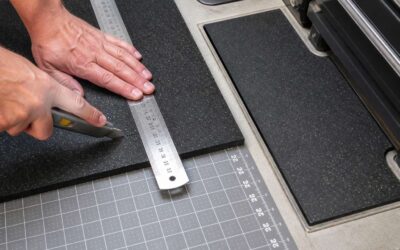
Consider the environment. Welding sparks, acid splashes, and relentless UV. The mat’s profile must not trap moisture. If you need to cut a mat yourself, use a sharp blade and a straight edge. A hot knife works for many compounds. Always measure twice, cut once.
- Edge treatment against curling
- Weight for stability
- Compression recovery
A proper fit prevents trip hazards. A rubber mat grainger cut to exact dimensions will outperform a stock piece that leaves gaps. Order slightly oversized and trim in place.
Application-Specific Mat Solutions
Warehouse Aisles and Forklift Traffic Zones
Warehouse aisles endure concentrated stress from forklift turning and braking. A rubber mat grainger solution for these zones must form a continuous surface with no gaps where a wheel can catch. Edge ramps at transitions prevent the mat from peeling under heavy traffic.
I have seen facilities reduce floor repairs by positioning mats to cover the full turning radius of their forklift fleet. In South African warehouses, the heat makes mats expand slightly, so leaving expansion gaps during installation is critical.
- Install mat sections so seams run parallel to the main traffic flow
- Use adhesive or tape at high stress entry and exit points
- Check mat edges monthly for lifting or curling
For aisles with frequent pallet movement, color coded mats mark pedestrian walkways and forklift lanes. Rubber mat grainger options with integrated edge ramps are worth considering for these zones.
Machine Shops and Assembly Lines
Machine shop floors endure a constant stream of cutting fluids, metal fines, and dropped fasteners. A rubber mat grainger designed for these spaces does more than protect concrete. It creates a surface that sheds oil and simplifies cleanup. Look for mats with drainage holes or channels that let fluids pass through rather than pooling on top. This reduces slip hazards and keeps small parts from sinking into grime.
Assembly lines present a different set of demands. Workers stand for hours, yet they move along the line. A mat that is too thick creates a trip point. Too thin and it offers no relief. The right rubber mat grainger for this setting balances cushioning with stability. It stays flat underfoot and resists shifting when workers pivot or reach.
- Choose mats with a textured surface to grip oil-soaked soles
- Verify the mat can handle constant foot traffic without compressing permanently
- Ask about custom lengths to cover the full work zone without seams
Entryway Systems and Lobby Flooring
An entryway endures more punishment in a single day than most floors face in a year. Every footstep drags in sand, rain, and the residue of city streets. A rubber mat grainger supplies for this frontier must scrape aggressively while maintaining a dignified appearance. The lobby beyond carries its own burden. Polished floors project a company’s image, yet they turn treacherous when moisture rides in on shoes. Rubber absorbs footfall shock and muffles the clatter of heels on stone. I have watched facilities where the wrong mat caused more problems than it solved. The correct installation creates a seamless transition from street to reception desk.
A robust entry system performs several duties:
- Capture debris before it travels deeper into the building
- Wick away moisture so hard flooring stays dry
- Withstand the abrasion of thousands of daily crossings
These uncelebrated surfaces work in silence, sparing cleaning crews and shielding the lobby’s investment.
Laboratory and Cleanroom Floor Protection
A single stray particle can nullify an entire experiment. Laboratories and cleanrooms demand surfaces that behave predictably under stringent protocols. A rubber mat grainger supplies for these spaces must possess a closed-cell structure that resists absorption. The surface should shed particulates rather than trap them. I once tracked airborne particle counts in a Johannesburg testing lab, comparing dense rubber mats against bare vinyl flooring. The measured difference convinced the facility manager to extend rubber coverage across the entire floor.
Specifying the correct material involves several factors:
- Particle shedding rate after repeated sanitization cycles
- Resistance to autoclave and UV exposure
- Compatibility with cleanroom class ratings
The right rubber mat grainger offers a forgiving surface for dropped glassware while remaining impervious to iodine and peroxide blends used in daily disinfection. It must hold up under rolling carts and stationary workstations without compacting. The material becomes part of the contamination control strategy, not an accessory to it.
Safety Compliance and Standards
ADA Compliance for Ramps and Transitions
A 12 millimetre lip can catch a wheelchair’s casters and expose a facility to liability. The Americans with Disabilities Act specifies a 1:12 slope ratio for ramps, while South Africa’s SANS 10400-S sets local limits for accessibility. These thresholds are not arbitrary. I have watched inspectors measure such gaps with a wedge gauge, and the verdict is always pass or fail. They check three things:
- Maximum slope gradients
- Threshold height differences
- Landing depth and clear width
Cut to size and properly anchored, rubber mat grainger options reduce the impact of those sharp transitions and add grip on the incline. The same surface prevents casters from dropping into gaps at the top of a landing, which is exactly the failure mode those standards address.
OSHA Requirements for Workplace Flooring
Walk into any facility during a surprise audit and the flooring is the first thing an inspector observes. OSHA’s walking-working surfaces standard, 29 CFR 1910.22, demands that floors remain clean, dry, and free of trip hazards. South Africa’s own Occupational Health and Safety Act parallels this, holding employers accountable for the ground beneath workers’ feet.
I have seen compliance teams scramble when an exposed expansion joint or a worn threshold lands them a violation. The fix often comes down to a simple intervention: a properly speced rubber mat grainger product that covers the gap and restores traction. Inspectors measure for cracks, peeling edges, and uneven transitions. They check:
– Drainage around wet process areas
– Slip resistance on ramps and inclines
– Edge anchoring to prevent curling
A mat that moves underfoot fails immediately. Anchored rubber mat grainger systems reduce incident reports and keep audit sheets clean, which matters when the penalty costs more than the retrofit.
Fire Retardancy and Flame Spread Classifications
Fire retardancy is the quiet requirement in compliance conversations. A rubber mat grainger product with a verified flame spread classification can contain an incident before it becomes a catastrophe. South African building codes reference SANS 10177 for fire propagation testing, and insurers increasingly demand documented evidence of retardant properties.
Flame spread classifications rank how rapidly a surface permits fire travel. Class A or Class 1 ratings represent the highest resistance, while lower classifications signal greater risk. Common test methods include the Steiner tunnel test and the pill test for floor coverings.
Consider what your facility actually needs:
– Exit routes require the strictest classifications
– Open plan areas tolerate moderate ratings
– Enclosed mechanical rooms demand documented certification
A rubber mat grainger without retardant additives becomes fuel. One with proper classification becomes a controlled boundary. The paperwork matters as much as the polymer.
Dimensional Stability and Tear Resistance Testing
Every compliance audit in South Africa begins with the same question: where is the test report? A rubber mat grainger that shifts underfoot or tears at the edges fails the very standards it claims to meet. Dimensional stability testing measures how well the material holds its shape under temperature swings and heavy traffic. Tear resistance testing reveals whether a small cut becomes a trip hazard.
I have seen audits stall over a single failed sample. The test methods matter:
- ASTM D624 measures tear strength
- ASTM D1204 evaluates dimensional stability
- SANS 10400 sets the regulatory baseline for flooring safety
Standards exist to protect people. A mat that moves, curls, or splits undermines every other specification on the datasheet.
Maintenance and Longevity Best Practices
Routine Cleaning Schedules and Compatible Chemicals
Maintenance is where most floor protection succeeds or fails. A quality mat performs admirably, but only if cleaning keeps pace with real world grime. I recommend a daily dry sweep for loose particles, then a weekly wash using a gentle neutral detergent. Harsh chemicals like ketones or chlorinated solvents break down the rubber binder over time.
Follow this rhythm to extend service life:
- Sweep or vacuum every day in high traffic zones.
- Scrub with a soft brush and mild soap each week.
- Rinse thoroughly and allow full drying before returning mats to service.
Compatible chemical solutions include diluted white vinegar and isopropyl alcohol at low concentrations. Never use petroleum distillates or acid based cleaners. With this schedule, a rubber mat grainger maintains its surface integrity year after year.
Preventing Edge Curling and Warping
Edge curling appears when a mat has been forced into a shape it never intended to take. The first defence is installation. Lay the material out flat for a full day before putting it into service. This lets internal stresses settle. In South Africa’s variable climate, a sudden drop from a warm storeroom to a cold concrete floor can trigger contraction along the edges. Acclimatise first, then install.
Moisture trapped underneath is another culprit. A rubber mat grainger will absorb water through the backing if the floor is damp, and that moisture accelerates warping. Wipe the slab dry, check for rising damp, and use a vapour barrier where the building has no membrane. Once the mat is down, inspect the perimeter monthly for telltale lifting at the corners.
Certain habits shorten mat life without obvious warning:
- Parking trolley wheels on the edge instead of the centre
- Hosing down mats while they still lie on the floor
- Placing heat sources within a few centimetres of the border
Rotating the mat every quarter keeps wear even and prevents one edge from curling under repeated foot traffic. If a corner does lift, clean the underside and apply a pressure sensitive adhesive tape rated for rubber. That stabilises the area while the rest of the mat continues to perform.
Inspection Protocols for Wear and Tear
Most mat failures announce themselves long before they become visible. A rubber mat grainger endures daily compression, abrasion, and the slow creep of surface fatigue. Run a hand across the surface monthly, feeling for textures that have turned slick or zones where the pattern has flattened. The perimeter edges deserve special attention, as they bear the brunt of trolley traffic and heel strikes.
Visible cracking along the surface often signals oxidation, not mere age. Deep fissures expose the internal structure to moisture and oils, accelerating breakdown. Look for delamination at the backing layer. Common trouble signs:
– Colour fading, which indicates UV exposure weakening the compound
– Soft spots detected by probing with a blunt tool
– Thickness changes measured with a calliper at marked reference points
These checks take minutes and reveal failures before they spread. Even a small flaw can migrate across the entire surface if left unexamined!
Repairing vs. Replacing Damaged Sections
Once inspection flags a compromised zone, the decision to repair or replace comes down to the damage depth and the mat’s remaining service life. Surface abrasion often responds well to a localized patch, especially when the surrounding rubber mat grainger still holds its original durometer and dimensional stability.
Replacement becomes the better call when the backing has delaminated or compression set has altered the thickness beyond safe tolerances. A repaired section in a busy forklift lane may fail faster than the surrounding material, creating a trip hazard that outweighs the initial saving. Treat the patched zone as a temporary measure, not a permanent fix.
Repair when the flaw is shallow and the base structure remains sound. Replace when fissures reach the internal layers or when the mat has lost its dimensional integrity. Measure the damaged area against the full footprint before committing to either route.
Proper Storage Techniques for Spare Mats
Sixty percent of premature flooring failure starts in storage, not in service. A spare rubber mat grainger tucked into a damp corner will betray you the moment you need it. Temperature cycles and stacked weight create hidden stress fractures that only surface under foot traffic.
Store spare mats flat, never rolled for extended periods. Lean them against a wall and gravity will wage a slow war on their structural integrity.
– Keep storage areas climate controlled between 10°C and 30°C
– Elevate mats on pallets to prevent moisture wicking from concrete floors
– Rotate stock using a first-in, first-out system
– Cover mats with breathable sheeting to block UV exposure without trapping condensation
Strapping materials can leave permanent compression marks when left in place too long. Check your inventory quarterly and inspect the underside of each mat for telltale discoloration. Premature aging shows up as a chalky residue before actual cracking begins. The real enemy is time spent idle, because the rubber mat grainger that protects your crew deserves the same vigilance in storage as it does on the floor.
Supplier Evaluation and Procurement Strategies
Comparing Stocking Distributors vs. Direct Manufacturers
When a facilities manager in Johannesburg opens a catalogue, the difference between a stocking distributor and a direct manufacturer is not always obvious. The rubber mat grainger procurement decision hinges on lead times, not just unit price. Distributors carry inventory across multiple brands, which suits urgent replacements. Direct manufacturers offer custom cutting and bulk pricing, but their minimum order quantities can delay a small project.
Consider what happens when a production line goes down. A stocking distributor can dispatch a standard roll from a local warehouse overnight. A manufacturer in Durban might need two weeks to schedule a production run.
For most maintenance teams, a hybrid approach works best. Evaluate the following:
- Stocking depth for common sizes
- Return policies for incorrectly specified mats
- Technical support for chemical compatibility
The rubber mat grainger buyer who compares these variables against their own usage patterns avoids costly overstocking.
Lead Times and Minimum Order Quantities
A single stalled production line can cost more than a year of flooring purchases. That is why lead times matter more than the nominal price on a rubber mat grainger order. In South Africa, a distributor in Johannesburg can often deliver standard rolls overnight. A direct manufacturer, however, may require a full production run before cutting your specific widths.
I have seen procurement teams overlook minimum order quantities until a quote arrives. What a costly surprise! Either the project stalls or you inherit surplus stock that occupies warehouse space.
Evaluate potential suppliers on these points:
– Stock depth for common dimensions
– Response time for emergency requests
– Flexibility on partial pallets and custom cuts
Ask for a written commitment on dispatch dates. A supplier who cannot state their lead time in days will struggle to support your maintenance schedule. Choose the rubber mat grainger partner who fits your operational rhythm rather than your budget.
Warranty Coverage and Return Policies
A warranty is only as strong as the supplier who honours it. In South Africa, a rubber mat grainger purchase often carries promises that fade once the invoice is paid. Ask for the return policy in writing before you commit. Some distributors accept unused rolls within thirty days, while manufacturers refuse any claim on custom-cut lengths.
Evaluate whether the warranty covers surface delamination, excessive compression set, or only manufacturing defects. A few suppliers replace damaged mats immediately, but freight charges fall on you. That hidden cost can exceed the mat’s price.
- Confirm the claim window for surface wear.
- Request a sample of the warranty certificate.
- Check if replacement includes installation time.
Pair the warranty with a realistic procurement strategy. A rubber mat grainger supplier who delays a simple return will complicate a larger order. Choose one who will exchange a defective roll promptly, because your maintenance schedule depends on it.
Total Cost of Ownership: Pricing vs. Durability
That bargain rubber mat grainger quote feels great until you replace it eighteen months later. The real calculation is cost per square metre per year of service, not the initial invoice figure.
A 6mm mat at R180 per square metre might survive two years. A 12mm premium mat at R450 per square metre often survives six. The premium option costs less annually. Factor in installation labour, production downtime, and the odd forklift skid on a failing surface.
- Freight and delivery charges on replacement rolls.
- Lost maintenance hours when a supplier cannot fill an order.
- Safety audit costs triggered by worn flooring.
Choose a rubber mat grainger supplier who demonstrates durability with tested data, not brochures. The cheapest quote usually becomes the most expensive procurement decision.
Sustainability Certifications and Eco-Labels
Show me a supplier’s factory floor and I will tell you if the rubber mat grainger will survive. Procurement strategies fail when they reward polished sales decks over verifiable process control. Demand batch traceability, third party test reports, and proof that their environmental management system functions beyond the audit day.
Certifications require interrogation. An eco-label is only as credible as the inspector behind it.
- Check ISO 14001 scope certificates for the specific facility.
- Confirm recycled content percentages through mass balance documentation.
- Review eco-label validity dates and audit frequency.
Vague sourcing chains conceal polymer quality problems. Select a rubber mat grainger partner whose certifications align with your own procurement policy, and you have built a relationship that outlasts any purchase order.
Bulk Ordering and Volume Discount Opportunities
Procurement teams often underestimate how much leverage a single rubber mat grainger order carries. When you consolidate your facility’s needs into one bulk purchase, you unlock volume discount opportunities that transform line item costs into real budget relief.
I evaluate suppliers on their ability to maintain consistent quality across large batches. A supplier who cannot guarantee uniform thickness and durometer across a full pallet will cost you more in replacements than any discount ever saves. Ask for production run records and batch numbers before you sign anything!
- Request tiered pricing for 50, 100, and 250 unit quantities
- Confirm lead times align with your installation schedule
- Negotiate freight terms for full pallet orders
Bulk ordering also reduces administrative overhead, fewer invoices, fewer deliveries, less receiving time. The savings compound when you standardise on one rubber mat grainger specification across multiple sites, giving your procurement strategy a clear edge.

0 Comments