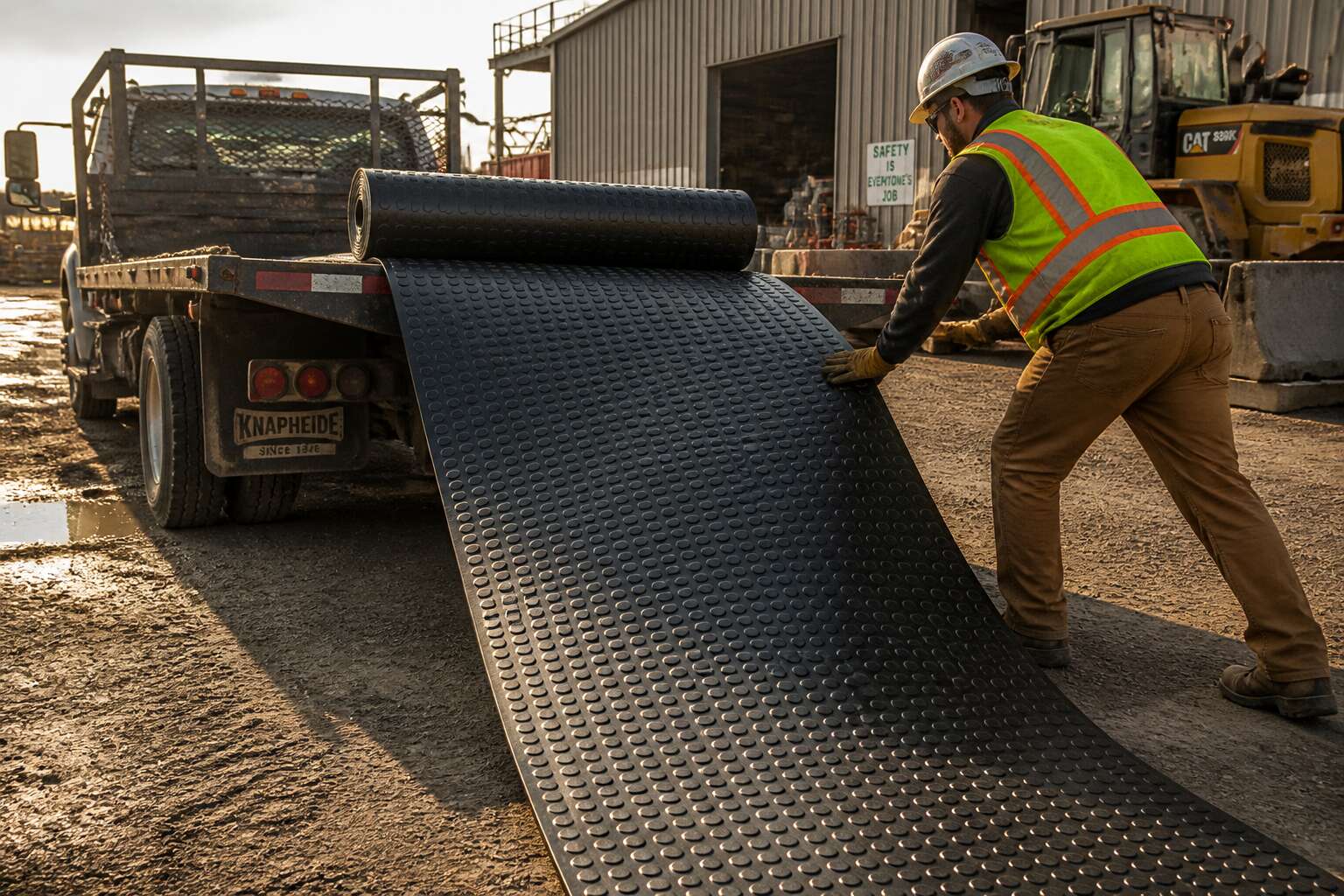
Types of Rubber Matting for Automotive Use
Molded vs. Flat Mats
Step into any 4×4 showroom and you’ll see the argument playing out on the floor. Molded rubber mats contour to the footwell precisely. Flat mats lie there, unassuming. That visual difference hides a practical gap. For a rubber matting vehicle, the choice affects cabin noise, spill containment, and long-term wear. Consider what separates them:
- Molded mats follow the exact floor contours, creating a basin for trapped debris.
- Flat mats rely on weight and friction to stay put, leaving gaps at the edges.
- Molded versions are vehicle specific, while flat sheets can be trimmed.
Most owners prioritize ease of removal over form fit. But the molded option often requires a specific vehicle model. Flat mats can be trimmed to size. Neither choice is universally superior. The right call depends on your terrain and tolerance for cleaning. For a rubber matting vehicle owner, that decision deserves more than a passing glance.
Heavy-Duty Truck and Van Flooring
Heavy-duty truck and van flooring takes a beating. Loads shift, boots grind grit into the surface, and spilled diesel pools in the low spots. A rubber matting vehicle in this class needs more than a simple sheet. It needs a system designed for abuse.
Common types include:
– Ribbed mats that channel liquids away from the driver’s feet.
– Studded or lugged surfaces that grip cargo and prevent sliding.
– Smooth, high-density rubber for easy sweeping and hose-down cleaning.
For South African conditions, heat and UV exposure matter. Cheap mats crack and warp within a season. Quality heavy-duty matting holds its shape under constant pressure. The right choice reduces maintenance and keeps the cabin serviceable. It also protects the resale value of the truck itself.
Custom-Fit Options for Popular Models
The cabin floor of a motorcar rarely gets a second glance, yet it endures the quiet accumulation of dust, moisture, and the slow grind of daily commutes. For South African drivers, the choice of rubber matting vehicle interiors goes beyond mere aesthetics. It becomes a silent contract between durability and the harsh realities of our roads and climate.
Beyond the standard flat sheets, there exists a spectrum of purpose-built surfaces. Consider the deeply contoured trays designed to trap mud from farm access roads, or the fine-ribbed variants that offer a firmer heel grip for city driving. Each texture serves a function, and selecting the wrong one invites premature wear.
Custom-fit options for popular models like the Hilux, Ranger, or Fortuner have transformed this decision. A tailored rubber matting vehicle solution mirrors the exact contours of your floorpan, covering every ridge and recess without shifting. It eliminates the gaps where dirt and moisture like to hide, festering underfoot.
- Precision laser scanning for exact year-model fitment.
- Reinforced heel pads that resist pedal wear.
- Raised outer lips to contain spills and debris.
These bespoke offerings are not a luxury. They are a practical answer to the specific footwell geometries of South African favourites, ensuring the rubber matting vehicle remains anchored and effective for years, not seasons.
Key Benefits of Installing Rubber Mats in Your Ride
Superior Protection Against Dirt and Moisture
On a rainy morning, a single work boot can drag four hundred grams of wet soil into a cab. That grit and moisture sneaks into the seams and stays there. For years, I watched old carpets rot from the inside out. Then I switched to rubber matting vehicle floors. The thick vulcanised rubber is impermeable. It keeps the steel below dry.
The difference is immediate. Water beads and sits on the surface. A quick wipe with a rag handles the rest. Consider what this means for your daily drive:
- Fine clay and sand settle on top instead of grinding into the floorpan.
- Standing water evaporates quickly instead of soaking into insulation.
- Mould and mildew find no organic material to feed on.
The ribbed surface channels runoff away from your boots, giving you a solid grip even in a downpour. Nothing soaks through. That is the relief you feel on a wet Highveld afternoon.
Slip Resistance and Safety Features
The moment your boot touches a wet pedal, you understand why grip matters! Slipping inside a cab is not a small inconvenience; it is a hazard that twists ankles and steals focus. Rubber matting vehicle floors gives you a surface that holds firm under pressure.
Here is what I have learned from years of driving in mist and rain:
- Deep channels drain moisture away from your feet.
- Raised nubs create friction even when mud coats your boots.
- The rubber compound stays pliable in cold weather, so the grip does not harden.
Safety is not about flashy tech. It is about your foot staying exactly where you put it, every time. That quiet certainty changes how you drive.
Noise and Vibration Dampening
Ever notice how an empty van amplifies every sound? The rattle of loose tools, the hum of tyres, the drone of the engine. It grinds at your concentration over a long shift. I have driven hundreds of kilometres in noisy cabs, and the difference a dense floor layer makes is striking!
Rubber matting vehicle floors absorb the low-frequency resonance that bare metal sends straight through the chassis. Instead of feeling every bump in your heels, you ride with a distant thud. The material also breaks up the sharp clatter of cargo shifting behind you.
- Engine drone drops to a background murmur.
- Rough gravel roads no longer shake the cab.
- Doors and panels rattle less under pressure.
That quieter space helps you catch a warning knock, a hissing tyre, or the radio call you would otherwise miss. Noise is more than an annoyance. It is information. Less racket means more focus.
Easy Cleaning and Long-Term Durability
Few things end a shift faster than the stale smell of coffee soaked into a carpeted cab. Easy cleaning matters when you live inside your work vehicle all day. A hose-down and a wipe handle most messes on rubber matting vehicle floors. Dried mud brushes out in seconds, and pressure washing takes off the rest. Oil drips and paint flecks lift with the right cleaner, no scrubbing for hours.
That longevity makes this choice economical. Quality mats hold their structure through Highveld heatwaves and frosts without cracking. They handle the constant scuff of work boots and the drag of heavy loads. A rubber matting vehicle floor often outlasts the vehicle itself, which is why fleet operators keep ordering the same fitment.
- Edges stay sealed under the driver’s heel.
- The surface resists splitting under sharp debris.
- Colour fades slowly, so the cab keeps a clean look.
How to Select the Right Matting for Your Vehicle
Assessing Your Driving Environment
South Africa’s driving terrain varies widely, from the slippery shale of mountain passes to the abrasive sands of the Kalahari. Selecting rubber matting vehicle without first assessing your daily environment leads to premature wear or poor grip.
Begin by cataloguing the surfaces you encounter each week. A harbour town demands resistance to oil and moisture, while a farming district calls for a pattern that releases mud easily. Consider your own habits too. Do you frequently transport wet dogs or dusty equipment?
- Inspect your driveway for sharp stones.
- Track the humidity levels in your region.
- Note whether you park on grass, concrete, or gravel.
Rubber matting vehicle performance hinges on these observations. For instance, a shallow ribbed profile suits urban stop-and-go traffic, whereas a deeper tread handles off-road debris. Match the mat to the environment, not the other way around.
Matching Mat Thickness to Intended Use
Mat thickness matters more than the pattern on the surface. A 3mm mat feels adequate until you drop a jack on it. The real question is what your rubber matting vehicle endures daily.
For light urban commuting, 3mm to 5mm handles grocery runs and muddy boots. But a bakkie hauling bricks or trailer loads of firewood demands 8mm to 10mm. That extra mass absorbs impact and prevents punctures from sharp stones.
Consider these scenarios:
- A 4mm mat suits a hatchback carrying passengers and light luggage.
- An 8mm mat survives construction sites where tools slide across the floor.
- A 10mm mat supports heavy equipment secured with ratchet straps.
Thicker mats resist curling but weigh more and shift without proper securing. Match the thickness to the load. Your rubber matting vehicle’s lifespan depends on this choice.
Understanding Retention Systems and Clips
A rubber mat that slides under your pedals is worse than no mat at all. That is why retention systems matter. Factory mats use plastic grommets that hook onto floor pins. After years of South African heat and dust, those grommets crack. The mat curls and shifts with every turn.
Aftermarket options give you more control. Some use velcro strips along the firewall. Others use metal clips that bolt through the floor pan. The floor design changes the anchor choice. A bakkie with a corrugated bed needs different anchors than a sedan with carpeted mounts.
- Measure the gap between existing mounting pins
- Ask if replacement clips are sold separately
- Look for reinforced eyelets on high-stress corners
That last point matters when you load and unload gear often. Ratchet straps snag loose edges. A secure rubber matting vehicle setup keeps the mat flat and predictable. A cracked grommet turns a R500 mat into a hazard, not a helper.
Comparing Material Quality and Odor Control
South Africa’s midday sun can heat a parked vehicle’s cabin to 70 degrees Celsius. At that temperature, a poor quality rubber matting vehicle liner emits volatile organic compounds strong enough to sting the eyes. I have removed mats that fogged windscreens within a month. Material quality determines both lifespan and smell.
SBR (styrene butadiene rubber) is common and affordable, but it oxidises quickly under harsh UV light. Recycled crumb rubber is worse. It retains tyre odours and leaches oils into your carpet. EPDM (ethylene propylene diene monomer) resists heat and sunlight, holding a neutral scent far longer.
- EPDM offers superior UV resistance compared to SBR
- Recycled crumb rubber tends to retain tyre odours
- Virgin polymer blends hold their neutral scent longer
Odour signals chemical breakdown, not a simple nuisance. A mat that stinks has already begun to fail.
Budgeting for Premium vs. Economy Options
The real cost of a rubber matting vehicle liner is not the shelf price. It is the cost per month of service. An imported economy mat priced at R350 may survive one Highveld summer before warping. A locally manufactured premium liner at R1,200 can hold its form for five years. The arithmetic favours the premium option, yet many buyers fixate on the initial outlay.
Your budget should account for:
- How often you will actually replace the liner
- The labour cost of removing and reinstalling it
- The risk of carpet damage from a warped mat
When you budget for a rubber matting vehicle, price signals something tangible. Cheap sheets use less polymer and more filler, which affects how they flex in cold morning traffic and how they sit against the floor pan. Premium options offer a multi-layer construction that resists scuffs from work boots and distributes weight evenly. That is where your budget actually goes.
Installation and Maintenance Best Practices
Preparing the Vehicle Floor Surface
More than 70% of premature matting failures trace back to an unprepared floor pan. For any rubber matting vehicle, the surface beneath dictates everything. Fine sand from the Karoo and moisture from coastal drives wear away the mat’s backing. Preparation requires attention and patience, not haste.
Begin by removing seats and trim. Sweep out every crumb and pebble. Then, use a degreaser to lift oils left by boots or leaking seals. Rinse with water and let the metal dry completely, perhaps overnight. A damp patch compromises the bond.
- Scrape away rust flakes with a wire brush.
- Wipe the area with a solvent based cleaner.
- Prime bare metal with a corrosion inhibitor.
Fitting and Trimming Custom Mats Properly
Fitting a custom mat demands discipline. A floor pan carries dents, weld seams, and contours that no template predicts. Cut conservatively with a sharp blade. You can always remove more material later.
For a rubber matting vehicle, precision influences safety. A mat that creeps over a pedal or snags a seat rail becomes a hazard. Test the fit and verify every mounting point before final placement.
- Mark cut lines with chalk, not ink that stains rubber.
- Cut from the underside to preserve the textured top surface.
- Heat the blade for thick sections to prevent tearing.
After trimming, let the rubber settle. Edges that curled during shipping relax after a day in sunlight. Install the retention system, then inspect the fit after a week. South African heat expands rubber, so a mat that fits in winter may shift by summer. A rubber matting vehicle demands this second check.
Securing Mats to Prevent Movement
Once your mat is trimmed and settled, the real work begins. A rubber matting vehicle faces constant vibration, temperature swings, and cargo shifts. Even a perfect fit will migrate if the floor lacks proper anchorage. Secure the mat at every designated point, using the clips or screws that match your vehicle model.
Check the fasteners after the first week, then monthly. South African roads can loosen a retainer well before you notice. I have seen mats curl over pedals because a single clip failed.
- Inspect edges for lifting
- Tighten any hardware with a torque wrench
- Clean debris under the mat’s perimeter
These steps keep the mat flat during hard braking.
Step-by-Step Cleaning Routines
Cleaning a rubber matting vehicle after a week of hauling sand or cattle feed is a revealing exercise. The mat shows exactly what the floor would have absorbed: fine dust, brake dust, and the occasional lost bolt. A stiff broom removes the dry debris first. Then a garden hose, aimed low, flushes the channels without disturbing the retention points.
Stubborn residue calls for mild detergent and a deck brush. Harsh solvents attack the rubber’s surface and hasten cracking. Rinse thoroughly, then let the mat dry in the sun, because a wet mat hides damage and invites mildew. Highveld winters slow the drying, so plan the wash for midday.
- Sweep or vacuum the mat daily
- Wash with soapy water weekly
- Inspect drainage channels after every wash
This routine keeps the rubber matting vehicle neutral in smell and presentable in appearance. Sunlight does the bleaching, so leave the doors open while the vehicle is parked.
Removing Stains and Odors Effectively
Stains and odors demand attention long before they become permanent. A rubber matting vehicle carries the evidence of every load, but quick response changes the outcome. For organic spills like cattle feed or fuel, blotting the area first prevents deeper penetration. A diluted citrus degreaser then lifts the residue. Scouring with wire brushes never works; the abrasion opens pathways for future contamination.
Odors linger in the micro-crevices of the rubber. Baking soda paste left overnight draws out the worst of it. Diesel or manure responds to a targeted enzymatic cleaner that breaks down the source. I always test any solution on a hidden corner first, because worn matting is porous.
Persistent stains call for focused methods:
- Pressure washing on a low setting, held at a distance
- Rubber-safe bleach alternatives for deep discoloration
- Cool water rinses to prevent setting
Those steps preserve the functional integrity of the rubber matting vehicle for years.
When to Replace Your Vehicle Matting
Every rubber matting vehicle carries a lifespan limit. Most fail quietly. After three years of shifting loads, the rubber begins to fatigue, and the telltale signs show up as surface cracks or a persistent chemical smell no cleaner removes. I have seen drivers ignore these warnings until the matting literally splits under pressure.
For any rubber matting vehicle, the installation phase sets the benchmark. Ensure the mat sits flat without buckling, and check that the retention clips are torqued correctly. Beyond that, weekly inspections take less than a minute. Look for uneven wear patterns, especially near the pedals or tailgate.
- Cracks wider than two millimetres expose the floor to moisture
- Matting that shifts during turns indicates clip failure
- Repeated odours after cleaning signal deep bacterial growth
When these conditions appear, replacement is overdue. Doing so protects the vehicle body and reduces long-term repair costs.
Frequently Asked Questions About Vehicle Rubber Matting
Can Rubber Mats Be Used in Extreme Temperatures?
South African summers push interior heat past 70 degrees Celsius, while winter mornings on the Highveld dip below freezing. Can a rubber matting vehicle withstand both extremes? In my experience, quality rubber compounds handle this range without cracking. The polymer structure remains flexible in cold and stable in heat. Cheap mats with recycled fillers turn brittle or warp quickly. That is why the curing process matters as much as the raw material.
Temperature thresholds for most products:
- Standard rubber mats endure negative 30 to 120 degrees Celsius.
- Heavy-duty compounds stretch that range further.
- UV degradation matters more than temperature alone.
Dimpled or ribbed surfaces allow air to circulate beneath the mat, reducing heat transfer to the floor pan. Many Johannesburg drivers choose darker mats for looks, but lighter shades reflect heat and keep the cabin cooler. The right rubber matting vehicle choice depends on parking habits and sun exposure rather than advertised cold ratings alone.
Are Rubber Mats Compatible with Aftermarket Accessories?
Aftermarket accessories complicate mat fitting. Pedal covers, seat risers, and under-seat storage boxes all change the floor geometry. A rubber matting vehicle setup that ignores these additions will buckle or interfere with pedal travel. I have seen custom installations ruined because the mat was cut before the accessories were installed.
- Bolt-in seat brackets raise the floor profile and require extra clearance
- Wiring looms routed under the mat can create pressure points
- Amplifiers and subwoofer boxes need airflow space beneath the mat
The interplay between mat and accessory varies by vehicle. Some owners trace the mat around the bracket bases, leaving exposed screw heads that can catch heels. Others cut oversized openings that let dust funnel through. Proper alignment depends on the accessory layout and the mat’s thickness.
How Do Rubber Mats Compare to Carpet or Vinyl?
Few questions spark as much debate as carpet versus vinyl versus rubber. I personally believe carpet is a luxury item best reserved for living rooms, not for floors that meet muddy boots. Vinyl offers a slick surface that turns your footwell into an ice rink after a rainstorm. A rubber matting vehicle setup, however, gives you something rare: forgiveness. It absorbs impact without soaking up moisture, and it shrugs off temperature swings that would make vinyl crack.
Consider what you actually demand from a floor covering. Carpet muffles noise but traps grit. Vinyl cleans quickly but offers zero cushion. Rubber provides a durable middle path that does not punish your knees or your nose.
- Carpet: quiet, comfy, but a sponge for filth
- Vinyl: cheap, playful with water, prone to punctures
- Rubber: heavy, grippy, and indifferent to your bad parking
For South African roads, where dust and heat conspire against interior materials, rubber matting vehicle owners report fewer headaches. That is not a marketing slogan. It is simply what happens when you choose function over showroom charm.

0 Comments