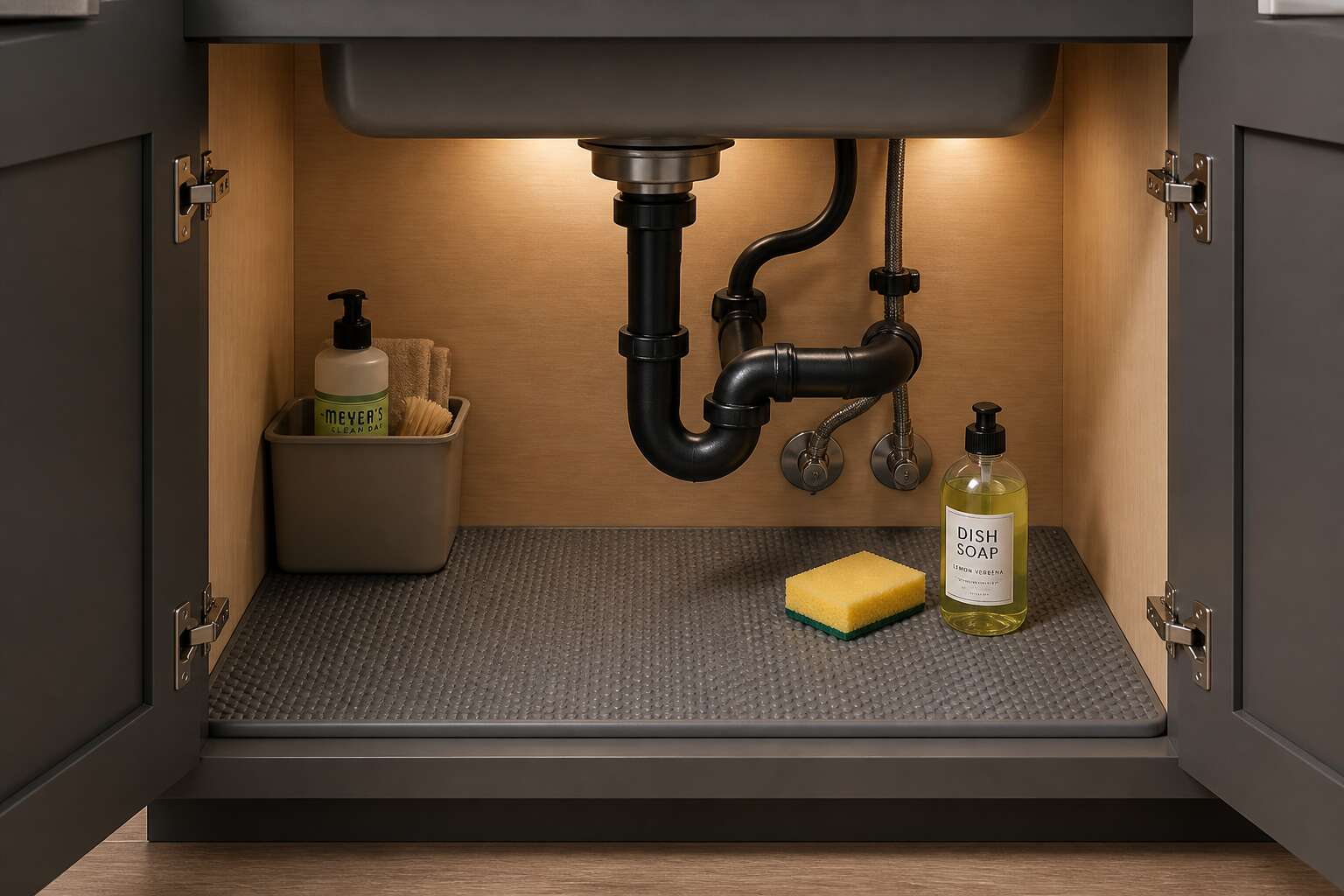
Why You Need a Mat Under Your Sink
Protecting Cabinets from Water Damage and Warping
A single unnoticed drip can saturate a cabinet base in under a week. Particle board and plywood, the materials most kitchen cabinets are built from, wick moisture upward with surprising speed. That moisture leads to swelling, delamination, and that telltale soft crunch under your fingertips.
A rubber mat under sink acts as the barrier between this slow destruction and your cabinetry. It catches splashes from washing dishes, condensation from pipes, and the drips that run down bottle sides. Without a rubber mat under sink, the same drips settle into the seams and swell the joints. Replacing a warped cabinet floor is expensive. The repair often means removing plumbing and cutting out damaged sections. I have watched homeowners wince at those quotes. A decent mat costs less than those quotes. For South African kitchens, where humidity varies wildly between coastal and inland regions, this simple layer of protection makes sense.
Preventing Mold, Mildew, and Unpleasant Odors
Mold does not need a flood to take hold. A persistent drip or a damp bottle left on the floor creates enough moisture for fungal spores to germinate within 48 hours. In South African homes, especially along the coast, that timeline shortens dramatically. The dark, confined space under the sink becomes a breeding ground.
A rubber mat under sink breaks that cycle. It lifts bottles and sponges away from standing water, allowing air to circulate underneath. The mat itself stays dry on top, and the surface below never absorbs the moisture. This simple barrier stops the musty smell that seeps into cabinets and drifts into the kitchen.
Consider what usually gathers under there:
- Dripping cleaning products with residue that feeds mildew
- Condensation from cold pipes in humid months
- Wet dishcloths or scrub brushes left on the base
Each one contributes to that sour, earthy odour. Once the smell sets in, it clings to wood and plastic. A rubber mat under sink prevents the conditions that cause it, keeping the space fresh without effort.
Reducing Clutter with a Non-Slip Surface for Sponges and Cleaners
A rubber mat under sink adds a grip that cabinets lack. Bottles of bleach, window cleaner and dish soap stay upright when you set them down. A wet sponge stops sliding across the base and rests exactly where you drop it. That small constraint cuts daily tidying time.
The mat also creates defined zones. You can keep scrub brushes on one side and cleaning sprays on the other. Stacking becomes easier, since bottles no longer shift with every door slam. In a busy South African kitchen, this saves minutes and frustration, letting you find what you need without excavating a pile of misplaced supplies.
Saving Money on Expensive Cabinet Repairs and Replacements
Consider the cost of replacing a single cabinet base in a South African kitchen. It runs into thousands of rand, not counting the plumber’s call-out fee when a leak becomes a flood. A rubber mat under sink absorbs the daily drips, the stray splash from a rinse, the slow dribble from a bottle cap. These small events seem harmless. They are not. Each one works its way into the joinery, loosening the fixings and weakening the structure. Cabinet doors start hanging crooked. Drawers bind. That is when the quotes arrive.
- New cabinet base, R2,500 to R8,000 before labour
- Countertop removal and refitting, R1,200 to R3,000
- Plumber call-out, R500 to R1,200 before any work begins
A rubber mat under sink costs less than a single takeaway meal. It sits in place for years, catching the drips and spills before they reach the carpentry. No repair bill ever arrives.
Key Features to Look For
Waterproof and Leak-Proof Materials: PVC, Rubber, and Silicone
Choosing the right material for a rubber mat under sink is the defining factor between a simple accessory and a long term defence system. Most people overlook the chemical resistance of PVC compared to natural rubber, yet this distinction matters when bleach or harsh spray cleaners inevitably drip. PVC offers a non porous surface that handles solvents without breaking down. Silicone, while softer to the touch, provides exceptional elasticity. It can be pulled, stretched, and repositioned without losing its shape, which suits irregular cabinet bases.
The thickness of the mat plays a critical role in its function. A flimsy sheet offers little cushioning for dropped glass bottles and tends to wrinkle under the weight of stored goods. A quality rubber mat under sink should maintain its structural integrity even when wet, creating a stable barrier between the cabinet floor and the cold, damp air that rises from the plumbing. Consider the manufacturing process as well; compression moulded rubber has a higher density, which prevents water from seeping through microscopic pores.
– Temperature resistance is crucial for cabinets near hot water pipes.
– Look for a mat with deep ridges or a dimpled texture to allow airflow under bottles.
– Ensure the material has a matte finish, as glossy surfaces can become slippery when soapy water pools.
Silicone mats excel in extreme conditions, remaining flexible even when exposed to boiling water. However, they can attract lint and dust, which requires a quick wipe to keep the surface looking pristine. A rubber mat under sink made from EPDM rubber offers the best balance of durability and cost, resisting ozone cracking and UV damage, though the latter is rarely a concern under a sink. The key is to avoid plastic mats labelled as “rubberized”, as these often contain fillers that degrade within months, leaving a sticky residue that is difficult to remove.
Raised Edges or Built-In Catch Basins for Spills
A raised edge on a rubber mat under sink contains spills before they reach the cabinet seams. Bleach drips and soapy runoff collect inside the raised perimeter. Some mats include a molded catch basin with a slight depression, which holds even larger accidents. I have seen this feature simplify a messy clean-up into a quick lift and rinse.
Consider the lip depth. A low ridge catches splashes, while a taller rim contains a tipped bottle. For active households, a mat with corner walls offers extra protection.
- Seamless raised edges, molded into the mat rather than glued on.
- A basin without drainage holes, so water stays captured.
This design contains every stray drop.
Non-Slip Backing and Textured Surface Patterns
The non-slip backing is what keeps a rubber mat under sink honest. It grips the cabinet floor firmly, so the mat stays put when you pull out a heavy bottle or lean against the sink. Without it, every wipe of the counter shifts the mat into folds, creating gaps where water pools against the wood.
Textured patterns work with that backing. They create friction, stopping bottles and spray cleaners from sliding. A good pattern allows airflow beneath items, so a wet sponge doesn’t stay trapped in a puddle. I prefer small raised nubs or a precise grid.
- Raised nubs hold bottles in place
- Grid lines guide drops to the edge
- Diamond patterns grip without trapping grime
When shopping, check that the backing is fully laminated, not just coated. A thin coating peels within months, leaving a loose mat and a vulnerable floor!
Flexibility and Easiness to Trim for Custom Fit
Most cabinet floors are a mess of brackets and pipes. In my experience, nearly every under-sink space is irregular. A rigid tray hovers awkwardly, leaving gaps. That is why flexibility matters. A soft, pliable rubber mat under sink conforms to uneven surfaces. It drapes over seams and bends around the P-trap without lifting.
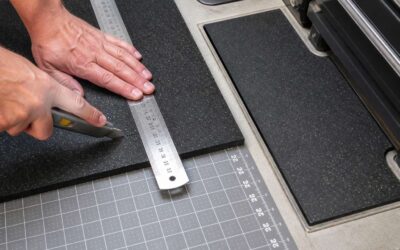
Trimming is just as important. The right mat takes seconds to alter. You can cut it with ordinary scissors or a utility knife. Trace the shape, then slice cleanly. This is where some mats fail. They crack or split during cutting. A quality mat carves neatly without tearing.
To fit properly, you will likely need to trim around:
- Pipe penetrations and shutoff valves
- Cabinet corner braces and dividers
- The edge of the sink base itself
A precise fit means total coverage, which is the whole point of the rubber mat under sink.
Durability Against Cleaning Chemicals and Temperature Changes
South African homes take cleaning seriously, and the cabinet beneath your sink absorbs the brunt of that enthusiasm. Bleach splashes, caustic scale removers, and citrus degreasers all find their way onto the floor. A rubber mat under sink needs chemical resilience, not just water resistance. Inferior materials will discolour, soften, or turn sticky after repeated exposure. The good ones are formulated to shrug off the harshest domestic cocktails without losing their shape.
Temperature is the second adversary. Geyser-fed pipes radiate steady warmth, while cold water lines create condensation. The mat must tolerate both extremes without warping, cracking, or growing brittle over time. A mat that handles this daily thermal cycling will stay supple for years.
When assessing durability, confirm the material resists:
- Bleach and chlorine based cleaners
- Ammonia and alkaline degreasers
- Hot surface contact from pipes
That quiet endurance is what separates a cheap temporary remedy from a rubber mat under sink you will forget is even there.
How to Choose the Right Size and Shape
Measuring the Cabinet Floor and Accounting for Plumbing Pipes
I have measured countless cabinet floors, and most people skip the step that causes frustration. They forget to account for the plumbing pipes. Clear the cabinet completely, then use a metal tape measure to capture the depth from the back panel to the door lip. Record the width between the internal side walls. For irregular shapes, press cardboard into the corner and trace the outline.
Plumbing pipes introduce variables that shape alone cannot solve. A drain often sits lower than the mat’s edge, so the rubber mat under sink has to flex around it. Use this sequence:
- Find the lowest point of the P-trap.
- Measure the gap between the pipe and the cabinet side.
- Mark these dimensions on your template.
Now you know where to trim! A rubber mat under sink with a cutout around the pipe settles without lifting.
Standard Kitchen Sink Base Cabinet Dimensions and Fit Charts
Standard base cabinets in South Africa tend to follow a polite fiction: every sink base is 600mm wide, 850mm tall, and entirely forgettable. The reality is that the space beneath your basin is rarely a rectangle. A 600mm cabinet might accommodate a standard insert, but the drain’s location, the door framing, and the counter depth all shift the effective footprint. Fit charts give a rough guide, suggesting a mat that runs a few centimetres short of the back panel and front lip. Most charts assume a clean opening, which your plumbing politely ignores. Consider the common sizes:
- Single trough basins often pair with 600mm cabinets
- Double troughs commonly require 800mm to 900mm
- Corner cabinets create triangular spaces that need a custom trim
Match the rubber mat under sink to the actual opening, not the label on the cabinet door.
Custom-Cutting Mats for Two-Door and Corner Sink Cabinets
Grab a tape measure before you buy anything. The space beneath a two-door sink cabinet almost never mirrors the door width. Plumbing pipes, a centre mullion, or a crooked floor can shift the usable footprint by several centimetres. A rubber mat under sink should be trimmed to the base panel, not the cabinet face. Measure both sides independently, because the divider often creates two different rectangles.
Corner cabinets are worse. The diagonal opening means a standard rectangular mat leaves exposed corners that collect drips. Make a cardboard template of the actual floor, then transfer that outline onto the mat and cut along the line.
- Two-door cabinets: cut one mat with a centre seam for easy removal
- Corner cabinets: create a triangular template that matches the real base
- Cut 5mm short of the walls to allow for natural expansion
With a precise template, the rubber mat under sink stays put and still leaves room to reach the trap and shutoff valves.
Installation and Maintenance Tips
How to Properly Clean and Dry the Cabinet Surface Before Laying the Mat
The cabinet surface rarely gets the attention it deserves before installation. A rubber mat under sink only protects when it sits on a clean, dry base. Residual soap film or a damp patch from a previous leak will undermine adhesion and encourage fungal growth. Use a diluted vinegar solution to remove mineral deposits, then wipe with plain water.
Towel drying is insufficient. The wood grain can hold moisture below the visible level. Leave the cabinet open for at least two hours, or until a hand placed flat on the surface feels no coolness. This simple test prevents the most common installation failure. For stubborn stains, sand lightly with fine grit paper, then vacuum the dust before the final wipe.
Trimming the Mat Around Pipe Openings and Sink Hardware
Trimming a rubber mat under sink demands patience. Pipe openings and sink hardware form an irregular geometry. Mark each obstacle with a marker. Cut from the outer edge toward the circle in small increments with scissors or a utility knife.
Follow this sequence:
- Place the mat and trace each pipe.
- Cut a cross shape over each traced circle, then trim the flaps.
- Fit the mat, check for gaps, and adjust.
The mat should sit flat without buckling around the P-trap. A test fit after every cut prevents two failures: overgenerous openings that expose wood and tight cuts that tear under vibration. For double door cabinets, trim one side at a time to keep the rubber mat under sink stable. The result is a resilient barrier against moisture.
Ensuring a Flat, Wrinkle-Free Fit for Maximum Water Containment
The cabinet floor is an unforgiving surface. A folded or buckled mat creates low spots where water pools and stagnates. That defeats the entire purpose.
Lay the rubber mat under sink carefully, working from the back corner toward the front. Smooth with your palms, pushing air toward the nearest edge. A stubborn bubble needs a firm, continuous stroke, not a series of taps. Examine the mat from standing height and again at floor level. Light reflects differently off wrinkles, so the angle matters.
- Run a hand across the entire surface to feel for crimps or raised edges.
- Check that the mat stays flush against the cabinet base overnight.
- Push a sponge along the perimeter to confirm water cannot slip beneath.
A mat that settles overnight stays put for years. Give it that time before loading the cabinet with supplies. The rubber needs to relax into the floor’s contours after being folded in packaging. A flat surface actively channels moisture toward the edges where you can see and wipe it. Wrinkles hide problems. Flatness reveals them.
Daily Wipe-Down Routine and Deep-Cleaning Guidelines
Daily maintenance keeps your rubber mat under sink hygienic. After each use, wipe the surface with a damp cloth to remove soap scum and drips. Once a week, lift the mat and rinse it under warm water, then air dry upright. Monthly deep cleaning prevents grime from embedding into the texture. Follow these steps:
- Remove the mat and scrub it with a soft brush and mild detergent.
- I prefer a vinegar solution for stubborn stains.
- Dry the cabinet floor completely before returning.
This simple routine preserves the mat’s flexibility and appearance. Neglect leads to sticky residue and hard water lines. A few minutes of care avoids an expensive replacement!
Replacement Indicators: When to Swap Out Your Mat
Most cabinetmakers agree that a rubber mat under sink lasts about two years before losing its original shape. That supple base turns rigid, and the raised edges flatten against the floor. You might notice stubborn stains that do not respond to cleaning. When water pools instead of beading, pay attention.
- A persistent musty smell after thorough washing.
- Visible cracks or tears that collect dirt.
- The non-slip backing crumbles into pieces.
Slipping and sliding on the cabinet floor is another clear clue. A mat that shifts with every door opening offers no protection. Honouring its service means replacing it before a leak ruins your drawer fronts.
Disposal and Recycling Options for Old Rubber Mats
When fitting a rubber mat under sink, the sequence matters more than most homeowners assume. Lay the mat before reconnecting the plumbing trap, allowing the flexible material to drape naturally around the P-trap and supply lines. A forced fit that pushes the edges upward creates gaps where spilled water escapes. Take time to press the mat flat with your palm, working outward from the centre to expel trapped air pockets.
Old rubber mats pose a disposal puzzle. Many curbside recycling programmes in South Africa reject rubber, so contacting your local municipality or a tyre recycling company becomes essential. Some hardware stores operate take-back schemes for worn mats.
Sustainable options include:
- Repurposing the mat as a garage floor protector for toolboxes.
- Donating to local farms for animal bedding areas.
These routes keep the rubber mat under sink from clogging landfill space prematurely.
Common Mistakes to Avoid
Using a Mat Without a Waterproof Barrier Underneath
Many homeowners assume a simple mat is enough, but skipping a waterproof barrier underneath is a costly error. Without that barrier, spills seep through and settle directly on the cabinet floor. A rubber mat under sink surface can feel dry while hidden moisture accumulates underneath, leading to silent damage.
The mistake worsens with seams or overlapping edges. Water finds every gap. Consider these errors:
- Ignoring the need for a separate PVC or silicone liner
- Assuming the mat’s texture provides full protection
- Failing to check for pooling after each wash
Each oversight compromises the cabinet’s integrity. Moisture trapped against raw wood creates an environment that invites rot and persistent mustiness.
Choosing a Mat That Traps Moisture Against the Cabinet Floor
Finding the right protection for your cabinet base is a balancing act. A thick, cushioned rubber mat under sink setups offers comfort for your knees and absorbs the clatter of dropped bottles, but that same dense material can become a hidden reservoir. If the mat itself is not impermeable, every splash and spill seeps into its core. The plywood beneath stays dark and damp, never seeing the light of day, creating conditions that are difficult to reverse.
Many designs are marketed for their absorbent qualities, which is the opposite of what is needed in a wet zone. You want a mat that repels water, not one that drinks it up. Check the base of the product. A felt or fabric backing will wick moisture upward and hold it against the floor, which defeats the entire purpose of the installation.
The material composition matters more than the label. A rubber mat under sink can still trap moisture if it has an open-cell structure. These act like a sponge, holding water in suspension against the wood. Closed-cell rubber or a smooth PVC surface will not absorb a drop.
Consider some of the most common problematic features you might encounter:
– A soft, fabric-like underside that clings to the floor and retains water
– Open-cell rubber that soaks up spills and releases them slowly over time
– A flat, non-drained surface where water pools and sits directly on the cabinet base
The fit also plays a role. A mat that is slightly too large and rides up the side walls of the cabinet can trap condensation against the vertical panels. Once the moisture is trapped between the mat and the wood, it has nowhere to go. The air circulation that usually aids drying is completely cut off. You might notice a persistent, musty smell long before you see the visible damage, a sign that the hidden rot has already begun to set in beneath that solid surface.
Forgetting to Lift and Air Out the Mat During Regular Cleaning
The rubber mat under sink looks impeccable after a wipe down. That appearance deceives. The underside of the mat, pressed against the cabinet base, remains untouched. Every routine cleaning that leaves the mat in place simply traps the moisture deeper. The water that spills during daily use finds its way beneath, where it sits in the dark.
- The mat’s backing stays damp for hours
- The plywood floor receives a slow, steady soaking
- The air inside the cabinet turns heavy and humid
Forgetting to lift and air out the mat during regular cleaning is the mistake here. The surface stays clean, but the damage lives underneath, out of sight.
Alternative and Complementary Solutions
Comparing Rubber Mats to Foam Liners and Plastic Trays
Foam liners offer soft cushioning but absorb water like a cloth left in a basin. They hold moisture against the cabinet floor for days, inviting the exact decay they claim to prevent. Plastic trays stay rigid and easy to wipe, yet they crack at the corners and shift whenever pipes knock against them.
A rubber mat under sink sits between these options with practical restraint. It neither drinks the water nor splinters under pressure. For the uncertain, weigh your choices:
- Foam: gentle on impact, treacherous with moisture retention.
- Plastic: stiff, brittle, prone to splitting around pipe cutouts.
- Rubber: dense, flexible, resilient against lingering dampness.
The decision shapes how long your cabinet endures the slow, quiet assault of daily drips and spilled cleaners, a choice best made with open eyes rather than hindsight.
Pairing Your Mat with Cabinet Organizers and Drip Racks
The rubber mat under sink performs better when paired with cabinet organizers and a drip rack. A rack catches wet bottles and scrub brushes before they travel across the mat. Organizers lift cleaning supplies off the cabinet surface entirely, leaving the mat to handle only stray splashes.
In my experience, the sink base stays drier when these tools share the space:
- A wire rack for damp sponges and brushes
- Stackable bins for spare detergent bottles
- A caddy for gloves and rags
The mat receives less daily wear, and grime has fewer corners to settle in. South African humidity makes this pairing a smart defense against musty cabinets.
Eco-Friendly Options: Mats Made from Recycled Rubber or Natural Fibers
Many South African kitchens host a rubber mat under sink that has seen better decades. For those who want a lighter footprint without sacrificing function, recycled rubber mats and natural fibre alternatives deserve a closer look. Recycled rubber, often reclaimed from old tyres, resists water and cleaning chemicals as well as the virgin material. Natural fibres such as jute or coir soak up stray drips and add a textured, less industrial character.
- Recycled rubber: sturdy, easy to wipe, slightly heavier
- Coir: thirsty, needs regular airing to avoid mildew
- Cork: naturally antimicrobial, but softer and less resistant to scratches
These materials complement a standard rubber mat under sink, or serve as a dedicated substitute for light-duty cabinet floors. Any natural fibre must sit above a waterproof barrier, because a soggy coir mat becomes a museum of mould. With the right layering, your cabinet stays dry and your conscience stays clean.
Using Multiple Mats in Bathrooms, Laundry Rooms, and Campers
In bathrooms, laundry rooms, and campers, a single rubber mat under sink only protects one floor. Multiple mats work as a system. A camper catches spills near the drain and another near the tap. This layered setup handles moisture without a full cabinet overhaul.
Bathrooms benefit from pairing a rubber mat under sink with a separate tray for toiletries. Laundry rooms often need a mat at the washing machine connection as well. The trick is placing each mat where water actually gathers.
- A corner mat for drip zones
- A flat mat for general cabinet floors
- A raised-edge mat for spill-prone areas
This arrangement keeps surfaces dry and cuts down on wear. One rubber mat under sink manages the pipe area, while others guard adjacent spaces. Consistent placement makes the routine easy to follow.

0 Comments